| transcript | |
|---|---|
|
00:00 - 0:00:07
The monologue podcast.
|
|
|
0:00:07 – 0:00:26
One word, one monologue.
|
|
|
0:00:26 – 0:00:34
Let's go!
|
|
|
0:00:34 – 0:00:47
Hello and welcome to the monologue podcast where I discuss a word and maybe
|
|
|
0:00:47 – 0:00:59
A little philosophizing about it here and there. Today we are talking about the attention economy. This is an
|
|
|
0:00:59 – 0:01:10
Topic, which many of us don't really have on the screen, but that's something that almost
|
|
|
0:01:10 – 0:01:20
Always, no matter what we do. It sounds like a complicated word from the university or
|
|
|
0:01:20 – 0:01:30
from everyday science or what marketers say about themselves, but the reality is,
|
|
|
0:01:30 – 0:01:42
It's totally banal. It's kind of something that gets our attention as a valuable resource.
|
|
|
0:01:42 – 0:01:53
defined. It determines what we think about, what we perceive, and what we end up with.
|
|
|
0:01:53 – 0:02:02
Even what decision we make. And that's exactly why we, like many other companies, want to
|
|
|
0:02:02 – 0:02:10
or platforms and media, to implement as much of our attention as possible.
|
|
|
0:02:10 – 0:02:19
And so the attention economy is the currency of the present. But what is the
|
|
|
0:02:19 – 0:02:27
The attention economy. Imagine you have a headlight. This headlight can go far
|
|
|
0:02:27 – 0:02:38
light, but always only a certain area. The area where you light up. Everything in
|
|
|
0:02:38 – 0:02:47
Cone of light lies, you see clearly, but everything around it remains in the dark. And the same
|
|
|
0:02:47 – 0:02:56
Attention economy works. It's about our attention. We can only ever have one
|
|
|
0:02:56 – 0:03:03
Really perceive a fraction of the many stimuli that surround us. And the more information it
|
|
|
0:03:03 – 0:03:12
The harder the struggle is to be light in these spotlights. Economist and
|
|
|
0:03:12 – 0:03:24
Psychologist Herbert R. Simpson wrote this in the 1970s. He says, in a sense,
|
|
|
0:03:24 – 0:03:33
A wealth of information creates poverty of attention. This means that the more information
|
|
|
0:03:33 – 0:03:41
The more valuable our limited attention becomes. And today, in the digital age,
|
|
|
0:03:41 – 0:03:51
Let's experience the extreme. Information is everywhere, infinitely available. But our
|
|
|
0:03:51 – 0:03:58
Attention is scarce. That's why she's hotly contested. A currency, a scarce commodity.
|
|
|
0:03:58 – 0:04:04
The mechanisms of the platforms If you want to understand,
|
|
|
0:04:04 – 0:04:09
How the attention economy works is worth taking a look at the big platforms.
|
|
|
0:04:09 – 0:04:19
In the social media sector. Let's take TikTok. Every second a new clip is presented,
|
|
|
0:04:19 – 0:04:26
Tailored to your preferences so far. Will you stick with it? Great, then you get more of it.
|
|
|
0:04:26 – 0:04:31
You want to go on? No problem. The next video is coming.
|
|
|
0:04:31 – 0:04:40
This is called the Infinity Scroll. You can theoretically go on infinitely,
|
|
|
0:04:40 – 0:04:48
without ever reaching an end. And that's exactly the point. There is no natural stop.
|
|
|
0:04:48 – 0:04:57
YouTube. It works the same way on YouTube. Especially the so-called watchtime. So
|
|
|
0:04:57 – 0:05:00
So how long do you stay on the platform?
|
|
|
0:05:00 – 0:05:07
And that makes sure that you're not just watching a video, you're watching 10.
|
|
|
0:05:07 – 0:05:17
That's why thumbnails are often so exaggeratedly designed, huge font, overlaid facial expressions, red
|
|
|
0:05:17 – 0:05:20
Arrows or the famous circle.
|
|
|
0:05:20 – 0:05:24
Everything so that the look gets stuck.
|
|
|
0:05:24 – 0:05:26
Gaming and streaming.
|
|
|
0:05:26 – 0:05:35
The attention economy has also long since arrived in video games. Reward systems, daily
|
|
|
0:05:35 – 0:05:42
Challenges, exclusive skins that you only get for a week. Everything ensures that you
|
|
|
0:05:42 – 0:05:52
Stay exaggerated. That you bring your attention back again and again. And at
|
|
|
0:05:52 – 0:06:00
With streaming services? Series are deliberately produced in such a way that each episode with a trick hanger
|
|
|
0:06:00 – 0:06:06
ends. One more episode, then I go to sleep. We all know.
|
|
|
0:06:06 – 0:06:14
The business model is always the same. The longer you stay, the more data you leave
|
|
|
0:06:14 – 0:06:21
The more advertising can be shown to you. That's just so much on the edge as smaller
|
|
|
0:06:21 – 0:06:27
If something is free, you are the product.
|
|
|
0:06:27 – 0:06:31
Now let's get to the psychological effect.
|
|
|
0:06:31 – 0:06:34
Why does it work so well?
|
|
|
0:06:34 – 0:06:38
We need to look at psychology.
|
|
|
0:06:38 – 0:06:40
Dopamine loops.
|
|
|
0:06:40 – 0:06:45
These are profane dopamine loops.
|
|
|
0:06:45 – 0:06:54
Every like, every comment, every new message is a small reward. In the brain, dopamine
|
|
|
0:06:54 – 0:07:01
It's a neurotransmitter that makes us want to behave.
|
|
|
0:07:01 – 0:07:08
repeat. By the way, it is also the same messenger substance that plays a role in many addictions
|
|
|
0:07:08 – 0:07:18
play. If I get the substance, I get the stimulus, dopamine is released and I feel
|
|
|
0:07:18 – 0:07:30
I'm fine. Fear of loss, in addition to the "Fear of missing out", i.e. FOMO for short. What a funny
|
|
|
0:07:30 – 0:07:42
The fear of missing something. If you don't see everyone else already sharing a new meme or
|
|
|
0:07:42 – 0:07:52
that friends are planning something, this can scare us that we are missing something and that keeps
|
|
|
0:07:52 – 0:08:01
us in front of the screen. The social confirmation and finally the urge for confirmation.
|
|
|
0:08:01 – 0:08:09
Humans are social beings. We are constantly comparing ourselves to others. The number of likes
|
|
|
0:08:09 – 0:08:17
or follower becomes a measure of one's own value. And I can only say,
|
|
|
0:08:17 – 0:08:25
I don't care, I'm happy about it, ha ha I have dopamine, but on the
|
|
|
0:08:25 – 0:08:31
On the other hand, I would never come up with the idea of saying, look at you, you have fewer followers like
|
|
|
0:08:31 – 0:08:38
Me, you're worth nothing. I don't understand, I've crossed paths many times.
|
|
|
0:08:38 – 0:08:46
That's why we often reflexively reach for the mobile phone, even if we don't have any notification at all.
|
|
|
0:08:46 – 0:08:50
We just check if there is something new, if something new has happened.
|
|
|
0:08:50 – 0:08:55
Consequences for individuals and business.
|
|
|
0:08:55 – 0:08:59
No, company. How do I get into business?
|
|
|
0:08:59 – 0:09:04
Consequences for individuals and society.
|
|
|
0:09:04 – 0:09:08
All this is not without consequences.
|
|
|
0:09:08 – 0:09:10
Individual consequences.
|
|
|
0:09:10 – 0:09:15
Many people find that they are less able to concentrate.
|
|
|
0:09:15 – 0:09:22
read a book, after 10 minutes the thoughts wander, work on a project,
|
|
|
0:09:22 – 0:09:31
Every few minutes a need pops up, just look at the mobile phone for a moment. The attention will
|
|
|
0:09:31 – 0:09:38
fragmented, cut into small pieces instead of developing longer chains of thought,
|
|
|
0:09:38 – 0:09:46
Let's jump from charm to charm. social consequences. Socially, this has it all.
|
|
|
0:09:46 – 0:09:56
consequences. Platforms reward content that engages. And these are often not
|
|
|
0:09:56 – 0:10:07
the differentiated analyses, but extreme positions. Polarization is intensified. The
|
|
|
0:10:07 – 0:10:15
Discussion is flattening. Instead of suggestion, it's just about who gets the loudest outcry
|
|
|
0:10:15 – 0:10:25
produced. Political campaigns are less about content and more about:
|
|
|
0:10:25 – 0:10:36
How do we feel about a clip going viral? Meme culture replaces the depth at most.
|
|
|
0:10:36 – 0:10:46
This creates a cycle. Those who want attention must be louder, more extreme, more provocative,
|
|
|
0:10:46 – 0:10:52
Even if the substance is missing. Counter-strategies
|
|
|
0:10:52 – 0:10:58
The question is, what can we do about it? Digital detox
|
|
|
0:10:58 – 0:11:09
Sometimes it just helps to take one of your almost banal steps. Conscious time-outs
|
|
|
0:11:09 – 0:11:20
suspend mobile phone, delete social media if necessary, certain days or hours in which
|
|
|
0:11:20 – 0:11:31
You're planning something solid without digital content. Have a nice movie night or
|
|
|
0:11:31 – 0:11:44
Playing with friends in the real world. The question is about attention management. It
|
|
|
0:11:44 – 0:11:51
There are also small tricks. Turn off notification, the mobile phone deliberately out of reach
|
|
|
0:11:51 – 0:12:02
Define time slots by being consciously online and not the rest of the day. me
|
|
|
0:12:02 – 0:12:13
For my part, do my work and reply to emails, respond to comments,
|
|
|
0:12:13 – 0:12:23
Except on the release day, mainly in the evening, because that's where I have my time for myself. The rest of the day
|
|
|
0:12:23 – 0:12:32
For the most part, I try to spend time without constantly looking at my phone. As I said,
|
|
|
0:12:32 – 0:12:41
Except on the release day, because it can hail comments without end. What can also help
|
|
|
0:12:41 – 0:12:50
Curated sources. Instead of consuming everything that gets flushed into your timeline, choose
|
|
|
0:12:50 – 0:13:01
One source or select few sources. One, two or three good news sources can suffice.
|
|
|
0:13:01 – 0:13:08
to get a comprehensive picture. own projects and perhaps the most important of them,
|
|
|
0:13:08 – 0:13:17
Not only passively give attention, but actively direct it into your own projects,
|
|
|
0:13:17 – 0:13:27
in creativity, in real encounters. You could say that attention is like a muscle,
|
|
|
0:13:27 – 0:13:37
Which we have to train all the time, but don't let it break. If it gets weaker, it must
|
|
|
0:13:37 – 0:13:48
we consciously work on raising them back to a level suitable for everyday use,
|
|
|
0:13:48 – 0:13:56
By focusing our attention on content that is important to us.
|
|
|
0:13:56 – 0:14:04
As I said, a nice game night, a movie night, sometimes going to the cinema or even to the theater,
|
|
|
0:14:04 – 0:14:08
Maybe go to a concert without a cell phone.
|
|
|
0:14:08 – 0:14:15
In the end, attention is not infinite.
|
|
|
0:14:15 – 0:14:23
It is our most valuable asset. And that's why we shouldn't give them away thoughtlessly,
|
|
|
0:14:23 – 0:14:33
because where our attention is directed, everyone decides for himself which content is
|
|
|
0:14:33 – 0:14:40
One is important and one disappears in the mass. We should ask ourselves the question,
|
|
|
0:14:40 – 0:14:49
Not where our attention disappears, but where do I want to use it consciously?
|
|
|
0:14:49 – 0:14:58
Because maybe that's the biggest asset in the attention economy, not the platform,
|
|
|
0:14:58 – 0:15:09
Not the algorithm, not the advertising, but our very own, alert, conscious look.
|
|
|
0:15:09 – 0:15:20
I hope I was able to introduce you to these easily scripted editions of the monologue podcast.
|
|
|
0:15:20 – 0:15:29
give you a few thought incentives and maybe teach you better how certain functions in social
|
|
|
0:15:29 – 0:15:36
Media, because it's really a big topic, and I'm now referring to YouTube,
|
|
|
0:15:36 – 0:15:44
TikTok, Instagram and so on with how they work when it comes to our
|
|
|
0:15:44 – 0:15:50
to draw attention and also to give you a few thought impulses, perhaps your
|
|
|
0:15:50 – 0:15:58
Pay attention more consciously in the future. We have this little experiment at the moment.
|
|
|
0:15:58 – 0:16:10
our sound radio channel in the format rectal-digital is running and there it is confirmed again and again,
|
|
|
0:16:10 – 0:16:22
How the attention economy works. It is truly exemplary, as if certain
|
|
|
0:16:22 – 0:16:32
Trigger points are set, the viewer numbers shoot up and if you don't do that,
|
|
|
0:16:32 – 0:16:42
how they are absent. It's easy to understand how this game works.
|
|
|
0:16:42 – 0:16:55
If you can play YouTube, how easy it is to get attention. I thank you for
|
|
|
0:16:55 – 0:17:04
Your attention and I would be happy if you leave a comment. And if this is for you
|
|
|
0:17:04 – 0:17:14
Liked, liked, commented, subscribed, not forgotten. And I say goodbye, your Sasha.
|
|
|
0:17:14 – 0:17:21
[Music]
|
|
|
0:17:21 – 0:17:50
[Music]
|
|
|
0:17:50 – 0:17:53
[Music]
|
|
|
0:17:53 – 0:17:59
[Music]
|
|
|
0:17:59 – 0:18:05
[Music]
|
|
|
0:18:05 – 0:18:11
[Music]
|
|
|
0:18:11 – 0:18:18
[Music]
|
|
|
0:18:18 – 0:18:34
[Music]
|
|
|
0:18:34 – 0:18:37
[Music]
|
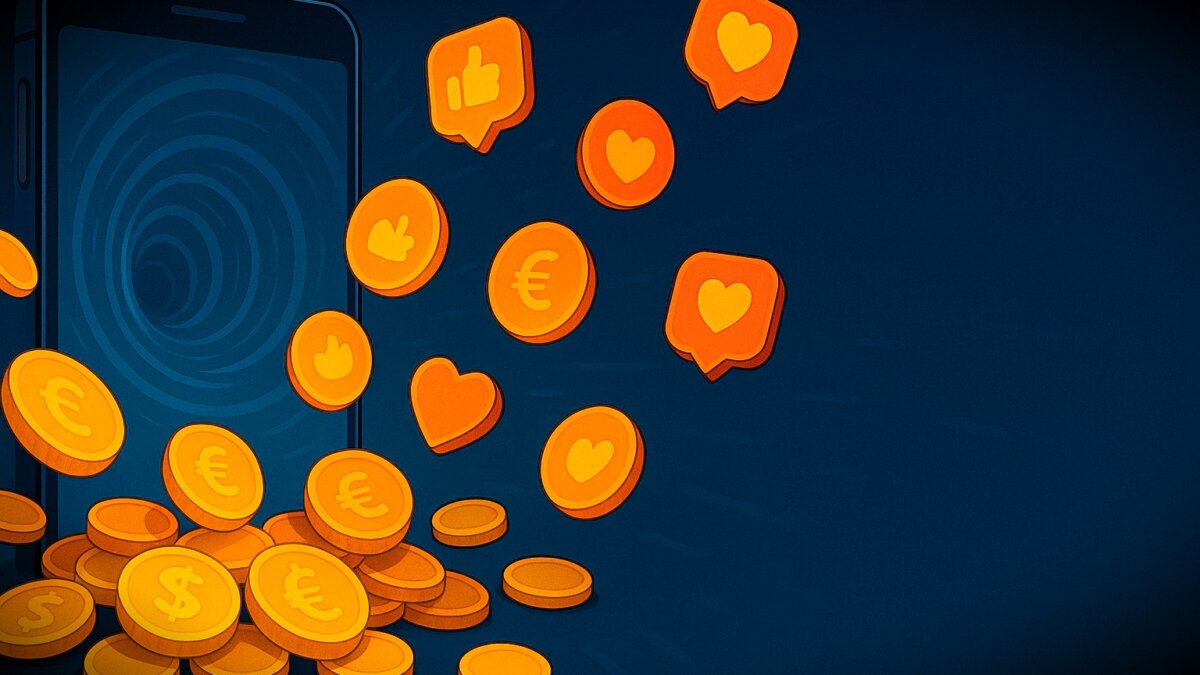
This episode of the monologue podcast is about a topic that affects us all – often without us noticing: the Attention economy. Our attention is the scarcest resource in the digital age – and that is precisely why it is hotly contested. Platforms such as TikTok, YouTube or Instagram work with mechanisms such as Infinity Scroll, Watchtime optimization and dopamine loops to keep us hooked for as long as possible.
I explain how likes, follower numbers and constant notifications affect our reward system, why FOMO (‘Fear of Missing Out“) fascinates us and how social media subtly controls our behaviour. At the same time, I show the social consequences of this development: Polarization, intensification of content and an ever-increasing fragmentation of our attention.
But there are also ways out. From small tricks such as turning off notifications to deliberately set offline times or curated sources, there are ways to turn your attention back to self-determination.
In the end, the question remains: Where do you consciously focus your attention – and who benefits from it?

Topics Outline
1. introduction
- What Does Attention Economy Mean?
- Why our attention is the scarcest resource.
2. The Spotlight of Perception
- Attention as light cone: Only a small section is illuminated.
- Abundance of information = lack of attention.
3. Mechanisms of platforms
- TikTok: Infinity Scroll & endless clips.
- YouTube: Watchtime, Thumbnails & Clickbait.
- Gaming & Streaming: Reward systems, skins, cliffhangers.
- The business model: ‘If something is free, you are the product.’
4. Psychological effects
- Dopamine loops: Likes and comments as a reward.
- FOMO (Fear of Missing Out).
- Social confirmation: Follower numbers as a measure of self-worth.
- Reflective handle to the mobile phone – even without notification.
5. Consequences for individuals
- Concentration problems & fragmented attention.
- Thought chains are dismembered.
- Permanent distraction instead of focused work.
6. Consequences for society
- Polarisation: Extreme positions reward interaction.
- Superficial discussions instead of depth.
- Virality replaces content.
7. Counter-strategies
- Digital Detox & conscious offline times.
- Turn off notifications, put mobile phone out of reach.
- Define time slots for online phases.
- Curated sources instead of continuous feed.
- Actively draw attention to projects & real encounters.
8. conclusion
- Attention is the currency of the present.
- Everyone decides for themselves where to direct them.
- Conscious handling = the largest capital in the digital world.
📖 German Books on Amazon
| titles | Author | Link |
|---|---|---|
| Economics of Attention: A draft | Georg Franck | amazon.de |
| Social media profiles in psychotherapy, counselling and coaching | Julia Neumann, Tina Steckling, Jana Heimes, Hannah Elsche | amazon.de |
📌 clue:
The links marked with * are Affiliate links. If you purchase from Amazon through these links, we will receive a small commission. For you, of course, the price remains the same. With this you support our work on the podcast and blog – thank you very much! 🙏
Links to the issue:
-
Economics of Attention: A draft
-
* Social media profiles in psychotherapy, counseling and coaching: Use social media professionally and ethically. With e-book inside: Neumann, Julia, Steckling, Tina, Heimes, Jana, Elsche, Hannah: Amazon.com: books
-
 Economics of Attention - Wikipedia
Support our podcast


Follow us on


Advertising:
Contributors to this episode


Playing time: 0:18:37
Date of admission: 22.09.25
This episode is from Season 2, there are a total of 2 seasons.
One According to Funk Publication Cartel Production - Where stories are transmitted unmistakably.
Podcast license:

This work is licensed under a Creative Commons Attribution-NonCommercial-ShareAlike 4.0 International License

Note: This post contains affiliate links. If you shop through these links, I'll get a small commission at no extra cost to you.
Related posts

Author: Sascha Markmann
Sascha Markmann ist ein kreativer Kopf mit einer bewegten Biografie – und ein Mensch, der das Leben nach einem Schlaganfall noch einmal ganz neu für sich entdeckt hat. Nach Stationen als Rettungssanitäter und Altenpfleger fand Sascha seinen Weg in den kreativen Ausdruck. Als Blogger, Podcaster, Musiker und visueller Geschichtenerzähler bringt er heute Dinge zusammen, die nur auf den ersten Blick nicht passen: Er kombiniert seine handfeste Begeisterung für Technik – von selbst gehosteten Servern bis hin zur elektronischen Musikproduktion – mit emotionaler Tiefe und einem schrägen Sinn für Humor. Seine Beiträge entstehen irgendwo zwischen Borderline, Acid Basslines und Beistand – ehrlich, direkt und gerne auch mal mit einem Augenzwinkern. Leitmotiv: „Audiovisueller Stumpfsinn mit keinem Nutzwert – aber vielleicht genau deshalb so wertvoll.“ View all posts by Sascha Markmann
 English