
| transcript | |
|---|---|
|
00:00 - 0:00:02
*Music*
|
|
|
0:00:02 – 0:00:31
[Music]
|
|
|
0:00:31 – 0:00:39
Hello and welcome to a new release. I'm Sascha Markmann and I say
|
|
|
0:00:39 – 0:00:47
Hello there. First of all, please excuse my somewhat convoluted voice, but I have the
|
|
|
0:00:47 – 0:00:56
I've had a little bit to do with cold symptoms in the last few days or something like that. You know it
|
|
|
0:00:56 – 0:01:09
It's not. Yes, today's theme, yes, this is initialized by graphics cards. I have
|
|
|
0:01:09 – 0:01:17
in November the last time for me personally got a graphics card for my computer and
|
|
|
0:01:17 – 0:01:25
I paid, let's say, $440. And if I were to buy the same card now,
|
|
|
0:01:25 – 0:01:36
I would pay well over 600 or almost 700 euros for it. This is the current storage crisis.
|
|
|
0:01:36 – 0:01:41
thanks. It is just as good with memory, which has become up to 800 percent more expensive,
|
|
|
0:01:41 – 0:01:49
Especially if you want faster memory. Or SSDs, i.e. these electronic
|
|
|
0:01:49 – 0:01:56
Hard drives. They have all become more expensive. Even rotating hard drives have become more expensive.
|
|
|
0:01:56 – 0:02:08
And all because almost a million of the good euros worldwide are invested in AI data centers.
|
|
|
0:02:08 – 0:02:15
The market is almost empty. I had now read that Samsung, I think, for the year
|
|
|
0:02:15 – 0:02:24
26 the total annual production is sold. That's what they reported, and some have even
|
|
|
0:02:24 – 0:02:31
He had already sold the entire year's production for 27. You can imagine,
|
|
|
0:02:31 – 0:02:37
what this looks like for the poor little end consumers and not for you any AI
|
|
|
0:02:37 – 0:02:44
Hardware for where a graphics card costs beyond 10,000 euros. I would like an Nvidia.
|
|
|
0:02:44 – 0:02:53
H100. I'd really like to. This will give my projects a huge boost.
|
|
|
0:02:53 – 0:03:04
Not the electricity costs. Oh, my God. A little discussion about the current situation. This
|
|
|
0:03:04 – 0:03:09
Whole thing got me thinking about it. I went to my first computer.
|
|
|
0:03:09 – 0:03:25
So I had some before, so Schneider PCP or CPC, CPC 464, so it was called. A fantastic
|
|
|
0:03:25 – 0:03:30
Machine with a great processor Z80, you could really do much more than just
|
|
|
0:03:30 – 0:03:39
Playing the games. No one has. Then I also had a C64 from Commodore, which was then
|
|
|
0:03:39 – 0:03:43
Mainly to play. On the other I actually programmed and there I damned
|
|
|
0:03:43 – 0:03:52
Learned a lot. And that was so with, yes I started with ten and that was 87. I am a vintage
|
|
|
0:03:52 – 0:04:00
77 and thus the bow is struck. The 77 episode, the digression, year of birth 77. Hey,
|
|
|
0:04:00 – 0:04:08
great. Small side-fact for the data collectors among us all. In any case, I have,
|
|
|
0:04:08 – 0:04:20
That was Christmas 92, so just before I turned 15, I got from my parents,
|
|
|
0:04:20 – 0:04:26
by my aunts and all other relatives for Christmas and the birthday I later
|
|
|
0:04:26 – 0:04:36
I got a PC. A 386 SX25 megahertz with two megabytes of memory,
|
|
|
0:04:36 – 0:04:45
a 100 megabyte hard drive and now there is a 512 kilobyte graphics card. So one
|
|
|
0:04:45 – 0:05:00
Half a megabyte. Not gigabytes, megabytes. 1024 megabytes is a gigabyte. That's so tiny
|
|
|
0:05:00 – 0:05:09
Tiny small compared to the 8 gigabytes and 16 gigabytes monsters of today. Or stop when it
|
|
|
0:05:09 – 0:05:20
Hold an 80s or 90s is with 24 and even more gigabytes of memory. Yeah, and that thing was great.
|
|
|
0:05:20 – 0:05:33
You have to say that there were SX and DX back then. DX was a 32-bit processor with a 32-bit bus. The SX
|
|
|
0:05:33 – 0:05:40
had stop internally 32 bit but stop externally a 16 bit bus that has made a bit slower
|
|
|
0:05:40 – 0:05:50
The hardware is cheaper. Nevertheless, the whole thing at that time cost 1300 DM and was of course a
|
|
|
0:05:50 – 0:06:00
Damn great gift. That's why Christmas and birthday and I was so happy so happy
|
|
|
0:06:00 – 0:06:09
Of course, the set consisted of a keyboard, a mouse and a monitor with this beautiful
|
|
|
0:06:09 – 0:06:20
Midi tower case in grey, as usual at the time. And then I continued with that. These
|
|
|
0:06:20 – 0:06:27
100 megabytes of hard drive that was in there, that was incredibly huge. Even my aunt and
|
|
|
0:06:27 – 0:06:34
My uncle, who was at university and was writing her doctoral theses at the time
|
|
|
0:06:34 – 0:06:39
They had 40 or 80 megabytes and they were all jealous.
|
|
|
0:06:39 – 0:06:45
And then they heard sayings like, "This will never be full, you will live forever."
|
|
|
0:06:45 – 0:06:46
I'll deal with it.
|
|
|
0:06:46 – 0:06:57
Have you ever seen a young teenager who has a computer, access to all
|
|
|
0:06:57 – 0:07:04
possible programs, apart from now Works and then Harvard Graphics or something,
|
|
|
0:07:04 – 0:07:12
which he has installed, side games, also programming environments, so C++ and so on.
|
|
|
0:07:12 – 0:07:19
Have you ever seen this before? This thing was always full and I just went with it.
|
|
|
0:07:19 – 0:07:24
Had fun. And if I put this in relation to what I have today,
|
|
|
0:07:24 – 0:07:39
an Intel i9 13900K, 64 gigabytes of RAM, 8 terabytes of SSD, where three pieces are MVMEs
|
|
|
0:07:39 – 0:07:49
and a SATA, as a data tomb. You have to think about the fact that the processor is between 10,000 and 10,000.
|
|
|
0:07:49 – 0:08:00
and is 40,000 times faster and 32,000 times more memory or that's so incredible
|
|
|
0:08:00 – 0:08:09
84,000 times more disk capacity. You have to think about it and when you think about it,
|
|
|
0:08:09 – 0:08:15
that lasts from one hard drive to another hard drive in this 386 it up to 14 minutes
|
|
|
0:08:15 – 0:08:26
took a gigabyte to copy and two seconds at the sata ssd or 0.15
|
|
|
0:08:26 – 0:08:37
seconds at my samsung mvm ssd this is mindblowing this is 5800 times
|
|
|
0:08:37 – 0:08:44
Faster shit and all that in these few years
|
|
|
0:08:44 – 0:08:48
Let's see what 30 years have been like in this kind of technological development.
|
|
|
0:08:48 – 0:08:52
And that's the processor I have now, which is already a bit older.
|
|
|
0:08:52 – 0:08:54
There are newer generations.
|
|
|
0:08:54 – 0:08:56
I believe two.
|
|
|
0:08:56 – 0:09:02
I mean, I only deal with processors and motherboards when I need them new.
|
|
|
0:09:02 – 0:09:08
I mean, I often buy new graphics cards because I need the performance there, but not so with the processors.
|
|
|
0:09:08 – 0:09:14
Of course, I also started programming with GW Basic. It doesn't matter now,
|
|
|
0:09:14 – 0:09:20
This is a very simple programming language. Basic already existed on the C64 and on the tailor,
|
|
|
0:09:20 – 0:09:26
That's why I knew that. And there I have an almond bread, which is so the best known
|
|
|
0:09:26 – 0:09:34
Fractal at all, made then. And I had the SX back then and that's up to
|
|
|
0:09:34 – 0:09:39
90 minutes, full screen. Because it's always too long for me
|
|
|
0:09:39 – 0:09:44
It took me a long time to get a mathematical co-processor, because
|
|
|
0:09:44 – 0:09:51
the processor had at that time, that had all up to the 486,
|
|
|
0:09:51 – 0:09:57
All of them did not have higher mathematical functions installed in the
|
|
|
0:09:57 – 0:10:03
Processor. So a processor can usually only be a plus computer, so
|
|
|
0:10:03 – 0:10:09
Addition. And then there are so many different tricks and intermediate steps, with which you can stop by the
|
|
|
0:10:09 – 0:10:19
Addition of a complement, hahaha, nerd knowledge, a subtration, a division can make. Because
|
|
|
0:10:19 – 0:10:25
Multiplication is just addition and then just so many steps.
|
|
|
0:10:25 – 0:10:31
But it's just about this one complement, so that's by keeping the smallest possible
|
|
|
0:10:31 – 0:10:36
unit, which you put on the right hand and then you make such an intermediate step and
|
|
|
0:10:36 – 0:10:44
Then you can make a subtration out of it. This is only possible with binary numbers. Mind you,
|
|
|
0:10:44 – 0:10:53
Only with binary numbers, not with our numbers, i.e. with a decimal system. A long speech,
|
|
|
0:10:53 – 0:11:03
short sense. After the installation of this mathematical co-processor, the whole thing did not take 90 minutes
|
|
|
0:11:03 – 0:11:11
more, but a maximum of twelve. It was mind-blowing. Oh my God, it was so fast.
|
|
|
0:11:11 – 0:11:18
You could almost watch how line by line was painted and not so pixel by pixel.
|
|
|
0:11:18 – 0:11:29
Boah crass! Yeah, that's how it was back then. And if you think about it now, today, the hardware is in the
|
|
|
0:11:29 – 0:11:40
Compared to then but become cheaper and much more efficient with lower
|
|
|
0:11:40 – 0:11:45
Electricity consumption. And even if I think of such single-board computers as a Raspberry Pi or
|
|
|
0:11:45 – 0:11:55
So go get it. They're as powerful as my first computer. me
|
|
|
0:11:55 – 0:12:03
But I also have to say that at that time I always, even if I bought the co-processor
|
|
|
0:12:03 – 0:12:07
I don't have it right now, but once I've gone and I've got an update.
|
|
|
0:12:07 – 0:12:16
From a 386 SX to a 386 40 DX. Then I have the same for it.
|
|
|
0:12:16 – 0:12:21
mathematical co-processor in order to be able to make these calculations faster.
|
|
|
0:12:21 – 0:12:29
Because I was already a very strange young man at that time, who was next to the whole
|
|
|
0:12:29 – 0:12:37
Read and besides all the programming and next to the music and meet up with friends.
|
|
|
0:12:37 – 0:12:46
Yes, even outside I programmed hardcore. And even with one
|
|
|
0:12:46 – 0:12:54
Buddy together. We used to sit, sit, sometimes sit on the floor.
|
|
|
0:12:54 – 0:13:04
one has read the listings aloud, so 10, go to, here and there, address anyway 20,
|
|
|
0:13:04 – 0:13:09
go sub 10, if and so on. So totally the blatant instructions. I remember that,
|
|
|
0:13:09 – 0:13:14
we sat there again and then hacked the thing in, the program didn't work and
|
|
|
0:13:14 – 0:13:19
you had to go through line by line again, look where the code is, because at that time it was still
|
|
|
0:13:19 – 0:13:27
There was no debugging routine, but only in the higher languages for programming. And
|
|
|
0:13:27 – 0:13:34
It was such a beautiful world then. And you just have to say, there are these
|
|
|
0:13:34 – 0:13:38
the intermediate generation. So there's not only the baby boomers and then comes Generation X,
|
|
|
0:13:38 – 0:13:46
but it is said that at the end of the baby boomer and at the beginning of Generation X, there is an intermediate generation
|
|
|
0:13:46 – 0:13:59
There are between 76 and 83 and that would be the Sennials. And that's exactly where I'm in it, because I actually had
|
|
|
0:13:59 – 0:14:05
This analog childhood and digital adolescence, and I've seen it all. I remember,
|
|
|
0:14:05 – 0:14:13
How cool that was when I bought my first modem on such a computer exchange. Da
|
|
|
0:14:13 – 0:14:19
Since you could not always buy the latest hardware, but they are extremely cheap.
|
|
|
0:14:19 – 0:14:23
And that was a modem, you can't even think about it these days.
|
|
|
0:14:23 – 0:14:28
I get a higher data rate through my amateur radio with a modem
|
|
|
0:14:28 – 0:14:29
than then.
|
|
|
0:14:29 – 0:14:33
2,400 bits per second.
|
|
|
0:14:33 – 0:14:39
When you entered a mailbox, you could watch how
|
|
|
0:14:39 – 0:14:45
All these movies from the 80s, when there are characters for characters on the monitor.
|
|
|
0:14:45 – 0:14:49
It had been the same.
|
|
|
0:14:49 – 0:14:55
And how I dialed into a mailbox for the first time, which was just one place away,
|
|
|
0:14:55 – 0:15:01
because back then there was City Call and Region Call and you really had to be careful,
|
|
|
0:15:01 – 0:15:07
That you are not pushing the phone bill in an explosively high direction.
|
|
|
0:15:07 – 0:15:13
Would that have been cool, as people told me back then, that you had to go for a local call.
|
|
|
0:15:13 – 0:15:15
Only one unit was consumed.
|
|
|
0:15:15 – 0:15:18
I didn't get that pleasure.
|
|
|
0:15:18 – 0:15:20
No, no, I had to pay right.
|
|
|
0:15:20 – 0:15:25
And when I finally got my parents to turn on a second phone line
|
|
|
0:15:25 – 0:15:32
To leave with my own number, just for my computer, boah, I was so proud.
|
|
|
0:15:32 – 0:15:36
Yeah, yeah, you can't even imagine that these days.
|
|
|
0:15:36 – 0:15:43
I mean, with an internet connection these days, you have at least three lines.
|
|
|
0:15:43 – 0:15:46
So you can have two conversations out and one in.
|
|
|
0:15:46 – 0:15:48
This is the case with most providers.
|
|
|
0:15:48 – 0:15:51
But you can have up to ten phone numbers.
|
|
|
0:15:51 – 0:15:56
This is no longer a comparison to then.
|
|
|
0:15:56 – 0:16:01
In any case, I was allowed a telephone bill plus the connection fees of two D-Mark
|
|
|
0:16:01 – 0:16:02
Produced in the month.
|
|
|
0:16:02 – 0:16:06
And they took all that out of my pocket money.
|
|
|
0:16:06 – 0:16:10
Yeah, yeah. It's a tough time.
|
|
|
0:16:10 – 0:16:13
But still, if you did it in the evening,
|
|
|
0:16:13 – 0:16:16
You have already been able to achieve a lot.
|
|
|
0:16:16 – 0:16:19
And dial into a mailbox for the first time.
|
|
|
0:16:19 – 0:16:22
My God, what was that great.
|
|
|
0:16:22 – 0:16:27
These expanses. And then you could even do that in BBS,
|
|
|
0:16:27 – 0:16:35
BDS, i.e. Battling Board Services, you could go there and discuss with others and
|
|
|
0:16:35 – 0:16:38
Write and even get private messages.
|
|
|
0:16:38 – 0:16:43
And that was all so people on your level, your level, with your interests.
|
|
|
0:16:43 – 0:16:54
And I found myself in there, which also led me to stop
|
|
|
0:16:54 – 0:16:59
I was very interested in computer science and so on, because there is still
|
|
|
0:16:59 – 0:17:05
so many other things to discover and nowadays you really have problems,
|
|
|
0:17:05 – 0:17:10
to follow through on all the developments. Yes, that's how it was then,
|
|
|
0:17:10 – 0:17:15
but again to hit the arc now back to the graphics card.
|
|
|
0:17:15 – 0:17:26
AI applications run on graphics cards, i.e. on these chips. Why? Because it's not so complex
|
|
|
0:17:26 – 0:17:34
Processors are like the processor that drives the computer, no matter if it's an Intel processor.
|
|
|
0:17:34 – 0:17:40
or an AMD processor, but there are a lot of very simple computing units in it,
|
|
|
0:17:40 – 0:17:48
understand the few instructions, i.e. instructions, but these extremely quickly
|
|
|
0:17:48 – 0:17:55
It can be processed because it is all so reduced. And they're just good in numbers
|
|
|
0:17:55 – 0:18:02
push back and forth, because in the end, in the calculations for the graphics, no matter for a game
|
|
|
0:18:02 – 0:18:12
or for a 3D application, number groups with x digits behind the comma must stop and
|
|
|
0:18:12 – 0:18:18
pushed back, back and calculated, can be changed and that's what they can do, with Nvidia these are
|
|
|
0:18:18 – 0:18:28
CUDA cores, extremely good, very fast. There comes a processor here, like my Intel, at all
|
|
|
0:18:28 – 0:18:35
Then after. That's how fast it is. And that's what makes it so interesting that you
|
|
|
0:18:35 – 0:18:42
instead of just gaming with it, also renders his videos on it, because that then damn fast
|
|
|
0:18:42 – 0:18:48
and goes efficiently. So when I think about it, on my processor takes such an hour video,
|
|
|
0:18:48 – 0:18:57
Let's say 30 minutes, that's on the processor. On my graphics card
|
|
|
0:18:57 – 0:19:04
That's eight minutes and that's a huge difference or when I do the transcript,
|
|
|
0:19:04 – 0:19:11
which is by far better than that of YouTube, for example, then I have about ten times
|
|
|
0:19:11 – 0:19:16
speed. That is, if I put a minute in there, let's say ten minutes,
|
|
|
0:19:16 – 0:19:22
is easier to calculate, ten minutes, then it's done in a minute and smiles
|
|
|
0:19:22 – 0:19:27
then also the graphics card, because then not the calculation the
|
|
|
0:19:27 – 0:19:31
The real problem is, but the data bus, which is the problem, because my
|
|
|
0:19:31 – 0:19:36
Graphics card is connected with eight lanes, i.e. with eight lanes
|
|
|
0:19:36 – 0:19:41
data traces, where 16 traces would theoretically be possible, but the connection of the
|
|
|
0:19:41 – 0:19:45
Graphics card does not allow this, because I don't have a premium model, because I
|
|
|
0:19:45 – 0:19:50
I don't want to buy a graphics card for $2,000.
|
|
|
0:19:50 – 0:19:54
Because for this I can buy three pieces or almost four pieces
|
|
|
0:19:54 – 0:19:57
and can build me an AI rack,
|
|
|
0:19:57 – 0:20:01
where I can run different processes at the same time.
|
|
|
0:20:01 – 0:20:05
Of course, the expensive more graphics memory would have
|
|
|
0:20:05 – 0:20:08
And then I could run bigger models.
|
|
|
0:20:08 – 0:20:13
But since Nvidia abolished this MV link,
|
|
|
0:20:13 – 0:20:17
You can't connect graphics cards properly.
|
|
|
0:20:17 – 0:20:22
And so load even larger models.
|
|
|
0:20:22 – 0:20:28
In addition, electricity consumption will eventually become an astronomical unit,
|
|
|
0:20:28 – 0:20:34
if you let this run all the time and then just let the graphics card run at the limit,
|
|
|
0:20:34 – 0:20:38
This is the case with some applications.
|
|
|
0:20:38 – 0:20:52
That's why I don't necessarily have such a fat graphics monster at home, but just several small graphics cards that are cheaper.
|
|
|
0:20:52 – 0:20:57
Especially when they've been doing this for two years, they're done.
|
|
|
0:20:57 – 0:21:04
That's why you get so cheap graphics cards on ebay from the Asian region, because the
|
|
|
0:21:04 – 0:21:06
Graphics cards are ready.
|
|
|
0:21:06 – 0:21:14
They're so swamped, not the processor, but the electronic components around them.
|
|
|
0:21:14 – 0:21:19
I mean, the processor and memory don't matter, but the capacitors and
|
|
|
0:21:19 – 0:21:24
manufacture the resistors and some switching regulators for certain voltages which:
|
|
|
0:21:24 – 0:21:33
under this extreme load. First of all, because there are trade restrictions with China,
|
|
|
0:21:33 – 0:21:41
the graphics cards are then also overclocked and thus driven to the absolute limit for
|
|
|
0:21:41 – 0:21:46
the data centers and then the hardware suffers even if it is not perfectly cooled. This
|
|
|
0:21:46 – 0:21:51
You have to imagine if there are ten graphics cards in such a rack,
|
|
|
0:21:51 – 0:21:54
Ventilation is not necessarily the best.
|
|
|
0:21:54 – 0:22:02
And so you buy almost in time-lapse aged hardware
|
|
|
0:22:02 – 0:22:04
for still expensive money
|
|
|
0:22:04 – 0:22:08
I wonder why the graphics card
|
|
|
0:22:08 – 0:22:12
for demanding applications, especially gaming,
|
|
|
0:22:12 – 0:22:14
Someday it will go bad
|
|
|
0:22:14 – 0:22:20
and then simply dot the refresh rate, the FPS.
|
|
|
0:22:20 – 0:22:40
Well, you have to think about that, too. The next consideration I had was, you get a Raspberry Pi, 16 GB of RAM, there's an SSD on it, but now not via interface, but via USB, that's still fast enough,
|
|
|
0:22:40 – 0:22:49
and put on top of it on the pins for the GPIO, this is such a special data bus,
|
|
|
0:22:49 – 0:22:56
Technic nerd, technic stuff, just technic stuff. Then you put it on top of it, then stop like that
|
|
|
0:22:56 – 0:23:03
AI-Head, that's just an additional card that you put on top of it and there's just a new one,
|
|
|
0:23:03 – 0:23:12
Now I think it's coming out in April, it's got 40 terra operations. So Terra, you can
|
|
|
0:23:12 – 0:23:21
Open it up, it's a million. Mega is a billion, sorry, a billion operations.
|
|
|
0:23:21 – 0:23:26
That's 40 billion operations. There you can already simple small language models
|
|
|
0:23:26 – 0:23:33
Let it run. And for such specific tasks, since sometimes summarizing texts,
|
|
|
0:23:33 – 0:23:45
small search analyses, to look for abnormalities in data sets, such a small model would be good
|
|
|
0:23:45 – 0:23:53
If you look at the 8 gigabytes, which are now this add-on module, this
|
|
|
0:23:53 – 0:24:03
AI-Head plus 2, that's the name of the thing. If you buy it, it will cost about
|
|
|
0:24:03 – 0:24:08
so 180 euros, even has a heat sink with it, because the thing will then of course accordingly
|
|
|
0:24:08 – 0:24:15
Pigs are called and have a power consumption, which is special, so from two to three watts below
|
|
|
0:24:15 – 0:24:23
Full load. Of course, this is extremely little compared to a fat graphics card. And if
|
|
|
0:24:23 – 0:24:29
I'm still thinking about the 300 watts at least, if not rather 400 watts with a medium
|
|
|
0:24:29 – 0:24:38
graphics card and an entire PC and this is then still energy-optimized and the at least
|
|
|
0:24:38 – 0:24:47
800 to 900 watts, if I take a server hardware, then this is a huge difference to the
|
|
|
0:24:47 – 0:24:56
Let's say 45 watts maximum use the stop of the Raspberry Pi and this additional board. But there can
|
|
|
0:24:56 – 0:25:02
You're going to stop. So everything that fits in these 8 gigabytes, you can run on it.
|
|
|
0:25:02 – 0:25:15
Of course, now compared to a modern one, which you can get very cheaply, is 30, 60, which would create about 20 tokens.
|
|
|
0:25:15 – 0:25:17
What is a torch now?
|
|
|
0:25:17 – 0:25:25
A torch is about a syllable of a word to illustrate this again.
|
|
|
0:25:25 – 0:25:34
So that's about 20 torches, 15 to 20. The other thing would be so maximum
|
|
|
0:25:34 – 0:25:40
Bring 8 torches, more like 6. Now you can say, okay, but these may be
|
|
|
0:25:40 – 0:25:49
Just one word per minute. Yes, but if I have time and that's because now
|
|
|
0:25:49 – 0:25:55
The crucial point. The processor would grab the text to the thing,
|
|
|
0:25:55 – 0:26:02
would then pack the model and the text into the memory of these additional things. Then
|
|
|
0:26:02 – 0:26:06
If the processor had nothing to do again, it would only take over a few control tasks
|
|
|
0:26:06 – 0:26:13
and because there is no desktop running on it, so no graphical user interface or something,
|
|
|
0:26:13 – 0:26:20
can completely lie down and slumber so nicely a bit and then would stop
|
|
|
0:26:20 – 0:26:25
This add-on module would do that and then it would rapidly consume little power compared to the
|
|
|
0:26:25 – 0:26:31
graphic has but of course I would then say such an evaluation or the summary
|
|
|
0:26:31 – 0:26:37
It takes several hours, if not all day, but it doesn't matter.
|
|
|
0:26:37 – 0:26:42
The task would be stopped. And the other advantage is that there's no shit coming
|
|
|
0:26:42 – 0:26:47
Hot air out. When I look at my computer under full load, graphics card
|
|
|
0:26:47 – 0:26:52
full power, then the processor full power at work is what's back there for a warm
|
|
|
0:26:52 – 0:27:01
Air comes out of the power supply, out of the case fans, then I already know where my, well well 800
|
|
|
0:27:01 – 0:27:06
Up to 1000 watts, which the computer needs per hour. And with the current
|
|
|
0:27:06 – 0:27:11
Electricity prices. You have to think about it, and let's talk about it like this.
|
|
|
0:27:11 – 0:27:19
An average of 35 cents. Then the thing runs for an hour and then 35 cents is gone. This is why
|
|
|
0:27:19 – 0:27:23
I also have my PC, if I'm not rendering videos or podcasts now
|
|
|
0:27:23 – 0:27:29
render or make the transcripts, always keep a power saving mode, because the thing
|
|
|
0:27:29 – 0:27:35
firstly then is quieter and secondly consumes much less power and the power on my
|
|
|
0:27:35 – 0:27:44
What does this thing actually have? 32 core. It's enough and I need it.
|
|
|
0:27:44 – 0:27:50
Much less power, because the clock is almost only half as high. And that's still fast
|
|
|
0:27:50 – 0:27:55
Enough to work smoothly. There are no hangers, no jerks, nothing. Even so I can
|
|
|
0:27:55 – 0:28:02
stream because I have enough cores on which the processes can be distributed. And if
|
|
|
0:28:02 – 0:28:07
I would then take a more efficient operating system, such as Linux, where the tasks
|
|
|
0:28:07 – 0:28:14
Even better distributed as in Windows, then there are even fewer problems. But this
|
|
|
0:28:14 – 0:28:23
These are completely different topics and completely different areas. Yes, that was my thoughts and my experience
|
|
|
0:28:23 – 0:28:30
and also some stories from the past of a much, much younger Sascha, who
|
|
|
0:28:30 – 0:28:39
At 14, 15, he was so happy that he had an IBM-compatible
|
|
|
0:28:39 – 0:28:48
I got a computer. And my God, what has changed my life? Unbelievable,
|
|
|
0:28:48 – 0:28:56
unbelievable. I never thought I'd have my own AI agents like I do today.
|
|
|
0:28:56 – 0:29:00
They live on different devices.
|
|
|
0:29:00 – 0:29:05
There are communication channels where information goes back and forth
|
|
|
0:29:05 – 0:29:08
stung, pushed,
|
|
|
0:29:08 – 0:29:13
who observe current articles and hashtags,
|
|
|
0:29:13 – 0:29:17
Watch the comments on videos
|
|
|
0:29:17 – 0:29:20
And then make an assessment.
|
|
|
0:29:20 – 0:29:23
Pre-sort my emails.
|
|
|
0:29:25 – 0:29:29
Of course not from my main account, but for an extra account.
|
|
|
0:29:29 – 0:29:33
And so many other things. I never would have thought that possible.
|
|
|
0:29:33 – 0:29:37
That I can go there myself and with my phone and then say
|
|
|
0:29:37 – 0:29:43
"Hey, do this and that and then send me the result as an e-mail."
|
|
|
0:29:43 – 0:29:51
And that this is understood because a Whisper model is running
|
|
|
0:29:51 – 0:29:55
and then stop translating the voice message into text.
|
|
|
0:29:55 – 0:29:58
And then there is the processing.
|
|
|
0:29:58 – 0:30:00
And then there's another answer.
|
|
|
0:30:00 – 0:30:05
And I can even use text-to-speech as a language again.
|
|
|
0:30:05 – 0:30:11
I can set it up so I can just have someone call me
|
|
|
0:30:11 – 0:30:13
And then give a message.
|
|
|
0:30:13 – 0:30:15
Then he can answer.
|
|
|
0:30:15 – 0:30:17
And I'll get it as an email
|
|
|
0:30:17 – 0:30:24
or stop as a direct message in the communication channels I have set up as a message.
|
|
|
0:30:24 – 0:30:28
So, here, Peter said the appointment is okay.
|
|
|
0:30:28 – 0:30:39
And I could never have imagined that a person who is interested in
|
|
|
0:30:39 – 0:30:43
that everything at home can build and set up itself
|
|
|
0:30:43 – 0:30:48
You only need to invest a few dollars in electricity.
|
|
|
0:30:48 – 0:30:54
and a little time and then have such automations.
|
|
|
0:30:54 – 0:30:57
That's unbelievable, unbelievable.
|
|
|
0:30:57 – 0:31:02
And considering how full YouTube and other channels are at the moment
|
|
|
0:31:02 – 0:31:15
Even in the podcast world. The topic Open Cloud before Moldbot and Cloudbot is the topic,
|
|
|
0:31:15 – 0:31:27
Of course, it's huge to put together some AI agents. Yes, let's
|
|
|
0:31:27 – 0:31:35
see what the future brings and whether I will heat my apartment with gas or electricity in the future,
|
|
|
0:31:35 – 0:31:40
Because there is so much hardware around and you are counting on it. Yes then I thank you for it
|
|
|
0:31:40 – 0:31:47
Listen and if you liked it, I'd love to hear a comment and that was
|
|
|
0:31:47 – 0:31:54
Today again a quieter edition without any beef behavior. I hope it has you
|
|
|
0:31:54 – 0:32:01
still please and I say goodbye to next time your sasha
|
|
|
0:32:01 – 0:32:04
[Music]
|
|
|
0:32:04 – 0:32:10
[Music]
|
|
|
0:32:10 – 0:32:16
[Music]
|
|
|
0:32:16 – 0:32:22
[Music]
|
|
|
0:32:22 – 0:32:28
[Music]
|
|
|
0:32:28 – 0:32:31
[Music]
|
|
|
0:32:31 – 0:32:37
[Music]
|
|
|
0:32:37 – 0:32:43
[Music]
|
|
|
0:32:43 – 0:32:49
[Music]
|
|
|
0:32:49 – 0:32:56
[Music]
|
|
|
0:32:56 – 0:32:59
[Music]
|
|
|
0:32:59 – 0:33:05
[Music]
|
|
|
0:33:05 – 0:33:11
[Music]
|
|
|
0:33:11 – 0:33:17
[Music]
|
|
|
0:33:17 – 0:33:23
[Music]
|
|
|
0:33:23 – 0:33:26
[Music]
|
|
|
0:33:26 – 0:33:32
[Music]
|
|
|
0:33:32 – 0:33:38
[Music]
|
|
|
0:33:38 – 0:33:44
[Music]
|
|
|
0:33:44 – 0:33:50
[Music]
|
|
|
0:33:50 – 0:33:53
[Music]
|
|
|
0:33:53 – 0:33:59
[Music]
|
|
|
0:33:59 – 0:34:05
[Music]
|
|
|
0:34:05 – 0:34:11
[Music]
|
|
|
0:34:11 – 0:34:17
[Music]
|
|
|
0:34:17 – 0:34:20
[Music]
|
|
|
0:34:20 – 0:34:26
[Music]
|
|
|
0:34:26 – 0:34:32
[Music]
|
|
|
0:34:32 – 0:34:38
[Music]
|
|
|
0:34:38 – 0:34:44
[Music]
|
|
|
0:34:44 – 0:34:47
[Music]
|
|
|
0:34:47 – 0:34:54
[Music]
|
|
|
0:34:54 – 0:35:00
[Music]
|
|
|
0:35:00 – 0:35:07
[Music]
|
|
|
0:35:12 – 0:35:15
[Music]
|
|
|
0:35:15 – 0:35:21
[Music]
|
|
|
0:35:21 – 0:35:27
[Music]
|
|
|
0:35:27 – 0:35:33
[Music]
|
|
|
0:35:33 – 0:35:40
[Music]
|
|
|
0:35:40 – 0:35:43
[Music]
|
|
|
0:35:43 – 0:35:49
[Music]
|
|
|
0:35:49 – 0:35:55
[Music]
|
|
|
0:35:55 – 0:36:01
[Music]
|
|
|
0:36:01 – 0:36:07
[Music]
|
|
|
0:36:07 – 0:36:19
[Music]
|
|
|
0:36:19 – 0:36:22
[Music]
|
Christmas of 1992.
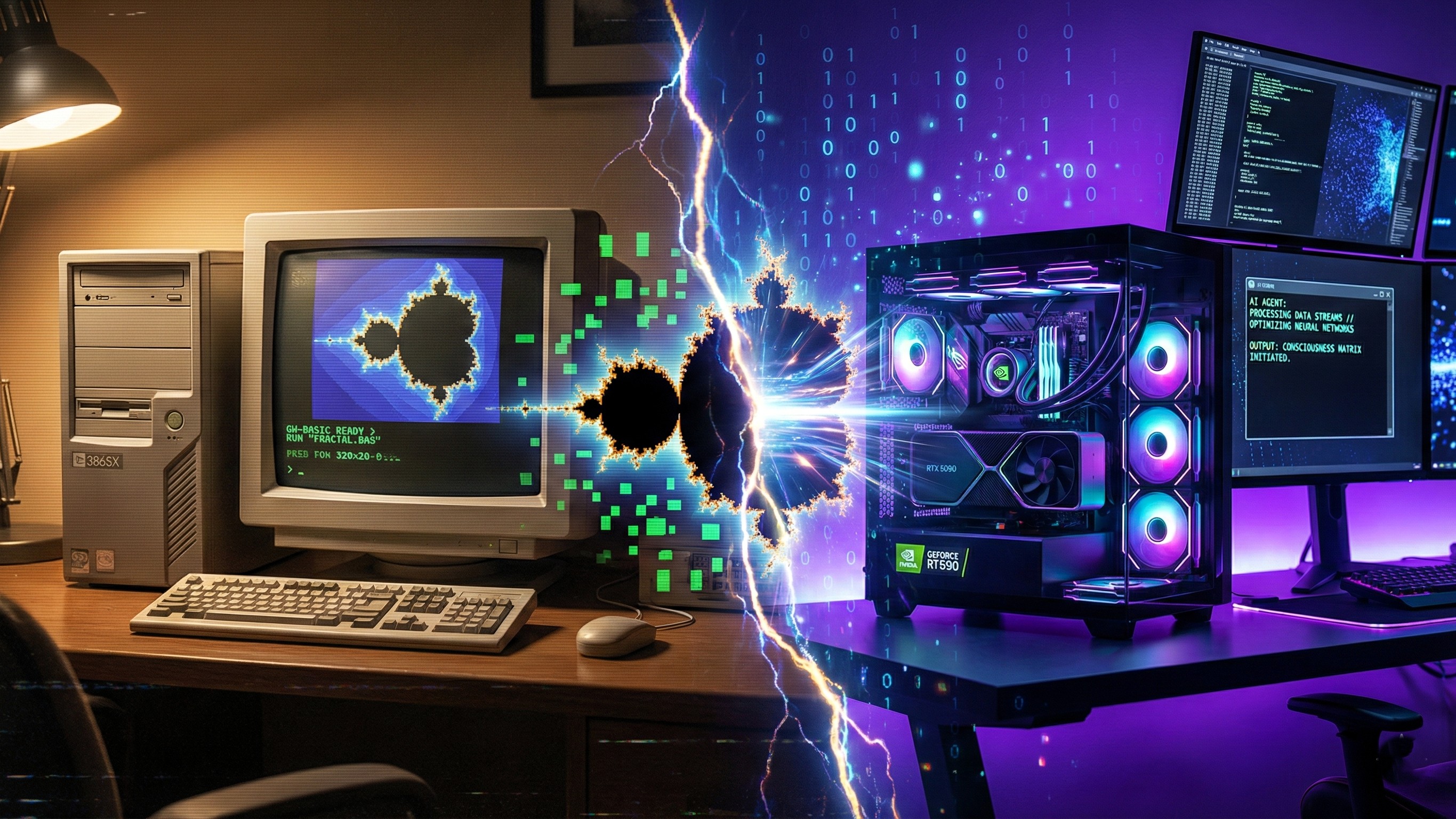
A 386SX with 25 MHz, 2 MB RAM and a 100 MB hard drive moves in – and changes everything.
This episode is about technological leaps in time. From the first almond bread in GW-BASIC, which took up to 90 minutes without a mathematical coprocessor, to the first 2,400-bit modem and mailbox nights, to today's system with i9-13900K, 64 GB of RAM and multiple NVMe SSDs, which shifts 1 GB in 0.15 seconds.
But it doesn't stay with nostalgia.
We talk about the current graphics card and storage crisis with AI data centres, CUDA cores, energy consumption, overclocked data centre hardware from the Far East – and whether small, efficient systems such as a Raspberry Pi with AI head can be the smarter alternative in the long term.
How does technological development feel when you have witnessed it from the beginning?
What does 30 years of computing power mean in real numbers?
And why isn't the move from the 387SX coprocessor to local AI agents as big as it seems?
A calm, personal sequence between retro computing, market analysis and vision of the future.
🎙 Chronological thematic structure
1️⃣ Entry - Current hardware reality
- Price explosion for graphics cards, RAM and SSDs
- AI data centers as drivers of scarcity
- Personal experience with GPU price development
- Nvidia H100 & professional AI hardware
2️⃣ Review - The First PC (1992)
- Christmas of 1992: 386SX 25 MHz
- 2 MB RAM, 100 MB HDD, 512 kB graphics card
- SX vs. DX Difference
- Meaning of this moment
3️⃣ memory sizes then vs. today
- 100 MB "will never be full"
- Software, games, programming environments
- Compared to 8 TB SSD
- Factor comparisons (capacity & speed)
4️⃣ First programming experience
- GW-BASIC
- Almond bread fractal
- 90 minutes render time
- Mathematical Coprocessor (387SX)
- Performance gain and mindblowing moment
5 ️⃣ The Mailbox era
- 2.400 Bit/s Modem
- dial-in, telephone costs, second line
- BBS & Community Feeling
- Digital youth of an analogue generation
6 ️⃣ Technological evolutionary leap
- From minutes to seconds (1 GB copy)
- 386SX vs. i9-13900K
- 2 MB vs. 64 GB RAM
- Hardware exponential leap over 30 years
7️⃣ Modern GPU architecture & AI
- Why AI runs on GPUs
- CUDA cores vs. classic CPUs
- Video rendering & transcription
- Lane Limitations & Multi-GPU Approach
- Wear and tear of data center hardware
8️⃣ Energy & Efficiency
- 800-1000 watts under full load
- Electricity prices & real costs
- Power saving mode & Process distribution
- Windows vs. Linux Efficiency
9 ️⃣ Alternative concepts
- Raspberry Pi + AI-Head
- 40 TOPS at 2-3 watts
- Operate small language models locally
- Slow but efficient processing
🔟 Future & personal reflection
- Own AI agents in the home network
- Automated processes & voice control
- Development of teenager with 386SX
- Where does the journey go?
- Heating with hardware?


Advertising:
Contributors to this episode


Playing time: 0:36:21
Date of admission: 18.02.26
This episode is from season 4, there are a total of 4 seasons.
One According to Funk Publication Cartel Production - Where stories are transmitted unmistakably.
Podcast license:

This work is licensed under a Creative Commons Attribution-NonCommercial-ShareAlike 4.0 International License

Note: This post contains affiliate links. If you shop through these links, I'll get a small commission at no extra cost to you.
Related posts
Discover more from LautFunk Podcast & Blog
Subscribe to get the latest posts sent to your email.

Author: Sascha Markmann
Sascha Markmann is a creative mind with a moving biography – and a person who has rediscovered life after a stroke. After working as a paramedic and elderly caregiver, Sascha found his way into creative expression. As a blogger, podcaster, musician and visual storyteller, he brings together things that just don't fit at first glance: He combines his keen enthusiasm for technology – from self-hosted servers to electronic music production – with emotional depth and an oblique sense of humor. His contributions are somewhere between borderline, acid basslines and assistance – honestly, directly and with a wink. Guiding principle: “Audio-visual dullness with no usefulness – but perhaps that's why it's so valuable.” View all posts by Sascha Markmann
 English