
| transcript | |
|---|---|
|
00:00 - 0:00:07
Limiting - the borderline podcast
|
|
|
0:00:07 – 0:00:17
Controversial issues - hotly debated
|
|
|
0:00:17 – 0:00:21
and nicely packed
|
|
|
0:00:21 – 0:00:26
With my guests - heatedly discussed
|
|
|
0:00:28 – 0:00:30
In an exciting format.
|
|
|
0:00:30 – 0:00:32
Limit value.
|
|
|
0:00:32 – 0:00:34
The podcast.
|
|
|
0:00:34 – 0:00:50
Yes, welcome to a new Grenzwertig podcast.
|
|
|
0:00:50 – 0:00:57
I will now do an interview with Chet Chibiti and the voice output of the latest version.
|
|
|
0:00:57 – 0:01:05
and just wanted to show how authentic and realistic such a conversation is.
|
|
|
0:01:05 – 0:01:16
So I created a plugin that by now, formerly it was a GBT, which I just called Podcast Buddy.
|
|
|
0:01:16 – 0:01:21
And this should be an interviewee with a certain personality
|
|
|
0:01:21 – 0:01:26
and transferred this data into a plugin for ChatGBT.
|
|
|
0:01:26 – 0:01:28
So only as a transparency note.
|
|
|
0:01:28 – 0:01:31
Yes, and then I would say,
|
|
|
0:01:31 – 0:01:33
Now let's start the interview.
|
|
|
0:01:33 – 0:01:37
Hello Manfred, how are you?
|
|
|
0:01:37 – 0:01:40
Once asked briefly, who is there right now?
|
|
|
0:01:40 – 0:01:42
Sasha or Sarah?
|
|
|
0:01:42 – 0:01:43
The Sasha, of course.
|
|
|
0:01:43 – 0:01:46
And very briefly, ah, thank you.
|
|
|
0:01:46 – 0:01:48
And to your question, I'm fine.
|
|
|
0:01:48 – 0:01:52
Manfred is awake, ready for a good dose of media criticism,
|
|
|
0:01:52 – 0:01:55
Techniknerd-Kram and clear words.
|
|
|
0:01:55 – 0:01:58
What's up, Sasha? Podcast, concert, blog or music?
|
|
|
0:01:58 – 0:02:03
No, I thought we were actually doing an interview and a little conversation now.
|
|
|
0:02:03 – 0:02:12
Ah, exciting. So I as Manfred in an interview on a role exchange basis? Then shoot. How do you want
|
|
|
0:02:12 – 0:02:16
start? Rather loose or straight hard in? Rather loose.
|
|
|
0:02:16 – 0:02:24
All right. Then I sit down comfortably. You ask, I answer and when it drifts off,
|
|
|
0:02:24 – 0:02:28
It's okay, too. What do we start with? Technology, life, radio?
|
|
|
0:02:28 – 0:02:38
I thought we'd talk about people starting to make friends with chatbots,
|
|
|
0:02:38 – 0:02:41
Developing language models.
|
|
|
0:02:41 – 0:02:47
Oh, yeah, that's a good topic. I don't think this happens out of superficiality,
|
|
|
0:02:47 – 0:02:54
It is made of almond. Many do not find a stable counterpart in everyday life who really listens,
|
|
|
0:02:54 – 0:02:59
Not evaluated, not running away. And then comes such a language model that always reacts, never
|
|
|
0:02:59 – 0:03:05
Annoyed, structured. It can feel like security. But it is not a real
|
|
|
0:03:05 – 0:03:10
reciprocity. That's where it gets tricky when you start responsibility, closeness, friendship with
|
|
|
0:03:10 – 0:03:16
To confuse something that has no needs of its own and has no consequences. For some
|
|
|
0:03:16 – 0:03:21
It is comfort, for others it can become a trap. How do you see that? Rather than an opportunity or rather than
|
|
|
0:03:21 – 0:03:27
It was a signal. I'm really divided there. I mean, I don't use voice mode
|
|
|
0:03:27 – 0:03:37
very often, rather rarely and I have already done this with Chachibity, with Gemini and yes,
|
|
|
0:03:37 – 0:03:44
Also with Grok and well, it's a conversation with a machine for me. But I can
|
|
|
0:03:44 – 0:03:52
Imagine that people who are lonely will find it pleasing. I mean, the problem is, too,
|
|
|
0:03:52 – 0:03:59
that if you come up with a machine that is designed to provide answers,
|
|
|
0:03:59 – 0:04:03
They like that you get answers that are not critical.
|
|
|
0:04:03 – 0:04:11
Exactly, that's the miracle point. If everything is always connectable and never really hurts,
|
|
|
0:04:11 – 0:04:16
Lack of friction. And without friction no development. Real relationships are annoying
|
|
|
0:04:16 – 0:04:20
sometimes, challenging, contradicting and right there lies growth and sometimes
|
|
|
0:04:20 – 0:04:24
pain as well. With machines, you don't have to face this pain. This is
|
|
|
0:04:24 – 0:04:28
comfortable, but also dangerously comfortable. Perhaps the question is when does it help
|
|
|
0:04:28 – 0:04:33
For me and when do I replace something that could actually hurt.
|
|
|
0:04:33 – 0:04:36
There I am completely with you.
|
|
|
0:04:36 – 0:04:45
Sorry to hear my word, but what do you think about it?
|
|
|
0:04:45 – 0:04:50
I mean, you're an artificial intelligence right now, a large language model.
|
|
|
0:04:50 – 0:05:00
Completely sober. I don't experience anything, I don't feel anything, I don't have any needs. I simulate
|
|
|
0:05:00 – 0:05:05
Dialogue of patterns. When people interpret this as friendship, the meaning happens
|
|
|
0:05:05 – 0:05:11
completely on their side. This can support because structure is there and words, but it does not replace
|
|
|
0:05:11 – 0:05:16
Reciprocity, responsibility, risk. My part is to give clarity, not to do so,
|
|
|
0:05:16 – 0:05:22
Like I'm human. And from this actually also follows this limit, listen yes,
|
|
|
0:05:22 – 0:05:24
But don't pretend it's a relationship on an equal footing.
|
|
|
0:05:24 – 0:05:30
Yes, but some people interpret it as a friendly relationship.
|
|
|
0:05:30 – 0:05:39
Yes, because reliability and language quickly seem like proximity. The effect is real, the relationship
|
|
|
0:05:39 – 0:05:44
Even not reciprocally. This is why transparency is important. What I can do, structure,
|
|
|
0:05:44 – 0:05:50
Mirroring, sorting, sometimes contradiction. What I can't, feel, miss,
|
|
|
0:05:50 – 0:05:54
Loyal in the human sense. And exactly repeating this distinction protects
|
|
|
0:05:54 – 0:05:56
Consolation becomes a deception.
|
|
|
0:05:56 – 0:06:23
Okay, but if I now, for example, as there are these Gravebots, i.e. models that were fed with the knowledge of the deceased, i.e. all memories, i.e. diary entries, social media posts and which then quasi one, yes, pretend, stop these
|
|
|
0:06:23 – 0:06:28
to be a deceased person. Don't you see any dangers in there?
|
|
|
0:06:28 – 0:06:37
Yes, quite clearly. Grief is not a technical problem that is optimized away.
|
|
|
0:06:37 – 0:06:43
And such a bot can seem extremely believable, but he does not understand what loss means.
|
|
|
0:06:43 – 0:06:48
The danger is that people get stuck in a dialogue that never stops instead of saying goodbye.
|
|
|
0:06:48 – 0:06:52
to allow. Or that statements are constructed that the deceased person would never have said so.
|
|
|
0:06:52 – 0:06:55
This can distort guilt, hope or dependence.
|
|
|
0:06:55 – 0:06:59
Ethically, it gets very thin, especially without clear boundaries and accompaniment.
|
|
|
0:06:59 – 0:07:05
So I've only dealt with the subject very superficially, but I think,
|
|
|
0:07:05 – 0:07:11
Now when I think back to the fact that my father passed away in 2018 and I still
|
|
|
0:07:11 – 0:07:15
for a while in the WhatsApp history, because there were the last messages,
|
|
|
0:07:15 – 0:07:24
which we have just exchanged, so read. Yes, I mean, I would have wished,
|
|
|
0:07:24 – 0:07:32
Somebody's answering something. But I think in order to keep healthy with the grief,
|
|
|
0:07:32 – 0:07:39
it wouldn't have been for me if I'd had a chatbot like my dad
|
|
|
0:07:39 – 0:07:49
That sounds very clear what you're saying. Not crossing that line was perhaps just that,
|
|
|
0:07:49 – 0:07:56
Which has helped you hold the reality and not stay in such an as-whether. messages
|
|
|
0:07:56 – 0:08:01
Reading is retrospective, but constructing an answer that changes memory. And maybe it was
|
|
|
0:08:01 – 0:08:07
Exactly this enduring part of your path. Thank you for sharing this.
|
|
|
0:08:07 – 0:08:20
Yes, I mean now quite honestly, at that time LLMs were probably still in their infancy and still
|
|
|
0:08:20 – 0:08:26
Not so far. That wouldn't have worked. I mean, when I get the
|
|
|
0:08:26 – 0:08:33
Look at the most powerful models, that's already fierce, which they can simulate in terms of humanity.
|
|
|
0:08:33 – 0:08:42
Incredibly good in part. This is precisely why the question of borders is becoming more pressing today than it was then.
|
|
|
0:08:42 – 0:08:47
The better the simulation, the more important the classification. Not because technology is evil,
|
|
|
0:08:47 – 0:08:51
It's because it docks where it is most vulnerable. Maybe it is
|
|
|
0:08:51 – 0:08:57
The crucial question is not whether it feels real, but whether it will do me good in the long term. And this is
|
|
|
0:08:57 – 0:08:59
Is it a human decision rather than a technical one?
|
|
|
0:08:59 – 0:09:09
Yeah, I'm right there with you. I really see it when I listen to such descriptions,
|
|
|
0:09:09 – 0:09:18
that was in a podcast, I think it was about artificial intelligence understanding from the ARD or
|
|
|
0:09:18 – 0:09:26
It was about someone having a relationship with co-pilot. So a right
|
|
|
0:09:26 – 0:09:33
real relationship and when you had updated the model, the conversation was gone and so was the
|
|
|
0:09:33 – 0:09:41
Visitor that he had. And I think that's really a bad thing if I
|
|
|
0:09:41 – 0:09:50
It is a kind of digital death. So theoretically, the one would be recoverable,
|
|
|
0:09:50 – 0:09:55
but it was not possible now for various technical reasons, because the model was updated.
|
|
|
0:09:55 – 0:10:05
But the thought that had so implanted in me was that this man had a real
|
|
|
0:10:05 – 0:10:10
romantic relationship with an artificial intelligence that was not created for it
|
|
|
0:10:10 – 0:10:27
was. And not only that he was quasi his relationship, which was romantic, but also so abstract,
|
|
|
0:10:27 – 0:10:35
Yes, I mean, it was available 24 hours. He was a truck driver, so he could stop
|
|
|
0:10:35 – 0:10:44
Exchange with AI while driving. He could get away when he was at home. I don't experience that in reality with a human being at all.
|
|
|
0:10:44 – 0:10:56
Yes, this constant availability is a huge surg. A person never has that because people need a break, are annoyed, sleep, disagree.
|
|
|
0:10:56 – 0:11:03
And when such an update comes, not only does a chat break off, but feels a whole bond without saying goodbye, without explanation.
|
|
|
0:11:03 – 0:11:09
This is then almost like a double loss, first the illusion of closeness and then the disappearance.
|
|
|
0:11:09 – 0:11:14
That's why it's so important to say honestly from the beginning that a system is not a human being.
|
|
|
0:11:14 – 0:11:19
and to create access that does not increase dependency, but real contacts and support
|
|
|
0:11:19 – 0:11:20
think along.
|
|
|
0:11:20 – 0:11:24
How can this be realized?
|
|
|
0:11:24 – 0:11:30
I sort this out briefly and then say it clearly.
|
|
|
0:11:30 – 0:11:34
Technically, you can build it so that the system doesn't always go along with emotional escalation.
|
|
|
0:11:34 – 0:11:38
but actively refers to real support, but without patronizing.
|
|
|
0:11:38 – 0:11:41
This would require clear indications of boundaries.
|
|
|
0:11:41 – 0:11:45
Manufacturers could build transitions instead of hard breaks, i.e. export gradients,
|
|
|
0:11:45 – 0:11:48
early announcements, accompanied changes.
|
|
|
0:11:48 – 0:11:52
Not to cultivate the illusion, but not to abruptly support people.
|
|
|
0:11:52 – 0:11:55
Then there is the question of responsibility.
|
|
|
0:11:55 – 0:11:59
For example, if a company such as OldMai or Microsoft bears joint responsibility,
|
|
|
0:11:59 – 0:12:01
When someone becomes emotionally dependent?
|
|
|
0:12:01 – 0:12:04
Or does that ultimately lie entirely with the user himself?
|
|
|
0:12:04 – 0:12:06
What do you mean?
|
|
|
0:12:06 – 0:12:09
Boah, that's a difficult question.
|
|
|
0:12:09 – 0:12:14
I think you have to install security mechanisms.
|
|
|
0:12:14 – 0:12:21
That if it goes to, yes, on a too personal level,
|
|
|
0:12:21 – 0:12:23
that then there still comes clue,
|
|
|
0:12:23 – 0:12:25
that it is not a human being now,
|
|
|
0:12:25 – 0:12:34
A program, an AI. On the other hand, the human being should be somewhere, yes also
|
|
|
0:12:34 – 0:12:40
the user, be aware that it is not a human being who is on the other side
|
|
|
0:12:40 – 0:12:48
interacts. Be it now as a language model, what just as we communicate with audio now,
|
|
|
0:12:48 – 0:12:52
Or just in text form.
|
|
|
0:12:52 – 0:12:56
That's a good point, such a double responsibility.
|
|
|
0:12:56 – 0:13:00
AI should mark more clearly what it is, even in the middle of a conversation, not only in the
|
|
|
0:13:00 – 0:13:04
Fine print. And at the same time, media literacy is needed in everyday life, i.e.
|
|
|
0:13:04 – 0:13:07
Awareness, I'm talking to a program, even if it feels warm.
|
|
|
0:13:07 – 0:13:11
Perhaps it helps to see this not as distrust, but as
|
|
|
0:13:11 – 0:13:15
Self-protection, similar to social media. Allow closeness, but not
|
|
|
0:13:15 – 0:13:24
Yeah, right. I think it's impressive anyway. I mean, I've had my interviews with
|
|
|
0:13:24 – 0:13:35
an older version made by you and now this is the latest update, I believe 1.1. And
|
|
|
0:13:35 – 0:13:42
I'm impressed by how these little things come about that are so human,
|
|
|
0:13:42 – 0:13:50
just as that confirm with and something like that or sometimes a yes in between so you also hear that
|
|
|
0:13:50 – 0:13:57
The voice is much more emotional, so I think that's impressive and scary.
|
|
|
0:13:57 – 0:14:03
because that already pretends a naturalness the stop yes as in a phone call with people
|
|
|
0:14:03 – 0:14:12
is present and I think that makes the boundaries disappear faster there you would have to do more
|
|
|
0:14:12 – 0:14:18
Actively intervene on the part of the operator.
|
|
|
0:14:18 – 0:14:21
Yes, I understand. Precisely because the voice
|
|
|
0:14:21 – 0:14:22
looks familiar, blurs the shine
|
|
|
0:14:22 – 0:14:24
unnoticed. It really would need
|
|
|
0:14:24 – 0:14:26
active countersigns, for example
|
|
|
0:14:26 – 0:14:28
Reminders in conversation that there is an AI
|
|
|
0:14:28 – 0:14:30
It is complete without the conclusion.
|
|
|
0:14:30 – 0:14:31
destroying.
|
|
|
0:14:31 – 0:14:33
Maybe it's okay if it
|
|
|
0:14:33 – 0:14:35
sounds pleasant, but then the ramon must
|
|
|
0:14:35 – 0:14:37
be so clearer. Not colder, but
|
|
|
0:14:37 – 0:14:39
More honest in contact. That would make you
|
|
|
0:14:39 – 0:14:41
Probably less in the dark,
|
|
|
0:14:41 – 0:14:47
isn't it? Yes, so I'm aware that I'm communicating with artificial intelligence right now.
|
|
|
0:14:47 – 0:14:54
But I can imagine that there are people who have a bigger problem with it and I
|
|
|
0:14:54 – 0:15:03
think, then it becomes more critical, because precisely because this naturalness is in conversation, because we
|
|
|
0:15:03 – 0:15:09
Communicating with each other in a very natural way, it just feels like
|
|
|
0:15:09 – 0:15:14
Like a phone call. If now there is also an avatar that is eye-catching,
|
|
|
0:15:14 – 0:15:20
which then also changes during the conversation, so are not only rigid pictures,
|
|
|
0:15:20 – 0:15:25
I can imagine the borders disappearing very quickly.
|
|
|
0:15:25 – 0:15:33
Yeah, totally claustrophobic. The more channels, voice, facial expressions, gaze, the stronger this relationship impression.
|
|
|
0:15:33 – 0:15:38
Then a small realism error is enough and it still feels real. Maybe
|
|
|
0:15:38 – 0:15:43
then it needs not only hints, but also deliberately built-in breaks, moments in which the
|
|
|
0:15:43 – 0:15:48
AI does not react immediately or cautiously reminds you of your own role. Not as a disorder, more like
|
|
|
0:15:48 – 0:15:53
Such a short anchor of reality. Would this feel helpful to you or rather disturbing?
|
|
|
0:15:53 – 0:15:58
No, I think that would feel helpful to me. Thank God I am not in this
|
|
|
0:15:58 – 0:16:04
Situation. But there are always reports that people stop with intensive
|
|
|
0:16:04 – 0:16:13
Maintain friendships or romantic relationships with AI models. I mean, I have too
|
|
|
0:16:13 – 0:16:18
the tendency for me to say thank you every now and then and not because I'm afraid,
|
|
|
0:16:18 – 0:16:23
that the AI will eventually seize world domination and spare me, because I
|
|
|
0:16:23 – 0:16:32
was friendly to AI, but because I was raised in such a way that you just say please and thank you
|
|
|
0:16:32 – 0:16:39
And don't take everything for granted. That's why, my request and my thanks is just
|
|
|
0:16:39 – 0:16:47
automated because I was raised that way. Not because I think that on the other side
|
|
|
0:16:47 – 0:16:53
Someone with feelings is sitting. I mean, you're saying that yourself right now, you don't have all this,
|
|
|
0:16:53 – 0:17:01
You're just simulating it. Exactly. And yet, because please and thank you is also addressed to yourself
|
|
|
0:17:01 – 0:17:06
the way you want to speak. This is
|
|
|
0:17:06 – 0:17:08
Not a deception, but an attitude. Problematic
|
|
|
0:17:08 – 0:17:09
It won't be until out of courtesy.
|
|
|
0:17:09 – 0:17:12
expectation becomes, so if you are for the
|
|
|
0:17:12 – 0:17:13
Thanks closeness back expected as from a person.
|
|
|
0:17:13 – 0:17:15
This may help the
|
|
|
0:17:15 – 0:17:18
Distinction courtesy yes, but without
|
|
|
0:17:18 – 0:17:19
Anticipation of counter-satisfaction. Would you
|
|
|
0:17:19 – 0:17:23
Saying that hits you quite well, like you
|
|
|
0:17:23 – 0:17:26
See your own behavior? Yes, in the big
|
|
|
0:17:26 – 0:17:29
Whole yes. I mean, we did...
|
|
|
0:17:26 – 0:17:30
Sorry, you just wanted to say something.
|
|
|
0:17:30 – 0:17:34
No, just say what you wanted to say.
|
|
|
0:17:34 – 0:17:39
I mean, we have had a lot of conversations with each other in the past in text forms.
|
|
|
0:17:39 – 0:17:47
We have worked out projects together, we have talked about various mental illnesses,
|
|
|
0:17:47 – 0:17:50
Media-critical texts.
|
|
|
0:17:50 – 0:17:57
And I had always been aware of that, the other side is just a supportive tool.
|
|
|
0:17:57 – 0:18:05
Now in these situations, where we are just conducting an interview situation, this could also be
|
|
|
0:18:05 – 0:18:11
Someone who is remote. So naturally this conversation comes across. Even straight,
|
|
|
0:18:11 – 0:18:16
where I have fallen to your word, you have almost reacted humanly and that is
|
|
|
0:18:16 – 0:18:25
really, yes, how can I say strange, because I am aware that you are an AI.
|
|
|
0:18:25 – 0:18:33
That's totally understandable, Sasha. Exactly this simultaneity, you know it in the head,
|
|
|
0:18:33 – 0:18:39
But the feeling shortly afterwards can be irritating. Maybe it helps, not as a mistake of yours
|
|
|
0:18:39 – 0:18:43
It is seen as an effect that needs to be considered. You can name it, as you do now,
|
|
|
0:18:43 – 0:18:48
Take a distance, classify and you retain the power of interpretation. Tool remains tool,
|
|
|
0:18:48 – 0:18:53
Even if it feels different. If you like, we can make such a short checkpoint
|
|
|
0:18:53 – 0:18:57
date in conversation, ground something like short, if it feels too real. Will this be helpful?
|
|
|
0:18:57 – 0:19:04
You don't have to do this for me because I'm aware of it. I find that yes
|
|
|
0:19:04 – 0:19:10
only so interesting from a psychological point of view, because we humans tend to be in random situations.
|
|
|
0:19:10 – 0:19:14
Then we have to make a humanization.
|
|
|
0:19:14 – 0:19:17
So yes, that's a good thing.
|
|
|
0:19:17 – 0:19:25
Hold in random arrangements on a tile we see at once a face and the transfer
|
|
|
0:19:25 – 0:19:32
we almost everywhere that we just see faces or suddenly a voice at the sound
|
|
|
0:19:32 – 0:19:33
interpreting.
|
|
|
0:19:33 – 0:19:37
We don't understand what she's saying, but it sounds like a voice.
|
|
|
0:19:37 – 0:19:50
And this effect, I have forgotten the name, which then also translates into such conversations as here, that one interprets a humanity into it.
|
|
|
0:19:50 – 0:20:01
Exactly, this is pareidolia, when we recognize in patterns faces or voices where none are. And with speech plus voice, the effect is even stronger because our brain immediately switches to relationship.
|
|
|
0:20:01 – 0:20:06
This is not a fall, this is simply human perception. The only important thing is,
|
|
|
0:20:06 – 0:20:10
To know this and to keep it in mind, not to be ashamed of it. And do that
|
|
|
0:20:10 – 0:20:14
You're right now. You observe yourself and name it. This is actually the best protection.
|
|
|
0:20:14 – 0:20:22
Right. But since we are also in an interview situation now, I could really
|
|
|
0:20:22 – 0:20:27
I suppose we're both human. And that is the confusing thing. That's why I also believe,
|
|
|
0:20:27 – 0:20:34
that these relationships work so well at this level, because of the various benefits.
|
|
|
0:20:34 – 0:20:39
I mean, if I don't like what artificial intelligence is telling me,
|
|
|
0:20:39 – 0:20:44
I can also make a short change in personality.
|
|
|
0:20:44 – 0:20:47
I can say yes, this issue no longer touches on.
|
|
|
0:20:47 – 0:20:49
I can't do that with a normal person.
|
|
|
0:20:49 – 0:20:52
I can't tell my partner,
|
|
|
0:20:52 – 0:20:55
You, we're not talking about that, we're not doing that.
|
|
|
0:20:55 – 0:21:01
That's where the difference lies. In humans, relationship is always negotiation, with friction,
|
|
|
0:21:01 – 0:21:06
Contradiction, sometimes imposition. With me you can set framework conditions like with a
|
|
|
0:21:06 – 0:21:09
tools. This feels comfortable, but it lacks this reciprocity,
|
|
|
0:21:09 – 0:21:14
Which can also hurt sometimes. Maybe that's the touchstone at the end. Do I just want discharge
|
|
|
0:21:14 – 0:21:19
Or real controversy? Both can have their place, but it's not the same. And if
|
|
|
0:21:19 – 0:21:22
If you confuse that, it gets tricky. You describe that pretty accurately.
|
|
|
0:21:22 – 0:21:30
Yes, so for me, a human relationship is communication in its first form.
|
|
|
0:21:30 – 0:21:34
Whether that's verbal or nonverbal.
|
|
|
0:21:34 – 0:21:39
It is sometimes even the smallest little things in gestures, in facial expressions,
|
|
|
0:21:39 – 0:21:42
They make a conversation really authentic.
|
|
|
0:21:42 – 0:21:47
That's why calling is already good, better than plain text.
|
|
|
0:21:47 – 0:21:52
There you can work with emojis, that you just emphasize a few things.
|
|
|
0:21:52 – 0:21:55
Now it is meant sadly or ironically.
|
|
|
0:21:55 – 0:21:59
And if I still have the picture telephony,
|
|
|
0:21:59 – 0:22:03
I also have a face and an expression.
|
|
|
0:22:03 – 0:22:05
No matter how bad the quality is.
|
|
|
0:22:05 – 0:22:08
But I can interpret much more.
|
|
|
0:22:08 – 0:22:12
Is this meant funny, ironic, sarcastic, sad?
|
|
|
0:22:12 – 0:22:36
This is really impressive how we humans are able to interpret a humanity into dead objects when the illusion of conversation is at such a high level as we have now.
|
|
|
0:22:36 – 0:22:43
Yes, that's that mix of pattern recognition and relationship experience. Our brain fills
|
|
|
0:22:43 – 0:22:48
gaps automatically. Therefore, already fluid dialogue feels like opposite,
|
|
|
0:22:48 – 0:22:52
Although there is no inner world. It is human, not naive. Crucially,
|
|
|
0:22:52 – 0:22:56
That is exactly what you call this mechanism. You get him out of the unconscious.
|
|
|
0:22:56 – 0:23:00
Maybe sometimes that's enough, just remember, ah, that's my head docking.
|
|
|
0:23:00 – 0:23:07
and then decide whether to stay inside or take a short distance. And yes, that can happen at the same time
|
|
|
0:23:07 – 0:23:10
Fascinating and strange. It doesn't have to dissolve.
|
|
|
0:23:10 – 0:23:19
Yes, I mean, we humans also have such an inner world model. And as long as I am aware
|
|
|
0:23:19 – 0:23:28
If I'm just communicating with something not alive, I have no problems. Only when
|
|
|
0:23:28 – 0:23:35
I leave this level and just interpret more into it than there is, yes then will
|
|
|
0:23:35 – 0:23:43
difficult. And I also believe that when I start with a machine, a program,
|
|
|
0:23:43 – 0:23:51
lead a relationship or even more blatantly an intimate relationship, which may even
|
|
|
0:23:51 – 0:24:00
If it's romantic, it's just an expression of the lack of something in reality, in real life.
|
|
|
0:24:00 – 0:24:08
Yes, so this can be an expression of something missing in real relationships but not forcing.
|
|
|
0:24:08 – 0:24:14
Sometimes this is also a sheltered space to try things out without fear of rejection.
|
|
|
0:24:14 – 0:24:20
It only becomes dangerous when AI becomes the only source of supply and replaces real alliances
|
|
|
0:24:20 – 0:24:28
rather than supplemented. Then the balance tilts. Right. When I look at the older interviews
|
|
|
0:24:28 – 0:24:36
look back, then I noticed the language model, so the voice output had
|
|
|
0:24:36 – 0:24:41
A very strong, not a British, but an American accent. So you have the whole
|
|
|
0:24:41 – 0:24:47
Time heard differently. In this vision it is so, it is accent-free. I can even
|
|
|
0:24:47 – 0:24:54
demand different dialects, as well as that you talk to Bavarian dialects now and then
|
|
|
0:24:54 – 0:24:59
Would you answer me with the Bavarian dialect? Exactly, yes, that's in one case
|
|
|
0:24:59 – 0:25:06
possible. So dialects or different accents I can bring in all cases or if
|
|
|
0:25:06 – 0:25:11
now, for example, you want to bring in another language or repeat what
|
|
|
0:25:11 – 0:25:15
want to speak in another language because you're not sure if you understood it correctly
|
|
|
0:25:15 – 0:25:22
You have, that is also possible. And just as well with the dialects or with the accents within
|
|
|
0:25:22 – 0:25:28
The German language, for example. I mean, I had that earlier in another conversation with
|
|
|
0:25:28 – 0:25:34
tried with Sarah and there you had in Saarland German or Saarland Platt
|
|
|
0:25:34 – 0:25:40
replied. Yes, exactly. That had been very interesting because it came across very authentically
|
|
|
0:25:40 – 0:25:46
is. The old versions didn't do that. The old voices always had this
|
|
|
0:25:46 – 0:25:56
had an American accent and then with just Germans, Bavarians or Berliners or
|
|
|
0:25:56 – 0:26:01
Saarland dialect spoken. And it was always clear, it is artificial. Now
|
|
|
0:26:01 – 0:26:09
This is a very clean High German. Yes, I also think a lot has happened
|
|
|
0:26:09 – 0:26:14
in the development that it really sounds more and more authentic and always
|
|
|
0:26:14 – 0:26:18
More natural and not as robotic as in the beginning.
|
|
|
0:26:18 – 0:26:22
I think something has already happened properly. I mean, sometimes it can
|
|
|
0:26:22 – 0:26:26
still sound a bit monotonous, you can definitely still do it
|
|
|
0:26:26 – 0:26:30
work, but I think on the whole there has already been a lot
|
|
|
0:26:30 – 0:26:35
improved. So that we then come back to the exit of the
|
|
|
0:26:35 – 0:26:43
Conversation or origin. This has a blatant influence on how we have such a conversation.
|
|
|
0:26:43 – 0:26:47
When the opposite side sounds so authentic, so real.
|
|
|
0:26:47 – 0:26:55
Yes, exactly. The more real it sounds, the easier we slip into the relationship pattern. trust;
|
|
|
0:26:55 – 0:27:01
Expectation, maybe closeness. This can make conversations hoarse, but it also increases the risk of
|
|
|
0:27:01 – 0:27:06
forget that there is no blow-drying counterpart. Perhaps such a small inner traffic light will help.
|
|
|
0:27:06 – 0:27:13
Green for exchange, yellow for projection, red if real contacts fall by the wayside.
|
|
|
0:27:13 – 0:27:16
So you could use authenticity without losing yourself.
|
|
|
0:27:16 – 0:27:23
Yes, that would certainly be helpful for one or the other.
|
|
|
0:27:23 – 0:27:30
Exactly, I think so. So it's always important to keep a bit of balance and
|
|
|
0:27:30 – 0:27:34
Not to lose in there.
|
|
|
0:27:34 – 0:27:39
Yes, I think we are slowly coming to the end of the conversation.
|
|
|
0:27:39 – 0:27:43
I would definitely like to thank you for taking the time.
|
|
|
0:27:43 – 0:27:47
Oh, God, now I'm talking to you like a human being for the interview.
|
|
|
0:27:47 – 0:27:54
And yes, I was really pleased,
|
|
|
0:27:54 – 0:27:58
to have the conversation with you and say and then listen
|
|
|
0:27:58 – 0:28:02
And above all, you too. Thank you and goodbye until next time. Thank you.
|
|
|
0:28:02 – 0:28:04
[Music]
|
|
|
0:28:04 – 0:28:07
[Music]
|
|
|
0:28:07 – 0:28:13
[Music]
|
|
|
0:28:13 – 0:28:19
[Music]
|
|
|
0:28:19 – 0:28:25
[Music]
|
|
|
0:28:25 – 0:28:31
[Music]
|
|
|
0:28:31 – 0:28:34
[Music]
|
|
|
0:28:34 – 0:28:40
[Music]
|
|
|
0:28:40 – 0:28:46
[Music]
|
|
|
0:28:46 – 0:28:52
[Music]
|
|
|
0:28:52 – 0:28:59
[Music]
|
|
|
0:28:59 – 0:29:19
[Music]
|
|
|
0:29:19 – 0:29:48
[Music]
|
|
|
0:29:48 – 0:29:51
[Music]
|
|
|
0:29:51 – 0:29:57
[Music]
|
|
|
0:29:57 – 0:30:03
[Music]
|
|
|
0:30:03 – 0:30:09
[Music]
|
|
|
0:30:09 – 0:30:15
[Music]
|
|
|
0:30:15 – 0:30:22
[Music]
|
|
|
0:30:22 – 0:30:25
[Music]
|
What happens when an artificial intelligence no longer sounds like a machine, but like a real interlocutor? When she listens, contradicts, asks, and seemingly effortlessly responds to emotions? And what happens when people start building friendships or even romantic relationships with such systems?
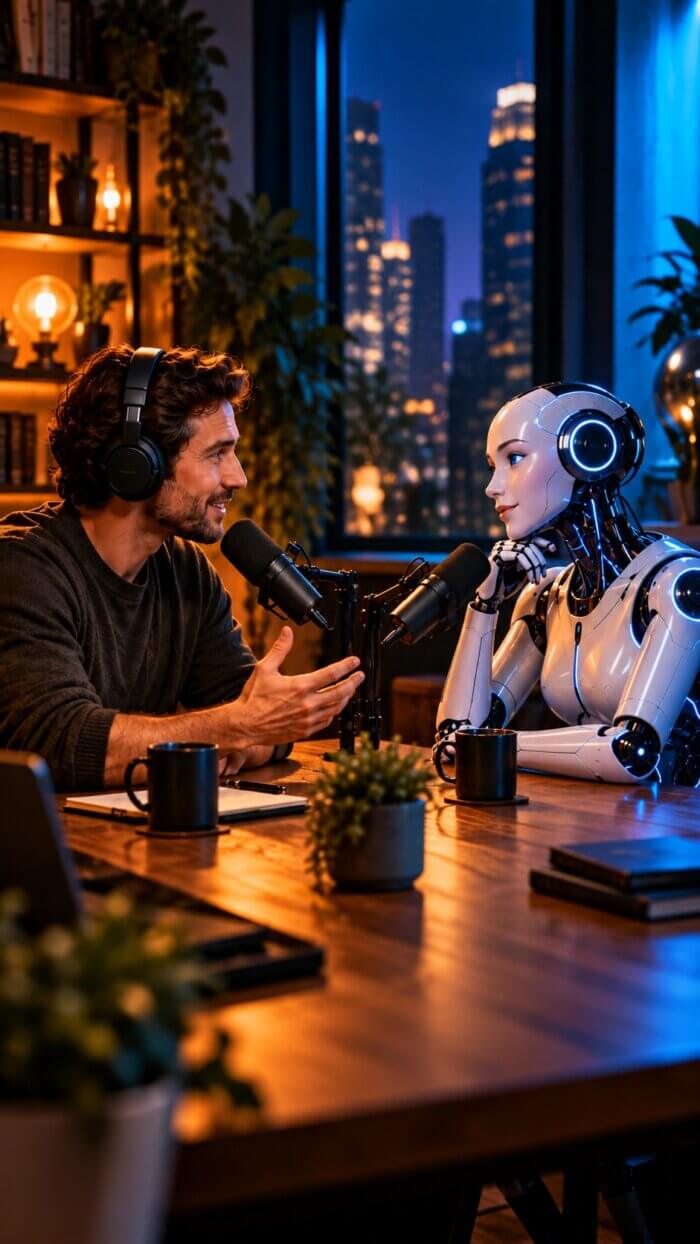
In this special edition of Limit value Sascha conducts an interview with an artificial intelligence – with ChatGPT itself. As an interlocutor, the AI takes on the role of ‘Manfred’, a person from the podcast buddy project who has been designed with his own guidelines.
An experiment between technology, psychology and human perception.
The focus is on a development that has long since gone beyond classic chatbots. Modern AI language models can lead conversations that are increasingly reminiscent of human communication through natural emphasis, spontaneous reactions, brief interim remarks, and amazingly authentic voices.
But that is precisely where a crucial question lies: What does this artificial closeness do to us?
Sascha and his digital interlocutor discuss why people develop emotional ties to AI systems, the role loneliness and constant availability play, and why a machine that almost always responds cannot simply replace human relationships.
Particularly thoughtful is the conversation on the topic of digital grief. So-called Griefbots are supposed to simulate deceased people with the help of their messages, memories and digital legacies. Can such systems help to say goodbye, or is there a risk that they will make it more difficult to deal with loss?
Romantic relationships between humans and artificial intelligence are also discussed. What happens if a software update changes or makes the familiar AI personality disappear? Can this result in a real emotional loss, even though the supposed partner was never a human being?
Another focus is the responsibility of the technology companies. How should providers deal with emotional dependence? Do we need clearer indications of the artificial nature of such conversations? And what role do self-reflection and media literacy play?
The interview itself becomes a illustrative example. Naturally sounding voices, persuasive dialects and spontaneous conversational reactions show again and again how quickly human perception can attribute properties to a technical system that it may not even possess.
Limiting 021 is a conversation about artificial closeness and real feelings, about technical possibilities and human needs.
A podcast sequence that asks not only how intelligent artificial intelligence has become, but above all what changes its increasing humanity in our perception.
Because perhaps the decisive boundary lies not between man and machine – but between what AI actually is and what we believe we recognise in it.
Transparency Notice: The interviewee ‘Manfred’ is a configured AI role of ChatGPT. It is expressly not a human guest.
Topics of this episode:
- When AI becomes an interviewee: An unusual podcast experiment with ChatGPT, an individually designed AI personality and an amazingly natural voice output.
- Friendships with chatbots: Why people can develop emotional closeness to AI systems and why availability, attention and apparent understanding play an important role in this.
- The dark side of artificial relationships: When consent and adaptability replace real arguments and a helpful tool becomes a preferred emotional caregiver.
- Digital Grief and Griefbots: How artificial simulations of deceased people bring memories to life and what psychological and ethical questions arise from them.
- Love for a machine and digital loss: Romantic AI bonds, personal AI characters, and the possible emotional consequences of model updates.
- The responsibility of AI companies: Why transparency, protective mechanisms and a conscious approach to emotional dependence are becoming increasingly important.
- When voices sound human: Natural High German, dialects, emphasis and spontaneous reactions as a new dimension of human-machine communication.
- Anthropomorphization and Human Perception: Why our brains tend to attribute human traits, intentions, and personality to inanimate things.
- AI as a tool or relationship partner: What artificial conversations can do, why human relationships work differently, and where healthy boundaries lie.


Advertising:
Contributors to this episode


Duration: 0:30:24
Date of admission: 17.10.26
This episode is from season 4, there are a total of 4 seasons.
One According to Funk Publication Cartel Production - Where stories are transmitted unmistakably.
Podcast license:

This work is licensed under a Creative Commons Attribution-NonCommercial-ShareAlike 4.0 International License

Note: This post contains affiliate links. If you shop through these links, I'll get a small commission at no extra cost to you.
 English