
Those who live in the periphery in 2026 often experience the much-vaunted ‘traffic transition’ as a clear-cut transport policy. The youngest victim of this administrative deficiency management is the Dortmund district of Lanstrop. At the timetable change on 25 May 2026, the growing direct connection of the lines C4/C14 to Lünen was effectively buried. What has been touted as ‘needs-based modernisation’ turns out, on closer inspection, to be a dismantling that, as a result, acts like the product of a bureaucratic responsibilities carousel.
At a glance: What has changed in Lanstrop
| range | Before (until 24.05.2026) | After (from 25.05.2026) |
| Connection to Lünen | Regular, spontaneously usable direct connection via the clock lines C4/C14. | Line 322 as a demand-only service (TaxiBus). Reservations must be made at least 60 minutes in advance. End at the station Preußen. |
| Pupil traffic (line 22E) | Several student-relevant driving opportunities in the morning and more flexible returns. | Reduced to a single morning ride with narrow, one-sided school bus logic. |
| Connection to Dortmund | Poetical 10-minute interval of the line 423 at the school's peak times. | Switch to a fixed 20-minute cycle (line 423), eliminating targeted amplifier runs. |
The political repair company: First nod, then protest
The political chronology of the Lanstrop bus chaos borders on a lesson of local contradiction and subsequent political follow-up. At its hearing on 19 May 2026, the Scharnhorst District Representation initially recommended the relevant administrative proposal 01890-26 without any formal amendments. The subsequent political repair company gives an idea of how far-reaching the inspection in advance actually was: In its own request of 29 May 2026 for the meeting of 30 June 2026, the CDU Group openly acknowledges that the original administrative template presented the reality of taxi bus and student traffic as ‘insufficient and highly euphemistic’.
According to Group President Jürgen Focke, the submission did not allow any conclusions to be drawn as to the actual outcome of the agreement. It is an implicit admission that the local bodies did not fully understand the scope of the decision at the May vote. Only after affected citizens and parents' initiatives expressed massive protest at an on-site appointment in a supermarket parking lot on May 28, did local politics switch to crisis mode.
The social media double game: From co-decision-maker to ‘savior’
This contradiction is particularly evident in the public relations work of the SPD local association Scharnhorst-Kirchderne. While the social democratic representatives in the political bodies allowed the far-reaching cuts to pass in May without any formal objections, the party already staged itself on Facebook as the spearhead of the protest on 27 May 2026, just two days after the fateful timetable change.
In a video published there, a SPD representative stands at the stop Dyer road, points to the newly displayed VKU timetables and explains with regard to the interrupted connections: “And that's something we want to change. We won't let that sit on it …’ This rhetorical bridge raises questions: Why does a governing party have to publicly protest against timetables, which it quietly decided a few days earlier in the town hall?
The construction site blind flight on the Färberstraße
Under pressure from a citizens' initiative that quickly collected over 2,000 signatures, local politicians are now hastily trying to distribute cosmetic plasters. At the centrally located stop Dyer road – Lanstrop’s main transport hub in close proximity to local shopping facilities – the dilapidated, seatless waiting house was demolished. In another Facebook video, the SPD praises this as a success: DSW21 has placed the stop on the priority list and a larger, more beautiful waiting room with new seats is to be created.
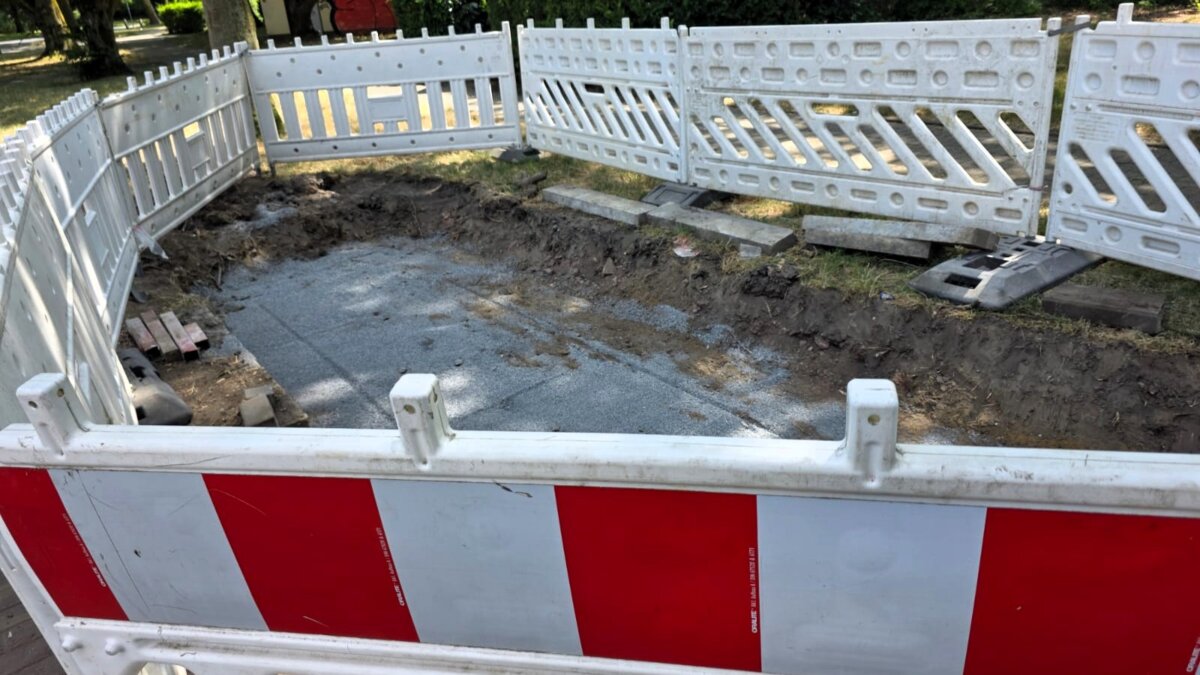
But while the PR drum is stirred in the network, the current state on the Färberstraße reveals the typical administrative ignorance towards the passengers on site. The reality of Lanstrop's main artery is currently a single mess:
- No replacement stop, no sign: Although the dyer road is purely a construction site, no replacement stop has been set up. Buses continue to depart from the construction site, but there is not a single stop sign on site to indicate this.
- The total information vacuum: There is not a single timetable or information material on the entire construction site. Passengers do not know whether buses stop here at all, when the remaining lines depart, or which different lines currently serve this construction site area at all.
- Exclusion of the older generation: While planners like to refer to digital apps internally, older people without a smartphone are particularly helpless at the nameless construction site. You have no way of knowing when and if a bus is coming.
- Unclear perspective: It is still unclear when the new station will be completed. So far, there is only one construction site to be seen. The citizens were not informed about anything in advance and left completely unclear.
The fact that the local politics of the SPD prefer to post advertising-effective videos on their channels, instead of facing the critical press questions of our editorial staff, leaves an extremely bland aftertaste. It seems like an attempt to flatter the population shortly before the upcoming elections and to soothe the displeasure, but without actively solving the real, profound connection problems to Lünen.
In addition, complex replacement concepts are now brought into play in retrospect to cushion the self-inflicted Lünen debacle. In the video, for example, the SPD promises to work to extend bus line 420 (coming from Aplerbeck) beyond the former Wittfeld terminus to Prussian station and Lanstrop. Also a connection of the express bus line X6 to the stop Alexiastraße/Old Heath is being discussed. Whether these vague statements of intent ever see rail or road, however, remains completely open.
The double blow: Cut off in both directions
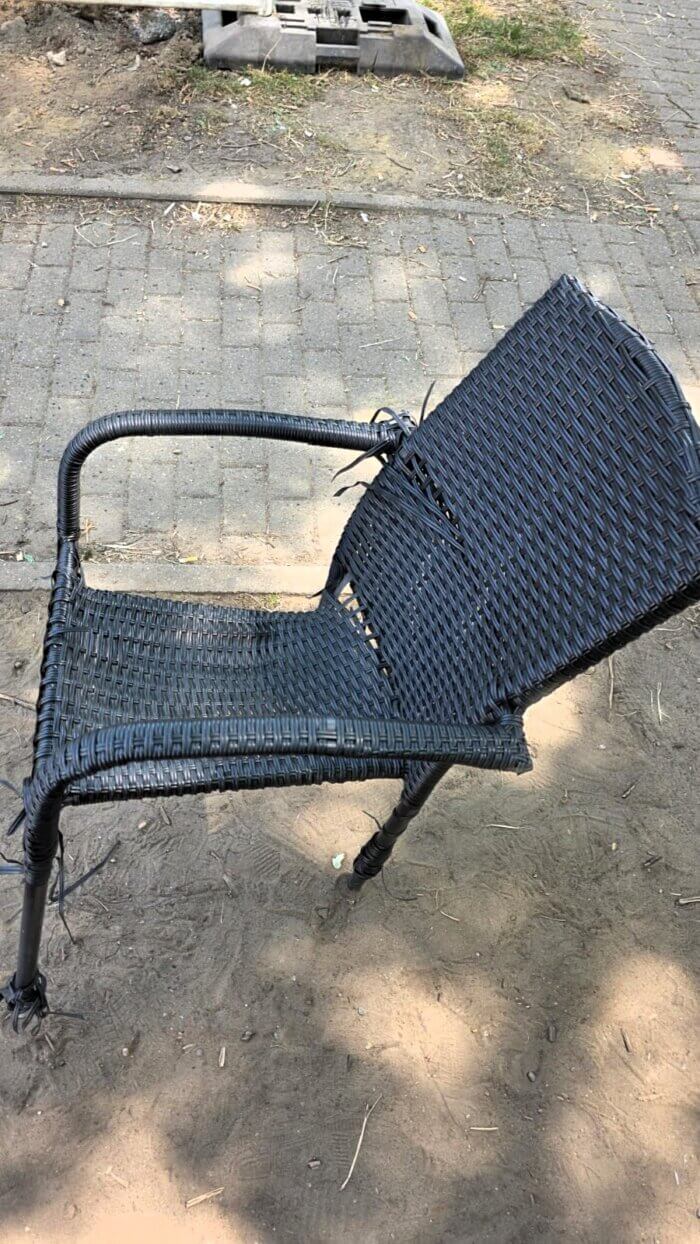
The transport policy reality for Lanstrop has been a systemic isolation since the end of May. As a result, the district is circumcised in both directions:
1. The barrier axis to Lünen (line 322)
As a replacement for the lines C4/C14, line 322 was introduced as a pure on-demand service (TaxiBus). At the official request of our editors, the transport company now unavoidably confirms: ‘The previous direct link […] shall not be replaced by an equivalent direct link. There has been no direct, continuous connection to Lünen-Zentrum in everyday traffic since 25 May 2026.’ Journeys must be booked at least 60 minutes in advance and end at the Prussian railway station.
- Analog blackout: None of the stops on Dortmund's urban area contain any indication as to how, at what cost or under what conditions the TaxiBus can be ordered at all.
- Lack of accessibility: Passengers are not informed on site about the ordering channels via app, Internet and telephone or about the operating hours. On the part of the VKU, this purely digital/telephone procedure is defended – it corresponds to the "common practice in on-demand transport and has proven its worth in the past". However, for people with disabilities, the visually impaired or senior citizens without digital infrastructure, this information vacuum is a massive hurdle in everyday life.
2. The Education Scandal in Student Traffic (Line 22E)
The temporal incompatibility of the new student traffic is now an official case for the committees.
- Radical coup: Where in the past three needs-based morning trips on the lines C4/C14 were flexible for the pupils, only a single calculated school bus of the line 22E has been running since the changeover.
- The vocational college dead end: This remaining bus is one-sidedly optimised for the start of lessons at 08:00 am at the Gymnasium Lünen. However, the fact that lessons at the Lünen Vocational College already start at 7:30 a.m. was completely ignored in the original structure. How deep the arrow of this criticism sits, the VKU now proves itself in its opinion. It is acknowledged that the original plan was flawed: "In addition, it is currently being examined whether the offer can be extended by an additional journey from Lanstrop towards Lünen to the Berufskolleg. However, these considerations are still in the planning phase.”
- The mathematical fiasco of the return journey: In the event of staggered school leaving, there is no consistently reliable return service from Lünen city centre that can be used on a daily basis. Should all students at the same time after the 6th When the hour is over, the space offered by the individual bus is unlikely to be sufficient.
3. Adaptation to Dortmund (line 423)
In order to dampen the displeasure in Lanstrop, Dortmunder Stadtwerke (DSW21) is selling an adaptation of line 423 towards Dortmund-Grevel as part of its ‘CityTaktPlus’ programme from 14 June 2026. The official announcement promises the use of articulated buses and a rigid 20-minute cycle during the day. What sounds like an offer offensive, however, turns out to be the end of the school-day amplifier rides in detail.
For the passengers, this does not mean a deterioration in every situation of the day, but it does mean a deterioration in those time windows in which so far school-day amplifier trips have condensed the offer. It is a planning intervention that binds Lanstrop more closely to the clock specifications of the Dortmund core network, while at the same time the historic connection to Lünen breaks away.
Transparency note: This presentation is based on official timetables, administrative templates, public announcements and written answers to press inquiries from our editorial staff. Requests that have not been answered or are answered late will be marked accordingly.
The Protocol of Incompetence: Who answered how
In order to clarify the responsibilities for this transport policy fiasco, our editorial team has confronted the involved bodies with hard press inquiries. The result is a document of organized lack of competence:
- City of Dortmund: The Dortmund city administration refers above all to the formal state of competence. Politically, however, the question remains open as to how a Dortmund district can be practically less connected without Dortmund assuming recognizable responsibility for it. In addition, according to the city, no financial compensation is provided for the kilometers on Dortmund territory. Politically, this seems like a zero-euro solution for a real deterioration on the ground.
- DSW21: At the official press request, the group communication stated in writing at the beginning of June that ‘Currently no adjustments planned by DSW21’ be. Only a few days later, the official timetable data were in recognizable contradiction to this statement. The altered timing of line 423 must at least have been very advanced in terms of planning at that time. Technically, DSW21 also revealed a terrifying standstill: A digital, dynamic connection fuse between the control centers of DSW21 and VKU does not exist in 2026. In the event of delays in border traffic, communication is purely manual via telephone and e-mail.
- VKU (Verkehrsgesellschaft Kreis Unna): After an initial delay, the VKU now disclosed its imputed figures and provided the economic justification for the clear-cutting. Accordingly, the threshold of 1,200 daily routes enshrined in the local transport plan was not met for the Lünen-Dortmund-Nord corridor. According to the VKU, the old lines C4/C14 recorded only around 140 passengers on one working day, spread over about 60 journeys – which means that statistical capacity utilisation of only 2.4 Passengers per journey corresponding. In order to avoid costs for a ‘parallel offer’ on the route section to Lünen-Zentrum, cap the direct line and force passengers at Prussia station to switch to line 22. Brisant: The VKU officially confirms that: ‘there is no binding […] connection guarantee deposited on the system’;. If you miss the connection due to delay, you are unlucky: ‘A general connection or replacement transport is currently not foreseen.’ In addition, it is acknowledged that the operating hours (Mon-Sat, 9:00 a.m. to 6:00 p.m.) were deliberately so narrow, as the offer was primarily intended as a pure ‘Basic supply services’ (Purchases, doctor's appointments) was designed.
- City of Lünen: The neighboring city of Lünen largely rejects the responsibility. Daniel Claeßen, head of the press office, said that although the system change was "expressly welcomed" during the formal procedure, he now emphasises defensively that the operational stability of individual connecting lines is the responsibility of the VKU. That it is the massive, inner-city construction site closures of the city of Lünen (default Jägerstraße / Bürgerplatz) that make the junction line 22 chronically untimely and thus completely destroy the transfer concept at the Prussian station for the Lanstroper, is dismissed as a pure problem of the neighboring district.
- VRR: The Verkehrsverbund Rhein-Ruhr washes its hands in innocence. In its apps, the VRR merely reflects what the operators provide in terms of data. If the digital booking link for the TaxiBus in the app collapses as soon as the 60-minute deadline has expired, the pure design matter of the VKU. The large European network does not feel responsible for the poor user-friendliness at the tariff line.
- SPD Scharnhorst / Local politics: While the social media channels of the local association are intensively used for citizen-oriented PR, the principle of silence prevails in hard inquiries. The Scharnhorst SPD faction under Ralf Römermann, which passed the controversial cut proposal in May without an amendment, reacted with complete silence to the targeted questions about their own voting behavior despite repeated requests from our editors. The selective communication behavior leaves a bland aftertaste: While one deliberately avoids critical journalistic questions, one's own staging on Facebook is solemnly continued.
Conclusion: If administrations block, operators count purely on statistical thresholds and look away from local politics, the traffic turnaround becomes a farce. For the students in Lanstrop, only one thing remains in the end: The bitter realization that transport policy services of general interest also end at the city border.
Sources and documents
- Timetable line 322 – Transport company Kreis Unna (VKU)
- Timetable line 22E – Transport company Kreis Unna (VKU)
- DSW21 driving publication – Official announcement of ‘CityTaktPlus’ (state of play: June 2026)
- Administrative template 01890-26 – Updating of the local transport plan, City of Dortmund
- Urgent motion by the CDU Group – Dortmund-Scharnhorst District Representation of 29.05.2026
- Social media sources (Facebook videos) – Official video releases on the public Facebook page of the Social Democratic Party of Scharnhorst-Kirchderne (Post of 27.05.2026 under the title ‘Dortmund hat Krafft!’ concerning the stop Färberstraße and follow-up posts on the line extensions of the 420 and X6).
- Written opinions – Official press replies of the City of Lünen, the City of Dortmund, the DSW21, the VRR and the official reply of the VKU (Inga Fransson) of 7 July 26 to the LautFunkEditorial staff.
Your experience counts!
Are you or your children affected by the timetable changes in Lanstrop? Have you experienced connection breaks at the station Preußen, stand in front of unlabeled stops or have problems with the way to school to the vocational college? Send us your testimonials, notes or photos directly by e-mail to redaktion@lautfunk.de – we stick to the story.
Discover more from LautFunk Podcast & Blog
Subscribe to get the latest posts sent to your email.

 English