
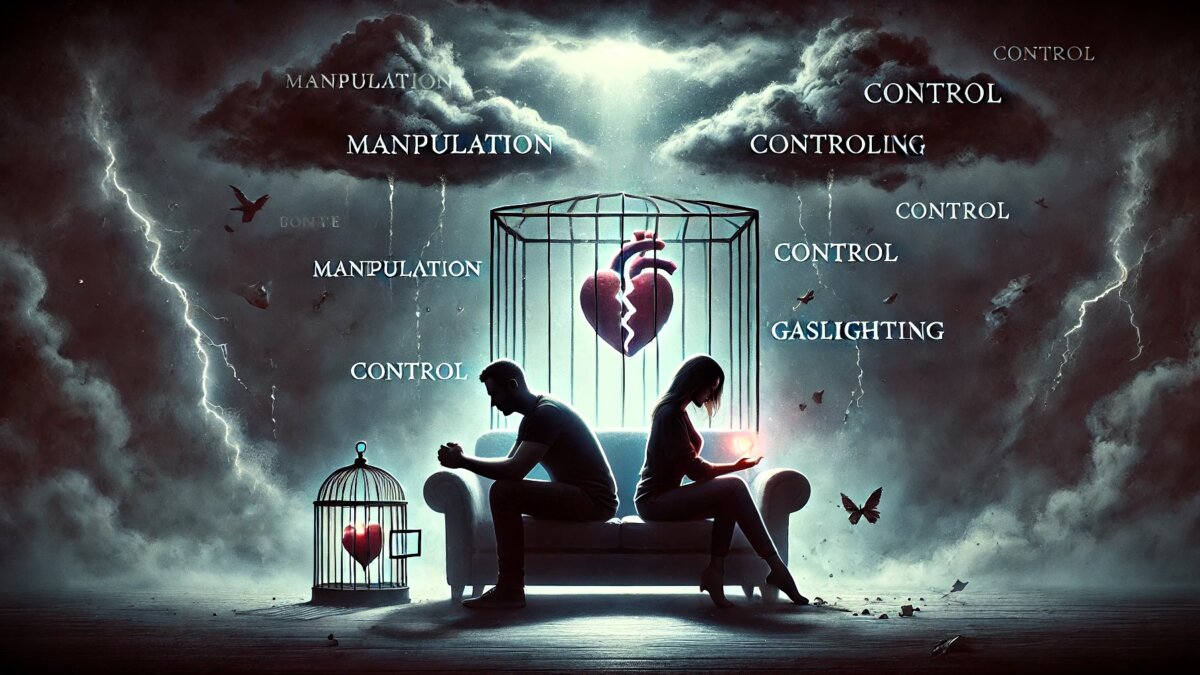
In every relationship, it's about growing together, supporting each other, and sharing love. But sometimes negative behavior patterns creep in, which can damage the relationship and cause emotional pain to both partners. In this article, we go into detail on the subject of toxic relationship patterns, explaining what this means, how they arise, and how to recognize them early on. In addition, we will present detailed examples, warning signals and concrete solutions that can help break down these harmful patterns and restore a healthy basis in the partnership. The path to change requires patience, courage and often external support – but it leads to a respectful and loving coexistence.
Introduction: What are toxic relationship patterns?
Toxic relationship patterns refer to recurrent, harmful behaviors within a partnership that lead to emotional distress, insecurity, and impaired self-esteem. These are not necessarily intentional harms, but often unconscious patterns of behavior resulting from past experiences, personal insecurities or learned patterns. Such patterns can solidify over time and, if not detected and treated early, leave long-term damage.
In a healthy relationship, both partners should experience a sense of security, respect and mutual support. Toxic patterns, on the other hand, lead to a climate of fear, mistrust and dependence. Awareness of these dynamics is the first step in breaking the vicious circle and returning to a positive coexistence.
How do toxic relationship patterns develop?
The emergence of toxic relationship patterns is a complex process that usually does not happen overnight. Several factors can work together:
- Past experiences and imprints:
Many people unconsciously adopt behaviors from their childhood or previous relationships. Anyone who has grown up in the family with a high degree of conflict, abuse or emotional neglect can unintentionally repeat similar patterns in their own partnership. - Low self-esteem and insecurity:
A lack of self-confidence often leads to emotional dependence. Those who do not find themselves valuable seek confirmation and love in excessive proximity to their partner – which can put them under pressure and lead to conflict. - Communication problems:
Unclear, hostile or even aggressive communication patterns can quickly lead to misunderstandings and injuries. If conflicts are not resolved constructively, permanent resentment and mistrust often arise. - External loads:
Stress, financial worries or health problems can increase the emotional pressure in a relationship and lead to conflicts no longer being fought objectively, but personally.
These factors can reinforce each other and keep them trapped in a vicious circle that is difficult to break out of without targeted action.
Typical Toxic Patterns in Partnerships
Below, we shed light on some of the most common toxic relationship patterns that can occur in partnerships. Each of these patterns has specific characteristics that make it possible to identify them early and address them in a targeted manner.

1. Emotional dependence
Emotional dependence describes a condition in which one partner makes his happiness and self-esteem completely dependent on the other's affirmation and affection. This dependence often leads to an imbalance in which one's own needs are neglected and personal freedoms are restricted.
Examples:
- A person renounces hobbies or contacts with friends because they constantly ask the partner for confirmation.
- Someone is afraid to make decisions without first agreeing with the partner, for fear of being rejected.
Declaration:
Emotional dependence is often the result of low self-esteem. The need to be constantly validated from the outside can be interpreted as loving in early relationship stages, but over time it turns into a crushing dependency. The victim loses his individual identity and lives in constant fear of rejection.
Possible actions:
- Self-reflection: Keep a diary and note what needs and desires are important to you.
- Strengthening self-reliance: Consciously take time for hobbies and activities that give you pleasure, even without your partner.
- Open communication: Talk to your partner about your fears, but also set boundaries to maintain your independence.
2. Emotional abuse
Emotional abuse includes all behaviors that undermine the partner's self-esteem and emotional stability. These are often subtle manipulations that make others small and feel like they're never enough.
Examples:
- One partner repeatedly makes derogatory comments, criticizes every little thing and questions the other.
- Accusations are constantly made, often accompanied by accusations (‘It is your fault that I feel this way’).
Declaration:
Emotional abuse is particularly insidious, as it is often not recognized as violence in the classical sense. The victims are gradually devalued and slowly lose confidence in themselves. In the long term, this can lead to depression, anxiety and a severely limited self-confidence.
Possible actions:
- Create awareness: Recognize and identify the hurtful behaviours – this is the first step towards change.
- Setting limits: Clearly say "no" to behaviors you don't want to tolerate.
- Looking for support: Talk to friends, family members, or a therapist to gain perspectives and strengthen yourself emotionally.
3. Permanent power struggles
In many relationships, power struggles dominate again and again, in which both partners try to gain the upper hand. This often manifests itself in constant disputes, in which compromises are rare and instead the struggle for control and decision-making power is paramount.
Examples:
- Both partners insist on enforcing their opinions without addressing each other's needs.
- There are constant discussions about who has the main responsibility in the budget or who is in charge of financial matters.
Declaration:
Power struggles often arise when both partners are insecure and try to consolidate their own position. The need to ‘have the right’ in the conflict can lead to constructive discussions turning into heated debates. This undermines mutual appreciation and leads to a climate of constant tension.
Possible actions:
- Learning conflict resolution strategies: Practice techniques such as active listening, self-messages, and formulating compromises.
- Creating Role Clarity: Clarifies together which areas in the relationship belong to each partner and in which decisions both are equal.
- Take time-outs: In escalating conflicts, it can help to take a break to let emotions subside and talk about solutions later in peace.
4. Gaslighting
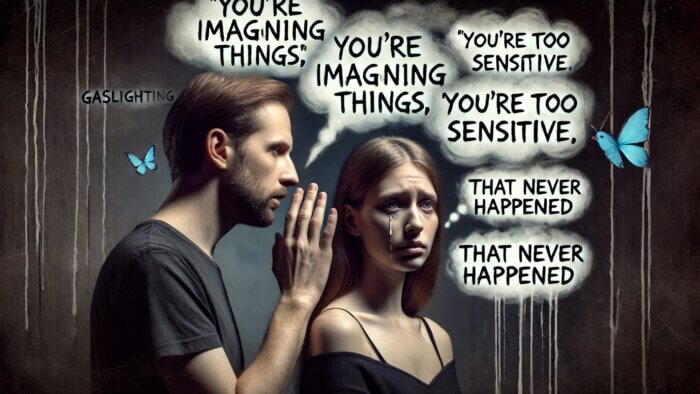
Gaslighting is a particularly manipulative technique in which the perpetrator attempts to undermine the perception of the victim's reality. By repeatedly questioning one's own memories and perceptions, the victim becomes increasingly insecure and loses confidence in himself.
Examples:
- The partner claims that an important event never happened, even though you clearly remember it.
- You become constantly unsettled by being suggested that you are overreacting or imagining things.
Declaration:
Gaslighting can extend over a long period of time and is often difficult to detect, as the manipulation is subtle and insidious. Victims feel more and more isolated and lose the sense of control over their own thinking and actions. This process can lead to serious mental health problems if no countermeasures are taken.
Possible actions:
- Documentation: Write down conversations, events, and feelings to maintain an objective picture of reality.
- Involve confidential counsellors: Talk to friends or family members who can back you up to confirm your perception.
- Therapeutic assistance: An experienced therapist can help you recognize the manipulation and develop strategies to rebuild your self-confidence.
5. Isolation
A common toxic pattern is to isolate the partner from their social environment. This can happen intentionally or unconsciously, causing the victim to move more and more away from friends, family, and other support networks.
Examples:
- Your partner criticizes and discredits your friendships, suggesting that you focus only on them.
- It makes contact with certain people more difficult because your partner reacts jealously or suspiciously when you spend time with others.
Declaration:
Isolation serves to make the victim emotionally dependent and prevent them from experiencing alternative perspectives and support. Over time, this not only loses support, but also important anchor points that could help break out of toxic dynamics. The feeling of being alone and without support often increases dependence on the dominant partner.
Possible actions:
- Preservation of social contacts: Consciously take time to stay in touch with friends and family on a regular basis.
- External activities: Find hobbies or activities that allow you to gain positive experiences outside of the relationship.
- Open communication: Explain to your partner why social contacts are important to you and ask for your understanding.

6. Emotional blackmail
Emotional blackmail is a method in which one partner puts pressure on the other by using feelings, guilt, or threats to enforce his will. Emotional attachment is often abused to manipulate.
Examples:
- “If you love me, you will do that for me.”
- Threats such as: “If you leave, I will hurt myself or lose my life.”
- Constant blaming that makes you feel like you're always acting wrong.
Declaration:
This pattern is based on exploiting the emotional vulnerability of the victim. Instead of relying on reasonable arguments, the feeling of responsibility is excessively passed on to the partner. This can lead to making decisions you don't actually want to make just to avoid conflict and maintain emotional stability.
Possible actions:
- Self-reflection: Recognize which decisions really belong to you and which ones you make out of fear of reactions.
- Define boundaries: Clearly state that emotional blackmail is unacceptable and explain the consequences of this behavior for the relationship.
- External assistance: Use professional advice to break these patterns together and learn alternative, healthy communication strategies.
7. Devaluation and constant criticism
Another common toxic pattern is that one partner continually devalues, criticizes, and ridicules the other. This behavior can begin in subtle remarks, but over time it massively undermines self-confidence and belief in one's abilities.
Examples:
- Your partner keeps making remarks aimed at questioning your opinion, clothing, or choices.
- Frequent comments such as: ‘You did it wrong’, ‘You are too sensitive’ or ‘No one likes you the way you are’.
- Public humiliations that expose you to friends or acquaintances.
Declaration:
Constant criticism and devaluation are destructive because they slowly but surely negatively affect the image you have of yourself. The feeling of never being good enough can lead to inner emptiness and depression. Often this criticism is sold as ‘honest’ or ‘direct’, although in reality it is deeply hurtful and undermines emotional stability in the long term.
Possible actions:
- Strengthening self-esteem: Work specifically to recognize your own strengths and positive qualities.
- Talking about hurtful words: Sit down with your partner and explain how their words affect your self-image.
- Reflection on the relationship: Consider whether this constant devaluation can contribute to a healthy partnership in the long term, or whether it is time to make profound changes.
Detection: Warning Signs and Symptoms of Toxic Relationship Patterns
An important step in improving the relationship is early detection of warning signs that may indicate toxic patterns. Here are some common symptoms:
- Constant exhaustion and emotional fatigue: Feeling drained and depressed after talking to your partner can be an indication of constant conflict and negative dynamics.
- Feeling of hopelessness: Recurring conflicts that remain unresolved can make you feel trapped in the relationship.
- Loss of self-esteem: If you increasingly doubt your own worth and feel inferior, it's often due to pejorative comments and disrespect.
- Fear of certain issues or conflicts: Do you feel insecure about addressing specific topics for fear of violent reactions or rejection?
- Isolation and withdrawal: If your social environment is shrinking and you feel like you no longer have anyone outside of the relationship, caution should be exercised.
Recognizing these warning signs is the first step in actively tackling the toxic patterns and protecting your own emotional health.
Solutions: How to Break Toxic Patterns
The dissolution of toxic relationship patterns is a lengthy but quite feasible process. Self-reflection, open communication and, if necessary, professional help play a central role. Below you will find concrete approaches to action that can help you gradually regain more harmony and respect in your partnership.
1. Intense self-reflection and examination of one's own feelings
Take time to analyze your own feelings and reactions. Ask yourself:
- What behaviors do I find stressful?
- In what situations do I feel particularly hurt or insecure?
- What needs do I have that are not met in the relationship?
Practical exercises:
- Keep a relationship diary in which you record your daily experiences and emotions.
- Write letters to yourself in which you work out your strengths and desires.
2. Open and respectful communication with the partner
An honest conversation is often the key to change. It is important to use self-messages to avoid accusations and to communicate your own feelings and needs clearly instead.
Tips for the conversation:
- Arrange a quiet time where you can both talk undisturbed.
- Start sentences with ‘I feel …’ instead of ‘You make …’ to express your perception without blaming.
- Listen actively and try to understand your partner's perspective as well.
3. Developing common solution strategies
Both partners should be willing to work on the relationship. Develop concrete strategies together to change the problematic patterns of behaviour.
Possible approaches:
- Set fixed times for conversations where you talk about current issues.
- Create a list of behaviors you want to change and agree on concrete actions.
- Plan joint activities that build trust and closeness without falling back into old patterns.
4. Get professional help
Often, one's own forces are not enough to break deeply rooted patterns. In such cases, professional help can be crucial.
Forms of support:
- Couple therapy: An experienced therapist can help you analyze the dynamics of the relationship and develop alternative communication strategies.
- Individual therapy: Sometimes it is helpful to work on your own insecurities before dealing with your partner.
- Workshops and seminars: There are numerous offers that deal with relationship topics and give you tools to deal with each other better.
Practical tips and exercises for everyday life
In addition to the above-mentioned solutions, there are numerous practical exercises that can help you strengthen your own position in the relationship and break through negative patterns.
A. Strengthen self-esteem
- Daily positive affirmations: Start your day with positive statements about yourself. Write down three things you appreciate about yourself every morning.
- Celebrating successes: Even small successes deserve recognition. Keep a list of what you've achieved, whether it's at work, in hobbies or in the relationship.
B. Communication exercises
- Active listening: Practice listening to each other with your partner without immediately judging or interrupting. After the conversation, briefly repeat what you understood to avoid misunderstandings.
- Role-playing games: Sit together in a safe environment and replay conflict-ridden situations. So you can try out new, respectful ways of reacting.
C. Establishing Common Rituals
- Weekly check-ins: Plan regular conversations where you share your feelings and thoughts without distraction.
- Joint activities: Consciously do things that both of you enjoy, whether it's a walk, a common hobby, or cooking a new recipe.

The Role of Professional Support
Sometimes the way out of toxic relationship patterns is difficult to navigate without external help. Professional support can greatly facilitate the process of change.
When does professional help make sense?
- Deep emotional injuries: If the injuries caused by repeated ill-treatment or manipulation have led to serious psychological damage.
- Constant conflicts without progress: When conversations are stuck in the same patterns over and over again and no positive changes occur.
- Feeling of isolation: When you feel like no one is holding you back outside of the relationship, and you're alone in your worries.
Forms of assistance
- Couple therapy: A neutral third party can help to moderate conflicts and show new solutions.
- Individual therapy: Here you can work specifically on your self-confidence and the individual causes of toxic patterns.
- Self-help groups: The exchange with other affected persons can not only open up new perspectives, but also reduce the feeling of loneliness.
Conclusion: Change is a continuous process
The path out of toxic relationship patterns is not a linear process, but a continuous, often challenging path of change. It takes courage, honesty and a willingness to work both on oneself and on the partnership. The examples and solutions presented in this article show that it is also possible to overcome deeply rooted patterns of behaviour – step by step, day by day.
Changes rarely happen overnight. It is normal to experience setbacks and to have phases in which the old trash returns. But with continuous self-reflection, open communication and, if necessary, professional support, a relationship can fundamentally change. It is important that both partners are willing to take responsibility for their own behaviour and work together on a new basis of trust and appreciation.
When you realize that you or your partner are entangled in toxic dynamics, take the time to understand these patterns and take concrete steps. The willingness to face your own weaknesses and actively work on a positive change is the first and most important step towards a healthy, loving relationship.
conclusion
Toxic relationship patterns can permanently shake the foundation of a partnership. But by early recognition of the warning signals, intense self-reflection and the will to change, these harmful patterns can be broken. Everyone deserves to live in a relationship where respect, understanding and love are the core values. Even if the road to it is paved with challenges, it is worth the effort – because ultimately it leads to a more fulfilling and harmonious coexistence.
The approaches described in this article - from strengthening self-esteem to constructive communication strategies to involving professional help - provide you with tools to exit the vicious circle of toxic dynamics. It is important to work patiently and consistently on yourself and on the partnership and to celebrate small progress again and again.
Remember this: Change takes time, but every conscious decision for a respectful coexistence is a step in the right direction. With openness, courage and the willingness to acknowledge even unpleasant truths, you can create the basis for a relationship that is characterized by mutual support and real love.

Final Thoughts
Each of us has the right to a fulfilling and healthy partnership. If you are in a relationship where toxic patterns are prevalent, realize that there are always ways to break out of this situation and find yourself again. Even if the path can be rocky, the first step is always the decision to no longer be a victim, but a designer of your own quality of life.
Use the examples and solutions shown here as a starting point to actively work on your relationship. Take small but consistent steps to increase your self-confidence, improve your communication skills, and break new ground with your partner. Whether it's talking to friends, keeping a diary or going for professional advice, every step counts.
The change is in your hands, and the path to a healthy, loving partnership begins with the realization that you are worth being happy. By facing your own patterns and speaking openly about your feelings, you not only create space for personal growth, but also for a partnership in which both partners treat each other on an equal footing and with respect.
With the measures described and the willingness to actively work on the challenges, you can identify and resolve toxic relationship patterns. It may be a long way to go, but investing in your emotional health and in a partnership relationship based on trust and mutual support is worth every effort.
This journey requires time, patience and often professional accompaniment. But with every little step you take, you come closer to a life where you feel safe, valued and loved – and that is the basis for true happiness in the partnership.
Note: Each change process is individual. The examples and solutions shown here serve as a suggestion and support, but are not patent recipes. If you feel stuck in your relationship or suffer from deep emotional injuries, don't hesitate to seek professional help. Therapy or counseling can make all the difference and pave the way for a positive change.
Overall, we can see: Toxic relationship patterns are not an insurmountable fate, but a signal that it's time to pause, reflect on yourself, and actively address change. By consciously dealing with these issues and not being paralyzed by negative dynamics, you open the door to a new, healthy chapter in your life. Every step towards change is a win-win for yourself and for the future of your relationship.
Finally, we would like to emphasize that the love and happiness you deserve in your partnership will never have to be determined by toxic patterns. With openness, self-reflection, and a willingness to work on yourself, you can lay the foundation for a relationship that is sustained by respect, trust, and genuine affection. Remember this: The road may be rocky, but the prospect of a fulfilling, happy coexistence is always worth it.
Here you will find a glossary that explains the technical terms used in the text in detail:
Glossary of technical terms in the context of toxic relationship patterns
Toxic relationship patterns
Definition: Recurring, harmful behaviors in a partnership that affect emotional well-being.
Explanation: These patterns often develop insidiously and can lead to insecurity, dependence, and decreased self-esteem. They are mostly unconscious and based on previous experiences or learned behaviors.
Emotional dependence
Definition: A state in which one's own happiness and self-esteem strongly depend on the affection and confirmation of the partner.
Explanation: Affected people often forgo their own interests and social contacts, as they constantly need the closeness and recognition of their partner in order to feel safe.
Emotional abuse
Definition: Forms of behavior in which one partner systematically devalues, manipulates, and emotionally hurts the other.
Explanation: This abuse often manifests itself through constant criticism, blame or reduction and can significantly affect the self-confidence and mental health of the victim in the long term.
Permanent power struggles
Definition: Recurring conflicts in which both partners struggle for control and supremacy in the relationship.
Explanation: Such struggles often arise when both partners feel insecure or want to maintain their own position. This leads to a constant dispute in which compromises are rare.
Gaslighting
Definition: A manipulative technique in which the perpetrator systematically questions the victim's perception and memory in order to unsettle them.
Explanation: By denying or distorting facts, the victim is specifically prevented from holding on to his or her own reality. This can lead to profound uncertainty and a loss of self-confidence.
Emotional blackmail
Definition: A manipulation technique in which the partner uses feelings, guilt, or threats to force the other into certain actions.
Explanation: Typical phrases such as ‘If you love me, then …’ or threats related to emotional consequences are used to break each other’s will and exercise control.
Devaluation and constant criticism
Definition: Systematic reduction and negative assessment of the partner, often in the form of constant criticism.
Explanation: Repeated negative comments and public humiliations undermine the self-esteem of the person concerned, which can lead to a feeling of constant inferiority.
Isolation
Definition: The targeted separation of the partner from his social environment in order to increase his emotional dependence.
Explanation: The insulating partner criticizes or forbids contacts with friends and family, which means that the victim receives less and less external support and remains trapped in the relationship.
self-reflection
Definition: The conscious process of analyzing and questioning one's own behavior, feelings and needs.
Explanation: Through self-reflection, those affected can recognize patterns, understand their own weaknesses and strengths, and take the first step towards change.
I-messages
Definition: A communication strategy that focuses on one's own feelings and needs without directly attacking the other.
Explanation: Formulations such as ‘I feel …’ help to avoid accusations and allow for an open conversation in which both sides can present their views.
Conflict resolution strategies
Definition: Methods and techniques that serve to work constructively on and resolve conflicts in a relationship.
Explanation: Examples include active listening, taking time out during heated discussions, or working out compromises together to avoid escalation.
Positive affirmations
Definition: Positive, affirmative statements that serve to strengthen self-confidence and overcome negative beliefs.
Explanation: Through daily repetition of positive messages (e.g. ‘I am valuable’ or ‘I can do that’), those affected can improve their self-image and promote their inner strength.
documentation
Definition: The recording of events, conversations and one's own feelings, often in the form of a diary.
Explanation: Complete documentation helps to objectively verify what actually happened and can serve as evidence when manipulative behaviors such as gaslighting occur.
Couple therapy
Definition: A therapeutic form in which both partners work together with a neutral third party to improve their relationship.
Explanation: Through professional moderation, communication problems, power struggles and other conflicts can be analyzed and new solutions developed.
Individual therapy
Definition: A therapeutic accompaniment that focuses on a person's individual problems and needs.
Explanation: Often, individual therapy helps to deal with personal insecurities, negative beliefs or traumas before they trigger recurring conflicts in the relationship.
Self-help groups
Definition: Groups of people who have had similar experiences and support each other to deal with emotional or psychological stress.
Explanation: The exchange in self-help groups can open up new perspectives and reduce the feeling of isolation by realizing that you are not alone with your problems.
This glossary is designed to help you better understand the technical terms used in the article and understand their meaning in the context of toxic relationship patterns. If you have further questions about one of the terms or need more details, I will be happy to help!
Discover more from LautFunk Podcast & Blog
Subscribe to get the latest posts sent to your email.

 English
Hello Sascha, I discovered the post at trusted-blogs.com: Thank you for letting & readers find your content there too. I will also recommend the article via the social media channels of trusted blogs.
Dear greetings,
Eddy