|
00:00 - 0:00:26
Hello and welcome to a new edition of Quiet Silence.
|
|
0:00:26 – 0:00:38
I'm Sascha Markmann and I say hello. Today's topic is obsessive-compulsive disorder. constraints;
|
|
0:00:38 – 0:00:47
For many, this sounds completely harmless for the first time, like a kind of order sky or the urge to
|
|
0:00:47 – 0:00:59
to check them all twice, but there is something much more complex behind them, namely obsessive thoughts,
|
|
0:00:59 – 0:01:08
Coercive acts and an inner, truly real struggle that can go so far as to lead to a
|
|
0:01:08 – 0:01:17
Stress in everyday life becomes a massive burden, because fears, feelings of guilt, the
|
|
0:01:17 – 0:01:24
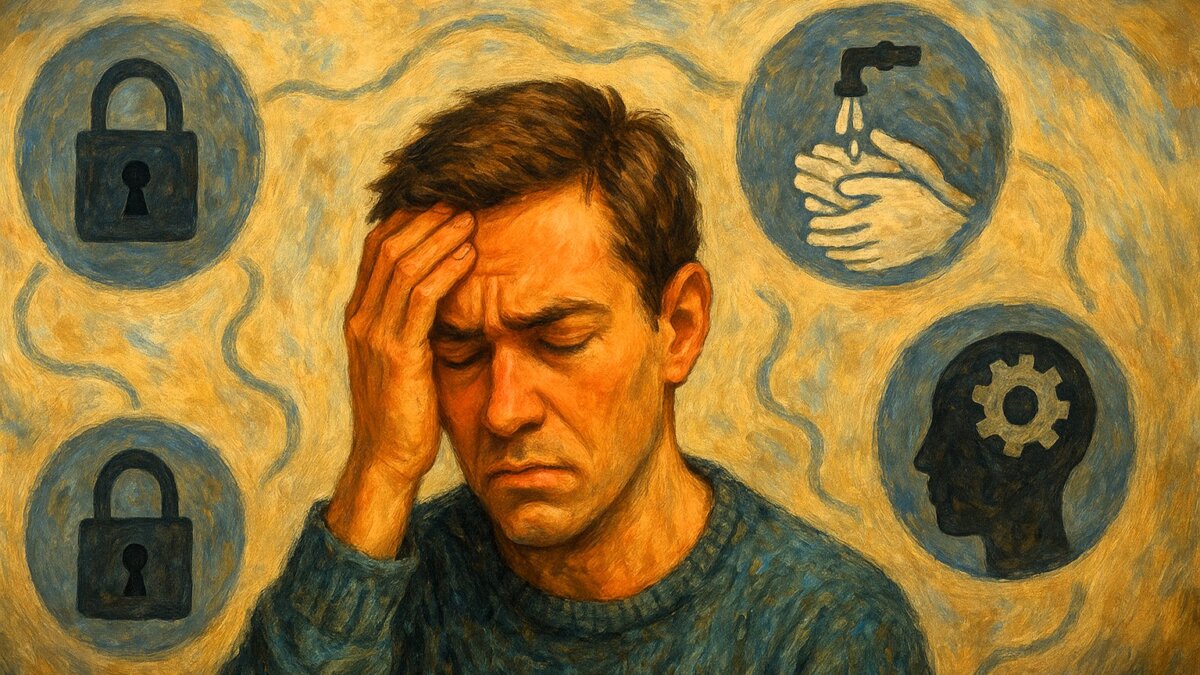
It can create a pressure that is hard to bear. But what are constraints at all?
|
|
0:01:24 – 0:01:32
Obsessive-compulsive disorder typically consists of two components. On the one hand, they are obsessive thoughts,
|
|
0:01:32 – 0:01:43
This can be, for example, intrusive, unwanted thoughts or images that are directed against the one
|
|
0:01:43 – 0:01:51
Pushing will into the head. Often it is about violence, religion, sexuality or even conspiracies
|
|
0:01:51 – 0:02:01
and the other are compulsive acts, quasi rituals or actions that are performed in response to
|
|
0:02:01 – 0:02:10
These thoughts are carried out to neutralize fear or avoid unhappiness.
|
|
0:02:10 – 0:02:19
Such examples would be, for example, someone has the thought, if I do not check the stove twice,
|
|
0:02:19 – 0:02:27
Could burn down the apartment. This leads to ritualized behavior. Each time he must
|
|
0:02:27 – 0:02:32
Stove controlled, not once, but twice. I even know people who do this.
|
|
0:02:32 – 0:02:40
magic numbers, i.e. three times and the whole thing must then be repeated three times. So
|
|
0:02:40 – 0:02:48
In the end, they checked the stove nine times. I once had a partner with whom
|
|
0:02:48 – 0:02:56
I was together for a good three years, which has also really checked very closely whether the stove from
|
|
0:02:56 – 0:03:01
is whether the kettle is off and whether the water is turned off from the washing machine
|
|
0:03:01 – 0:03:08
and dishwasher and so on. And all this was repeated several times. What distinguishes
|
|
0:03:08 – 0:03:17
Are there any tics or routines? Clearly the pressure of suffering. Because if you have this
|
|
0:03:17 – 0:03:26
If you don't follow up on compulsions, there is a pressure of suffering because you haven't done that, because then you have to stop.
|
|
0:03:26 – 0:03:33
The fear comes, there is an unhappiness, to set the whole thing apart from tics and routines.
|
|
0:03:33 – 0:03:43
Tics, such as blinking or sugars, are rather neurological and unreal.
|
|
0:03:43 – 0:03:49
So you do not make it somehow conscious, but it comes from the vegetative nervous system
|
|
0:03:49 – 0:03:58
system or through any cross-connections in the brain or small short circuits on the
|
|
0:03:58 – 0:04:10
Nerve tract and yes, it's awkward when you have it. For example, I had a time
|
|
0:04:10 – 0:04:18
It's a really bad murder. So that's kind of a shaking and I can halfway
|
|
0:04:18 – 0:04:24
Imagine what it's like to have such tics now, because I couldn't turn it off either. I could
|
|
0:04:24 – 0:04:31
I just couldn't hold my arm still and it was pretty uncomfortable. routines. How to Border Now
|
|
0:04:31 – 0:04:37
Are there any constraints on routines? Yeah, that's easy, too. Routines are kind of like that.
|
|
0:04:37 – 0:04:48
Habits and rituals. But they are voluntary. So you've gotten used to these things because
|
|
0:04:48 – 0:04:56
It also seems reassuring. They give structure, but most importantly, they are voluntary.
|
|
0:04:56 – 0:05:02
It's not bad if you don't do this ritual. For example, sleep rituals. Yes,
|
|
0:05:02 – 0:05:06
You can also fall asleep without the ritual, but of course it is more beautiful with the ritual.
|
|
0:05:06 – 0:05:15
Yes, and then there are constraints. Compulsions are excruciating, definitely. They're not fun. They will
|
|
0:05:15 – 0:05:23
Although the person concerned knows that it is actually total nonsense or irrational.
|
|
0:05:23 – 0:05:31
But the fear of missing something or triggering a catastrophe is much stronger than
|
|
0:05:31 – 0:05:36
what you do – even if you know rationally that it is nonsense – that's a lot
|
|
0:05:36 – 0:05:44
Stronger than reason. Typical examples from everyday life. I already have some of them myself
|
|
0:05:44 – 0:05:53
Experience less with other people and others. Washing obligation, i.e. up to 50 times or
|
|
0:05:53 – 0:06:01
more a day to wash your hands, for fear of transmitting any bacteria and germs
|
|
0:06:01 – 0:06:08
Or get infected. I know people who wash all their food several times a day,
|
|
0:06:08 – 0:06:17
Fear that something will arise. This is also difficult, even as a person standing next to it.
|
|
0:06:17 – 0:06:23
Control constraints, as I said, a former partner of mine, control constraints can
|
|
0:06:23 – 0:06:31
Light, doors, faucet, stove, fuse box, everything must be checked several times. And
|
|
0:06:31 – 0:06:36
And woe to him, something is not as it should be.
|
|
0:06:36 – 0:06:39
It could end in a little drama.
|
|
0:06:39 – 0:06:40
Yes, yes.
|
|
0:06:40 – 0:06:45
It's just a number squeezer.
|
|
0:06:45 – 0:06:49
Certain numbers have to be reached in order to achieve a misfortune.
|
|
0:06:49 – 0:06:53
As I said, do the same procedure three times three times.
|
|
0:06:53 – 0:06:59
Because three is a magic number and multiples of it are all the more magical.
|
|
0:06:59 – 0:07:01
Seven has such a strange number.
|
|
0:07:01 – 0:07:09
What some people do too. The higher the number, the more often you repeat. This
|
|
0:07:09 – 0:07:15
can take a long time. Something I haven't experienced so far is
|
|
0:07:15 – 0:07:26
Obsessive thoughts. Impulses to hurt someone, even though you would never do that, stuff broke
|
|
0:07:26 – 0:07:41
What else is there to steal, there is everything. This can be done legally and with the
|
|
0:07:41 – 0:07:50
The law has a lot of problems. I know people who are under some sort of buying compulsion.
|
|
0:07:50 – 0:07:58
have suffered, which have first of all totally indebted and on the other hand in several shops then stop
|
|
0:07:58 – 0:08:06
They had a house ban and almost had problems with their everyday life, because if you were in the
|
|
0:08:06 – 0:08:11
The only grocery store in town that can't even go shopping, then you have a problem.
|
|
0:08:11 – 0:08:23
Religious compulsions, there are and prayer and moral self-control I have at a
|
|
0:08:23 – 0:08:31
I have experienced my own hospital stays, how this is and I can only say that the person was
|
|
0:08:31 – 0:08:38
This is really good, because she did it with fervor and devotion. I found it rather
|
|
0:08:38 – 0:08:45
It's annoying because they were always involved involuntarily. Now as a human being,
|
|
0:08:45 – 0:08:54
who was baptized Catholic but never really lived religiously – I have
|
|
0:08:54 – 0:09:01
all rituals took place in this way, except confirmation – there is no such connection. And if I
|
|
0:09:01 – 0:09:10
If I imagine that there is God, then this is someone who has quite a bit of humor and just like in Dogma the movie.
|
|
0:09:10 – 0:09:18
God laughs at people's faces during sex.
|
|
0:09:18 – 0:09:25
This is how I imagine God. It was just fun for him. That's amusing what's happening here on Earth.
|
|
0:09:25 – 0:09:34
Okay, back to the subject. These constraints are simply not voluntary. They don't push it
|
|
0:09:34 – 0:09:40
character of a person. They are simply symptoms of a disease. And that's what it is.
|
|
0:09:40 – 0:09:48
As soon as something becomes a burden, a burden, because you have to do something, even if it
|
|
0:09:48 – 0:09:57
It's just fitting. It is a serious illness and should be treated.
|
|
0:09:57 – 0:10:11
What is actually behind it? What are the three main emotions that dominate? This is once
|
|
0:10:11 – 0:10:20
Fear of something bad happening, guilt, feeling responsible for possible disasters
|
|
0:10:20 – 0:10:31
to be and quasi the responsibility, often an exaggerated sense of responsibility for
|
|
0:10:31 – 0:10:38
others. Of course, this also becomes a burden if you constantly feel responsible for others.
|
|
0:10:38 – 0:10:43
Typical thoughts would be, for example, if I did not make this one move,
|
|
0:10:43 – 0:10:51
It's my fault if something happens. This idea acts like an alarm system in continuous operation,
|
|
0:10:51 – 0:10:58
Even when there is no longer any cause for concern. As I said, several
|
|
0:10:58 – 0:11:04
Control of all sorts of things, constant hand washing, because possibly could.
|
|
0:11:04 – 0:11:13
What actually helps? Obsessive-compulsive disorders are definitely treatable. It is not
|
|
0:11:13 – 0:11:20
Quick solution, but there are clear strategies on how to deal with it. On the one hand, it is
|
|
0:11:20 – 0:11:33
behavioral therapy, especially the method of exposure with reaction avoidance.
|
|
0:11:33 – 0:11:43
She has shown in studies that this treatment method helps very well. It's the confrontation with them.
|
|
0:11:43 – 0:11:53
Triggering, for example, that I have dirty hands and I have to wash my hand first. Then comes,
|
|
0:11:53 – 0:12:02
The coercive action is not carried out. The brain learns that what could happen
|
|
0:12:02 – 0:12:08
The catastrophe, the bad event. I'm getting sick now. It doesn't happen.
|
|
0:12:08 – 0:12:17
The next approach would be mindfulness techniques. Learning to perceive thoughts without them
|
|
0:12:17 – 0:12:26
to follow automatically. An example would be that I have these thoughts, but I don't have to act on them.
|
|
0:12:26 – 0:12:34
So if I now, to stick to the example in my hands, if I have internalized,
|
|
0:12:34 – 0:12:40
that if my hands are a little dirty, I don't automatically get sick from it,
|
|
0:12:40 – 0:12:49
Because I learned that if I don't act, I won't get sick.
|
|
0:12:49 – 0:12:56
The next option, of course, is drug treatment. In particularly severe
|
|
0:12:56 – 0:13:04
Cases help selective serotonin reuptake hammers. They are like that in the classical sense.
|
|
0:13:04 – 0:13:12
"Antidepressants" in general. They act almost in the brain, exactly at the
|
|
0:13:12 – 0:13:20
interface of the individual neurons, where serotonin is in the synaptic gap and that
|
|
0:13:20 – 0:13:28
it is then resumed again, is prevented because the docking station is blocked
|
|
0:13:28 – 0:13:35
is. And so simply more serotonin is freely available in the synaptic gap and the
|
|
0:13:35 – 0:13:44
This is because the frequency of how often one has to think of these obsessive thoughts can be reduced. But how
|
|
0:13:44 – 0:13:53
In other words, it's actually an antidepressant. But as is so often the case, various
|
|
0:13:53 – 0:14:01
Medications that were conceived for completely different purposes, in other diseases. What to do
|
|
0:14:01 – 0:14:09
But in any case, it is necessary to be aware that obsessive-compulsive thoughts do not simply happen overnight.
|
|
0:14:09 – 0:14:20
disappear. But they can be disempowered and if you have learned that nothing bad
|
|
0:14:20 – 0:14:27
If you don't follow the constraints, it loses power over you.
|
|
0:14:27 – 0:14:39
Changes life. Why is this topic so important to me? Constraints also belong to the borderline spectrum.
|
|
0:14:39 – 0:14:49
As I said, I am myself someone who has a diagnosis, borderline personality or
|
|
0:14:49 – 0:14:58
Emotionally incredulous personality about the borderline and have a bit of a struggle with it themselves.
|
|
0:14:58 – 0:15:09
In my case, yes, how can I say that, although not particularly pronounced, but if I
|
|
0:15:09 – 0:15:15
When I've done things, I just feel safer. Maybe it's more rituals.
|
|
0:15:15 – 0:15:23
as a compulsion. Because it doesn't bother me, I don't necessarily see it as worthy of treatment.
|
|
0:15:23 – 0:15:29
If it were different, I'd be thinking about it. But it's important to me to say,
|
|
0:15:29 – 0:15:39
Constraints are not splices. It is not a matter of order and certainly not voluntary. I know so many
|
|
0:15:39 – 0:15:50
People who suffer from compulsions,
|
|
0:15:50 – 0:15:53
And they suffer in silence because of
|
|
0:15:53 – 0:15:56
Experiences that you have experienced in the course of your
|
|
0:15:56 – 0:15:59
Life has been made, you will not
|
|
0:15:59 – 0:16:02
Take It Seriously Or Take It
|
|
0:16:02 – 0:16:05
Funny about one or you'll be for
|
|
0:16:05 – 0:16:09
kept insane. I mean, if someone
|
|
0:16:05 – 0:16:10
Hands 20 times in a row
|
|
0:16:10 – 0:16:13
washes, so that almost no more skin
|
|
0:16:13 – 0:16:14
It's on your fingers, and you're going to
|
|
0:16:14 – 0:16:18
It's crazy because a normal person
|
|
0:16:18 – 0:16:21
Don't do that. And it's me
|
|
0:16:21 – 0:16:25
important, with the format "The quiet silence"
|
|
0:16:25 – 0:16:28
educating about various
|
|
0:16:28 – 0:16:32
Psychological illnesses, sometimes also
|
|
0:16:28 – 0:16:37
neurological diseases, because the stigma of what these diseases have, because they are on the
|
|
0:16:37 – 0:16:46
Hidden in silence or not visible, is far too great. How often do I come across understanding
|
|
0:16:46 – 0:16:52
because of my physical disability, which I retained after the stroke,
|
|
0:16:52 – 0:17:00
But how often do I run into incomprehension when I say I'm not going to the Christmas market?
|
|
0:17:00 – 0:17:02
Dortmund, because it's too many people for me.
|
|
0:17:02 – 0:17:12
And with the experience I have with this stigma and lack of understanding,
|
|
0:17:12 – 0:17:15
I would like to do some educational work.
|
|
0:17:15 – 0:17:22
It is important for me to say that we need more empathy in society.
|
|
0:17:22 – 0:17:27
Those who experience compulsions live out.
|
|
0:17:27 – 0:17:32
He fights daily against what's going on in his head.
|
|
0:17:32 – 0:17:39
And this is a strenuous struggle, something that robs forces.
|
|
0:17:39 – 0:17:44
And if I can't go after that compulsion, then I'm really suffering.
|
|
0:17:44 – 0:17:52
What's going on in the minds of the people who are in this situation is incredible.
|
|
0:17:52 – 0:17:58
Of any catastrophes, of any bad upheavals.
|
|
0:17:58 – 0:18:02
The house burns down because I forgot to turn off the stove.
|
|
0:18:02 – 0:18:09
The apartment is flooded because I forgot the faucet from the washing machine
|
|
0:18:09 – 0:18:11
Turn off and the hose will burst.
|
|
0:18:11 – 0:18:20
These are, of course, real dangers. This can happen, but what is the probability or how high is the frequency?
|
|
0:18:20 – 0:18:28
Therefore, these fears are completely exaggerated. But who lives these fears, for him this is real.
|
|
0:18:28 – 0:18:33
And that's important to me to clarify.
|
|
0:18:33 – 0:18:43
If you know someone or yourself
|
|
0:18:43 – 0:18:47
Don't wait, don't wait,
|
|
0:18:47 – 0:18:49
Help or seek help if you
|
|
0:18:49 – 0:18:50
You can't go to the doctor alone
|
|
0:18:50 – 0:18:55
Or if you know someone who doesn't
|
|
0:18:55 – 0:19:00
can. It is so important,
|
|
0:19:00 – 0:19:02
that you get support and
|
|
0:19:00 – 0:19:10
Perhaps the first point of contact is your family doctor, that you talk to him about it or accompany someone to encourage them to talk about it.
|
|
0:19:10 – 0:19:24
And be certain that you are not alone. There are many people who suffer from it, who talk about it on the Internet, in various forums, groups, on Facebook and hatefully seen.
|
|
0:19:24 – 0:19:29
Some talk about it more openly, others behind a pseudonym.
|
|
0:19:29 – 0:19:36
But there is so much support, so many offers and I can only recommend you to use it.
|
|
0:19:36 – 0:19:43
In my first time with my borderline diagnosis and also the suspicion that I have borderline,
|
|
0:19:43 – 0:19:48
I read a lot about it on the internet,
|
|
0:19:48 – 0:20:01
I just found a great group, a chat where I could exchange a lot and that gave me so much strength and energy that it was worth gold.
|
|
0:20:01 – 0:20:08
And now I'd just say we're pretty much through with the episode.
|
|
0:20:08 – 0:20:17
If you know someone who suffers from it, you may want to show them the episode.
|
|
0:20:17 – 0:20:23
Thank you for listening to me up to this point.
|
|
0:20:23 – 0:20:33
And I'd say in one of the next episodes we're talking about dissocialization or
|
|
0:20:33 – 0:20:45
Dissociation, one of the two, or emotional numbness. I have these three themes on the
|
|
0:20:45 – 0:20:52
Agenda. So stay healthy, take care of yourselves, bye, your Sasha.
|
|
0:20:52 – 0:21:21
[Music]
|
|
0:21:21 – 0:21:24
[Music]
|
|
0:21:24 – 0:21:30
[Music]
|
|
0:21:30 – 0:21:36
[Music]
|
|
0:21:36 – 0:21:42
[Music]
|
|
0:21:42 – 0:21:48
[Music]
|
|
0:21:48 – 0:21:51
[Music]
|
|
0:21:51 – 0:21:57
[Music]
|
|
0:21:57 – 0:22:03
[Music]
|
|
0:22:03 – 0:22:09
[Music]
|
|
0:22:09 – 0:22:16
[Music]
|
|
0:22:16 – 0:22:19
[Music]
|
|
0:22:19 – 0:22:25
[Music]
|
|
0:22:25 – 0:22:31
[Music]
|
|
0:22:31 – 0:22:37
[Music]
|
|
0:22:37 – 0:22:43
[Music]
|
|
0:22:43 – 0:22:46
[Music]
|
|
0:22:46 – 0:22:53
[Music]
|
|
0:22:53 – 0:22:59
[Music]
|
|
0:22:59 – 0:23:05
[Music]
|
|
0:23:05 – 0:23:11
[Music]
|
|
0:23:11 – 0:23:14
[Music]
|
|
0:23:14 – 0:23:20
[Music]
|
|
0:23:20 – 0:23:26
[Music]
|
|
0:23:26 – 0:23:32
[Music]
|
|
0:23:32 – 0:23:39
[Music]
|
|
0:23:39 – 0:24:08
[Music]
|
|
0:24:08 – 0:24:11
[Music]
|
|
0:24:11 – 0:24:14
[credits]
|




 English