

| transcript | |
|---|---|
|
00:00 – 0:00:12
Short disclaimer. In this episode, Bernhard Wagner is only used as a source of information.
|
|
|
0:00:12 – 0:00:23
It is not imputed to him at the, yes, what do you call that, suggesting that there is no act
|
|
|
0:00:23 – 0:00:34
There was, in no way done. warning. We live in a time where again warnings total
|
|
|
0:00:34 – 0:00:45
in and vogue. It is used as a stylistic device, as an argument. One makes an announcement to X,
|
|
|
0:00:45 – 0:00:50
YZ and refers to interesting judgments.
|
|
|
0:00:50 – 0:01:00
Klarfunk. Not around it. Not just further. Not just loud. Questioning.
|
|
|
0:01:00 – 0:01:03
Clear radio.
|
|
|
0:01:03 – 0:01:07
Clear radio.
|
|
|
0:01:07 – 0:01:10
Let's talk about it.
|
|
|
0:01:10 – 0:01:16
Let's talk about it.
|
|
|
0:01:16 – 0:01:27
Welcome to Klarfunk. I'm Sascha Maachmann and now I'll be a little bit, yes, yes plain text
|
|
|
0:01:27 – 0:01:39
not, loud and clear my opinion on it. Yes, we have again, when was that
|
|
|
0:01:39 – 0:01:51
have been. That was before 20, 2020. Dance ban made announcements. Announcements to Montana Black, Announcements
|
|
|
0:01:51 – 0:02:03
to all sorts of other YouTubers. Orangemorengescrews, Because of Casino Streams and How Suspicious He Is
|
|
|
0:02:03 – 0:02:08
finds. Strangely enough, this coincides with the very time when he was an extreme.
|
|
|
0:02:08 – 0:02:17
It had channel growth. Well, there were announcements really very successful. But experience this
|
|
|
0:02:17 – 0:02:24
me now. We have a renaissance of announcements. I make announcements to X, Y and Z,
|
|
|
0:02:24 – 0:02:31
then wipe with any court rulings that have a completely different set of facts and a
|
|
|
0:02:31 – 0:02:39
Discuss completely different problems, but I'll show you, because I have the proof here.
|
|
|
0:02:39 – 0:02:47
Yes, I would throw around so inflationary with what I'm doing for ads and procedures
|
|
|
0:02:47 – 0:02:54
I'd be wondering, firstly, who's paying for all this shit and secondly,
|
|
|
0:02:54 – 0:03:02
Do I have to make an ad for every cocolor? But that seems to be just in
|
|
|
0:03:02 – 0:03:10
to be our little bubble really big topic. What? You don't like what I say? Display.
|
|
|
0:03:10 – 0:03:21
What? I don't like what you say? Display. My lawyer writes a letter. Post is out. warning,
|
|
|
0:03:21 – 0:03:31
warning warning warning this has now become totally horny so really interesting that people
|
|
|
0:03:31 – 0:03:37
Everyone has money for it and also so much time to expose themselves to each other
|
|
|
0:03:37 – 0:03:42
to put because if you just go there poorly prepared then the lawyer has to take care of all this
|
|
|
0:03:42 – 0:03:46
look and then stop writing the stuff that he calculates naturally and put at hours
|
|
|
0:03:46 – 0:03:54
from beyond the 300 rather 400 euros. Yes, you're thinking that somehow you're going to spend four hours there
|
|
|
0:03:54 – 0:04:02
Live streams let the lawyer watch or if you don't go there and then everything yourself
|
|
|
0:04:02 – 0:04:11
gather and give them a package. Yes, I wonder what these announcements do anyway
|
|
|
0:04:11 – 0:04:20
should. Since a cuddly kitten also writes an announcement to us, posts this in her community area
|
|
|
0:04:20 – 0:04:27
and then see that the people who follow it or stop where the algorithm feels it is necessary,
|
|
|
0:04:27 – 0:04:38
Show it to people. And that's the big all-round envelope. I showed it to you.
|
|
|
0:04:38 – 0:04:46
And then I wonder, in what context is that? What am I getting an announcement for now? For
|
|
|
0:04:46 – 0:04:51
What does the project get? Who gets an announcement? Is it the female part? Is it
|
|
|
0:04:51 – 0:04:57
the male part? Is it the other proagunists who are active on radio?
|
|
|
0:04:57 – 0:05:04
Difficult, especially if you don't call a name. Who is addressed now? Mr., Mrs.,
|
|
|
0:05:04 – 0:05:12
the others are questions that I ask myself and those where I can't get an answer because
|
|
|
0:05:12 – 0:05:26
Ask, Ansage to Lautfunk plus xyz and then also with orange highlighter the text passages
|
|
|
0:05:26 – 0:05:33
marked by a verdict. Is that supposed to intimidate me somehow? So at least that is,
|
|
|
0:05:33 – 0:05:41
What I have now heard about this process is on a completely different level like that,
|
|
|
0:05:41 – 0:05:48
what's going on here. But maybe this is just an attempt at intimidation. I mean,
|
|
|
0:05:48 – 0:05:57
We really like to work with that right now. It starts with ad and there you get hold of post
|
|
|
0:05:57 – 0:06:02
from my lawyer, then at some point goes over visits in front of any offices,
|
|
|
0:06:02 – 0:06:18
where one is then also threatened with a black powder projectile accelerator and the
|
|
|
0:06:18 – 0:06:25
then used as an opinion booster to deliver a message that is highly
|
|
|
0:06:25 – 0:06:31
It is interesting in its core statement. But then something becomes somehow
|
|
|
0:06:31 – 0:06:35
Constructed that it wasn't there. This is the post office, which then
|
|
|
0:06:35 – 0:06:40
Either before or after. And then there will also be a community post
|
|
|
0:06:40 – 0:06:46
obtained from someone else, who then neatly analyzed how halt
|
|
|
0:06:46 – 0:06:53
into the livestream, which happened after the fact, how the speeches were,
|
|
|
0:06:53 – 0:06:58
what themes were, how and so on.
|
|
|
0:06:58 – 0:07:03
This is then referred to and then, this is all a staging.
|
|
|
0:07:03 – 0:07:16
I really wonder with these people, and that goes to our Hamburg handbag activist,
|
|
|
0:07:16 – 0:07:24
Is your inner perception different from the outer perception?
|
|
|
0:07:24 – 0:07:29
So I have already discussed it in the context of the digression that I stop
|
|
|
0:07:29 – 0:07:36
People who remember situations where several were involved completely differently
|
|
|
0:07:36 – 0:07:38
have like the others.
|
|
|
0:07:38 – 0:07:43
So that I've ever wondered, what's wrong with my perception?
|
|
|
0:07:43 – 0:07:52
If you talk about it, you find that 99 percent of my perception is identical to the perception of others.
|
|
|
0:07:52 – 0:07:59
Is good, that one percent are just deviations, because everyone just sets a different focus for himself personally.
|
|
|
0:07:59 – 0:08:08
But so on the whole the situation, the processes are described uniformly and then things stop there,
|
|
|
0:08:08 – 0:08:15
You think so, that can't be true. Above all, stone and ball are claimed,
|
|
|
0:08:15 – 0:08:21
No, that's the way I tell you, and that's the way it is there. There are things going to be
|
|
|
0:08:21 – 0:08:28
rhymed together, constructed, and I'm really wondering, don't they realize that?
|
|
|
0:08:28 – 0:08:35
And the answer is, unfortunately, no, they don't realize it. There are protection mechanisms,
|
|
|
0:08:35 – 0:08:50
who conceal their own failures, so that you just consider everything as a threat, what just something
|
|
|
0:08:50 – 0:08:58
says what does not correspond to one's own inner perception. And yes, then you just reach out
|
|
|
0:08:58 – 0:09:09
more radical means and I see this now really increased and not in vain I have
|
|
|
0:09:09 – 0:09:15
Yes, various content creators had written with the "Please talk".
|
|
|
0:09:15 – 0:09:19
Some have also written to me with the "Please talk" because they
|
|
|
0:09:19 – 0:09:25
also noticed. Yes, then you just exchange ideas and find out
|
|
|
0:09:25 – 0:09:33
Everyone finds this worrying.
|
|
|
0:09:33 – 0:09:33
But somehow nobody does anything.
|
|
|
0:09:33 – 0:09:38
I find it really difficult and
|
|
|
0:09:38 – 0:09:45
It is frightening to think that
|
|
|
0:09:45 – 0:09:49
in Wuppertal someone in front of his office
|
|
|
0:09:49 – 0:09:53
They are so intimidated.
|
|
|
0:09:49 – 0:09:55
First of all, I wonder what happens as
|
|
|
0:09:55 – 0:10:01
Next and who is next
|
|
|
0:10:01 – 0:10:04
on it? Do I need alarm systems now
|
|
|
0:10:04 – 0:10:08
gaining? Do I have to get personal protection?
|
|
|
0:10:08 – 0:10:11
Just because I dare to tell people
|
|
|
0:10:11 – 0:10:16
Criticizing for Publicly Done
|
|
|
0:10:11 – 0:10:21
Statement? I have to be scared because I
|
|
|
0:10:21 – 0:10:24
People wear things they wear with
|
|
|
0:10:24 – 0:10:26
Have you experienced this other person?
|
|
|
0:10:26 – 0:10:29
Although I do not publicly
|
|
|
0:10:29 – 0:10:33
I talk about it, but I have the knowledge.
|
|
|
0:10:33 – 0:10:35
Do I have to be afraid of that? Do I have to
|
|
|
0:10:35 – 0:10:39
me quasi on the shortening key of my
|
|
|
0:10:35 – 0:10:41
mobile phones;
|
|
|
0:10:41 – 0:10:49
the 110 and the direct extension to the
|
|
|
0:10:49 – 0:10:49
SEK, Ministry of Interior,
|
|
|
0:10:49 – 0:10:57
other authorities, everything over there
|
|
|
0:10:57 – 0:11:00
stands, here protection of the Constitution,
|
|
|
0:11:00 – 0:11:02
Federal Criminal Police Office, State Criminal Police Office.
|
|
|
0:11:02 – 0:11:04
Do I have to use all this on speed dial
|
|
|
0:11:04 – 0:11:05
make groping, so that I then in the
|
|
|
0:11:04 – 0:11:07
Deciding the Right Ones Right Now
|
|
|
0:11:07 – 0:11:12
You can call people to get help.
|
|
|
0:11:12 – 0:11:14
get? Do I have to make contacts to
|
|
|
0:11:14 – 0:11:16
provide military shielding service,
|
|
|
0:11:16 – 0:11:19
so that I somehow stop at it
|
|
|
0:11:19 – 0:11:23
Be warned if something happens?
|
|
|
0:11:23 – 0:11:25
No, I don't have to. But it is
|
|
|
0:11:25 – 0:11:30
sad that you have something like this
|
|
|
0:11:30 – 0:11:33
must address. There will be a young man,
|
|
|
0:11:30 – 0:11:37
who goes to his office at two o'clock at night because he still has something to do,
|
|
|
0:11:37 – 0:11:44
threatened and injured with an opinion booster, the black powder
|
|
|
0:11:44 – 0:11:52
Accelerated projectiles fired. And then it is called into question that
|
|
|
0:11:52 – 0:11:58
this has happened. The question is not asked or the
|
|
|
0:11:58 – 0:12:04
Opinion expressed that this is totally
|
|
|
0:12:04 – 0:12:07
is exaggerated. No, it will
|
|
|
0:12:07 – 0:12:10
doubted. It will be in your own
|
|
|
0:12:10 – 0:12:13
inner perception interpreted and
|
|
|
0:12:13 – 0:12:16
interpreted that it only stages
|
|
|
0:12:16 – 0:12:18
can be. Because it is in the
|
|
|
0:12:18 – 0:12:22
The past also once made a statement,
|
|
|
0:12:22 – 0:12:25
where you had the guess without
|
|
|
0:12:25 – 0:12:28
Evidence to have whether there is a
|
|
|
0:12:25 – 0:12:32
There was use or maybe even just a telephone conversation, which is not at all in the
|
|
|
0:12:32 – 0:12:36
Police diary is listed.
|
|
|
0:12:36 – 0:12:42
So from this one then interprets that someone else makes them punishable and
|
|
|
0:12:42 – 0:12:48
this is a crime, a pretense of a crime, especially with the
|
|
|
0:12:48 – 0:12:52
Impact, because you had said yes, you had the impression that it was just a
|
|
|
0:12:52 – 0:13:00
Sharp black powder accelerated projectile device would be.
|
|
|
0:13:00 – 0:13:05
I mean, that's where our law enforcement officers are very allergic to it.
|
|
|
0:13:05 – 0:13:11
And then a slightly larger gun is pulled up on search work.
|
|
|
0:13:11 – 0:13:16
as if you were saying I got an email from xy there stood what
|
|
|
0:13:16 – 0:13:23
bad inside. I want to show that now.
|
|
|
0:13:23 – 0:13:24
No, they're a little allergic.
|
|
|
0:13:24 – 0:13:33
They also do a little more than
|
|
|
0:13:33 – 0:13:36
that. So another YouTuber from
|
|
|
0:13:36 – 0:13:39
Berlin also has Wuppertal
|
|
|
0:13:39 – 0:13:41
Asked the police if it stopped there.
|
|
|
0:13:39 – 0:13:46
There was a commitment and he confirmed it
|
|
|
0:13:46 – 0:13:48
get. So it became quasi
|
|
|
0:13:48 – 0:13:51
Confirmed by someone third
|
|
|
0:13:51 – 0:13:54
that there was a mission. A short
|
|
|
0:13:54 – 0:13:56
Disclaimer. From this point onwards,
|
|
|
0:13:56 – 0:13:59
expressly not Bernhard Wagner of
|
|
|
0:13:59 – 0:14:02
Berny's night café. It is about the
|
|
|
0:14:02 – 0:14:06
cuddly kittens. But you still doubt
|
|
|
0:14:02 – 0:14:11
that, assuming a criminal offense, pretends to be a criminal offense and then argues it with announcements,
|
|
|
0:14:11 – 0:14:20
It could all be constructed. So I think it's pretty virious and when I'm like that
|
|
|
0:14:20 – 0:14:30
think about it, if that would happen to me, so that I keep having these thoughts
|
|
|
0:14:30 – 0:14:39
and outward and I do not notice that I have these train of thought and that this stops with
|
|
|
0:14:39 – 0:14:46
the inner and outer perception is a great discrepancy, then the point would be where I
|
|
|
0:14:46 – 0:14:51
halt would seek help. Especially if I notice it. If I don't notice it anymore,
|
|
|
0:14:51 – 0:14:56
I would be grateful if someone else would let me know that I am helping.
|
|
|
0:14:56 – 0:15:00
would try. But we know from experience above all in
|
|
|
0:15:00 – 0:15:07
these special persons, that will then be dismissed as cocolores, they will be
|
|
|
0:15:07 – 0:15:16
Advertisements are made, warnings are written. I always wonder where this
|
|
|
0:15:16 – 0:15:20
All the money comes here for it. I mean, after all, something like that costs money. So I
|
|
|
0:15:20 – 0:15:24
knows from own experience, so a media lawyer somehow costs what
|
|
|
0:15:24 – 0:15:30
between 350 and 400 euros an hour. Other lawyers have others, of course.
|
|
|
0:15:30 – 0:15:37
Rates, but getting something on legal aid is already really difficult.
|
|
|
0:15:37 – 0:15:48
I find it very interesting these dynamics and I must say I have also really meanwhile
|
|
|
0:15:48 – 0:15:56
So if I get an ad, I can handle it. If I get a warning,
|
|
|
0:15:56 – 0:16:04
yes I can also deal with it, because it means in the end only a little bit
|
|
|
0:16:04 – 0:16:10
Trouble and hold a lot of money, which I have to spend. And I know, I was howling around at the
|
|
|
0:16:10 – 0:16:15
First warning. Well, don't yell, I complained about it being damn difficult
|
|
|
0:16:15 – 0:16:23
Find a lawyer who has the capacity. And how shit I find this action,
|
|
|
0:16:23 – 0:16:37
I can say that. Yes, but when I think about it, it's always such huge things
|
|
|
0:16:37 – 0:16:44
be constructed and people then do themselves with it important and see, I already have this
|
|
|
0:16:44 – 0:16:59
won. Yeah, I don't know. This is something that is no longer normal. So, you just notice,
|
|
|
0:16:59 – 0:17:04
I'm also at the end of my Latin. Yes, I know I speak a terrible Latin.
|
|
|
0:17:04 – 0:17:11
I mean, the whole thing is rescripted here now. I sit here in front of the microphone spontaneously and
|
|
|
0:17:11 – 0:17:20
Speak this in. And I'm just
|
|
|
0:17:20 – 0:17:23
speechless, how unempathetic there
|
|
|
0:17:23 – 0:17:29
is reacted. And shortly after three rings
|
|
|
0:17:29 – 0:17:31
that, I get a message that just someone
|
|
|
0:17:31 – 0:17:35
I want to talk about what
|
|
|
0:17:35 – 0:17:38
Bad things happen. We were on the
|
|
|
0:17:38 – 0:17:39
Go to bed and then
|
|
|
0:17:38 – 0:17:44
We'll talk on the phone and then you'll hear what happened. And you're thinking, "What the fuck?
|
|
|
0:17:44 – 0:17:53
What kind of world do we live in, where you travel with such opinion enhancers? What are these
|
|
|
0:17:53 – 0:18:01
for sick, criminal brains?" And every person I've talked to about it,
|
|
|
0:18:01 – 0:18:09
shakes his head and asks himself
|
|
|
0:18:09 – 0:18:14
for what? What? It is about
|
|
|
0:18:14 – 0:18:18
YouTube Beef? How please? For
|
|
|
0:18:18 – 0:18:22
Criticism and counterarguments and all that? For that?
|
|
|
0:18:22 – 0:18:27
Yes? And then you've got people sitting there,
|
|
|
0:18:22 – 0:18:33
of this relativization. That can't be. This is staged and then become
|
|
|
0:18:33 – 0:18:41
also made announcements and I think to myself, young woman, what's wrong with you and
|
|
|
0:18:41 – 0:18:50
Your life doesn't have you arguing and thinking that way.
|
|
|
0:18:50 – 0:18:54
I also fall for this personally now
|
|
|
0:18:54 – 0:18:59
Nothing more that I
|
|
|
0:18:59 – 0:19:05
could still say without me
|
|
|
0:19:05 – 0:19:10
Legally external to this. Because my
|
|
|
0:19:10 – 0:19:15
Contempt for this could hardly be greater
|
|
|
0:19:15 – 0:19:19
to be expressed as if I were someone
|
|
|
0:19:15 – 0:19:23
willfully climb on the roof and has
|
|
|
0:19:23 – 0:19:24
shit about it. Yes, I think that hits it
|
|
|
0:19:24 – 0:19:29
Very well. This is a beautiful picture
|
|
|
0:19:29 – 0:19:36
for it. I mean, there has been
|
|
|
0:19:36 – 0:19:39
Someone all human empathy so
|
|
|
0:19:36 – 0:19:47
Shot in such a way that you can only
|
|
|
0:19:47 – 0:19:51
From, yes, from what reason, hatred
|
|
|
0:19:51 – 0:19:55
Don't explain yourself to me, loyalty
|
|
|
0:19:55 – 0:19:59
to third parties, so that's what I find
|
|
|
0:19:59 – 0:20:01
Even a hard piece. I don't know,
|
|
|
0:20:01 – 0:20:03
Maybe I'll get another
|
|
|
0:20:01 – 0:20:09
Announcement and then there is also an explanation. Would be interesting. Man
|
|
|
0:20:09 – 0:20:16
just realizes I'm still missing the words and it's a little time now
|
|
|
0:20:16 – 0:20:21
past and I shake my head all the more when I see how some
|
|
|
0:20:21 – 0:20:27
Content creators and, above all, people in the comment columns
|
|
|
0:20:27 – 0:20:38
react to it. And I am appalled that one sees oneself compelled to do an analysis of the
|
|
|
0:20:38 – 0:20:49
to order livestream content, where you analyse the speech shares and the topic shares,
|
|
|
0:20:49 – 0:20:57
only to show that it is a moral staging and others then relate
|
|
|
0:20:57 – 0:21:05
on it. So more perfectly you can not put a conflagration, as in the World Cup, in such situations
|
|
|
0:21:05 – 0:21:17
Keep the little game going. Yeah, sad, right? In the end, it is about
|
|
|
0:21:17 – 0:21:31
for people. We now have a young man who is intimidated, who is hurt. Not
|
|
|
0:21:31 – 0:21:41
Physically, even mentally. And experience has shown that when people have experienced something like this, there will also be
|
|
|
0:21:41 – 0:21:49
There is a trauma left behind and that needs to be treated. And then it will become
|
|
|
0:21:49 – 0:21:58
echauffiert, a story, a construct made, that all this is constructed, a staging.
|
|
|
0:21:58 – 0:22:08
And no one comes up with the idea of being outraged that, first of all, the act happened and
|
|
|
0:22:08 – 0:22:17
others that they deny credibility to the victims and mean,
|
|
|
0:22:17 – 0:22:23
Because it is a staging, one would fake a crime.
|
|
|
0:22:23 – 0:22:33
A crime writer, a screenwriter couldn't make it more perfidious and blatant
|
|
|
0:22:33 – 0:22:41
Implemented. Well, that's just life and the internet is a reflection of our
|
|
|
0:22:41 – 0:22:49
society. There must also be very special specimens. So many people
|
|
|
0:22:49 – 0:22:53
on this. I know I have repeated myself, I have an indistinct debate and
|
|
|
0:22:53 – 0:23:00
my latin is horrible, my grammar is bad and I know I
|
|
|
0:23:00 – 0:23:06
I know I'm talking too slowly. Thank God there is a function for that. Double speed
|
|
|
0:23:06 – 0:23:14
makes life more bearable, saves time, namely half. And against the other there is also a
|
|
|
0:23:14 – 0:23:24
super aids. Just don't listen. By the way, the permission gives us the contents of the group
|
|
|
0:23:24 – 0:23:30
release. Then I say thank you and goodbye, your Sasha.
|
|
|
0:23:30 – 0:23:41
Thoughts remain, questions smoke, think on, ask on, talk on.
|
|
|
0:23:41 – 0:23:51
That was KlarFunk. Yeah, yeah, yeah, yeah, yeah, yeah, yeah, yeah, yeah, yeah, yeah, ye Let's talk about it.
|
|
|
0:23:51 – 0:23:58
[Music]
|
When does public criticism become a personal conflict? When do legal means become a demonstration of power? And what happens when even reports of violence no longer trigger compassion, but distrust and new accusations?
In this episode of KlarFunk Sascha Markmann deals with a worrying development within the German YouTube scene: Public announcements, warnings, criminal charges and mutual accusations seem increasingly to become an integral part of digital disputes.
What used to start with disagreements now often develops into a dynamic of legal threats, public justifications, and ever-new levels of escalation. The question arises whether it is actually still about the matter or long ago about attention, sovereignty of interpretation and the demonstration of supposed superiority.
When legal disputes become a public staging
Based on previous YouTube controversies, Sascha sheds light on how so-called announcements are used as a means of publicity. Court rulings are cited, passages highlighted and legal action announced. But how meaningful are such references when the underlying facts are completely different?
It is also about the question of what financial and personal burdens arise when disagreements are increasingly carried out by legal means.
When real fear arises from digital conflicts
Sascha is particularly concerned with the reported attack on a journalist in Wuppertal, who is said to have been threatened and physically injured.
The focus of the episode, however, is not only the incident itself, but also the public handling of it. While some people react with dismay, doubts are expressed elsewhere and speculation about a possible staging is spread.
Sascha questions how such narratives arise, why people evaluate conflicting information differently and why the credibility of suspected victims becomes the subject of public debate.
Perception, group dynamics and lack of empathy
Another focus is on the psychological side of digital conflicts. How much do personal beliefs influence our perception? Why do people stick to their interpretation, even if other participants describe the same situation in a completely different way?
It is about self-protection, selective perception, group affiliation and the question of how loyalty to individual persons can create a dynamic in which compassion and factual differentiation are increasingly lost.
A personal consequence across the borders of digital disputes
KlarFunk 007 is deliberately not a distant news report, but a personal comment. Sascha speaks openly about his uncertainty, his anger and the consequences of an increasingly aggressive culture of discussion for people who publicly voice criticism.
In the end, a fundamental question remains:
How far can a conflict on the Internet escalate before we stop thinking in camps and see the people behind it again?
KlarFunk – Not just loud. questions. Questioning. Let's talk about it.
Note: The episode contains personal evaluations and refers to reported events as well as public reactions to them. Any suspicions expressed are not to be equated with facts established by a court.
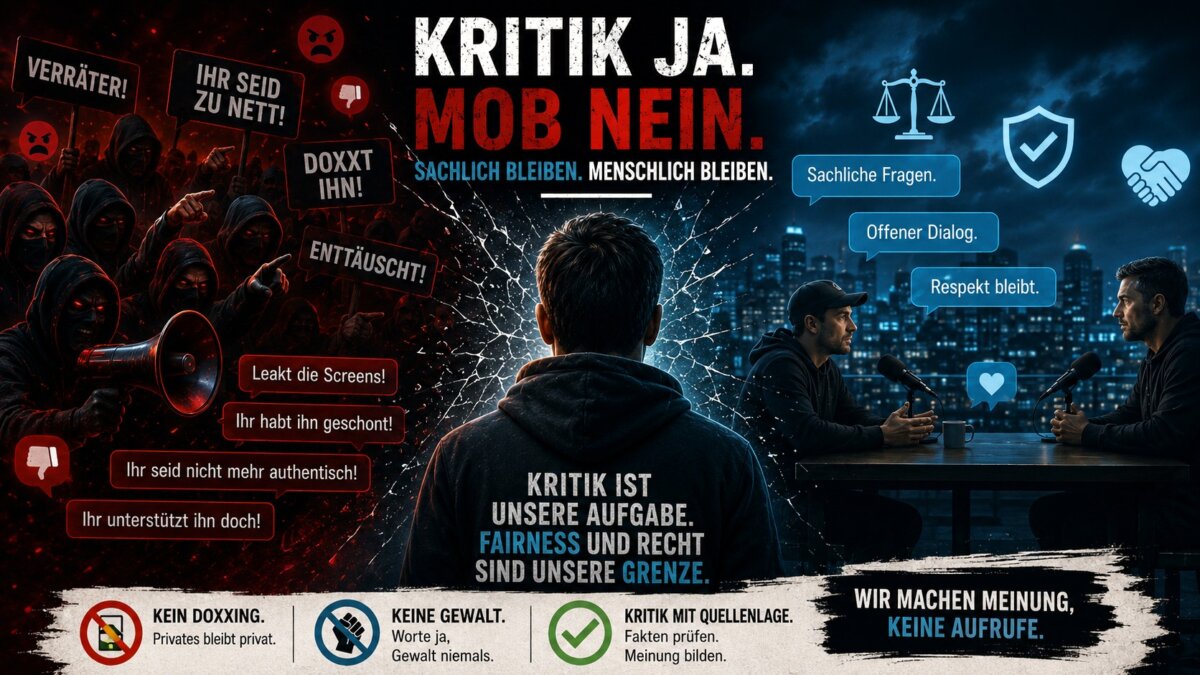
Topics of this episode
- The renaissance of YouTube announcements: Why public bills and provocative statements within the creator scene are gaining in importance again.
- Warnings, criminal charges and legal threats: When differences of opinion become legal disputes and the boundaries between legitimate legal protection and public demonstration of power become blurred.
- Court rulings as rhetorical means of pressure: Why reliance on legal decisions without taking into account the specific facts of the case can be problematic.
- The price of digital conflicts: Legal fees, time spent and psychological stress caused by ongoing legal and public disputes.
- Public announcements and their actual effect: Who should be addressed, what message is conveyed and what role does the audience play?
- Intimidation beyond the Internet: How real feelings of threat arise from verbal conflicts and what consequences this has for people who appear publicly.
- The reported attack on a journalist in Wuppertal: Why this incident concerns Sasha personally and what fundamental questions he raises.
- If alleged victims are denied credibility: The dynamics of public speculation, allegations of staging and unsubstantiated suspicions.
- Internal and external perception: How people interpret the same events differently and why personal beliefs play a crucial role.
- Psychological protection mechanisms and selective information processing: Why contradictory information can be perceived as an attack on one's own worldview.
- Group Dynamics and Loyalty in the YouTube Bubble: When camp thinking, mutual confirmation and personal dislikes complicate a factual discussion.
- The responsibility of content creators: What influence public statements have on their own community and how quickly conflicts can be further fueled by this.
- Empathy in a polarized online world: Why compassion should not depend on sympathy, group affiliation, or personal differences.
- Personal limitations and the fear of escalation: Sasha's thoughts on the impact that public criticism can have on one's own safety and personal life.
- When man disappears behind the conflict: Why we must not lose sight of the human consequences of our actions even in digital disputes.


Advertising:
Related episodes:
- How hate connects us
- KlarFunk-002 The indignation machinery, opportunists and the ‘stupid click cattle’
- Drama in the nanocosmos and the witty cuddle
- Brainwash in the Bubble - Balcony philosophy meets media criticism
- Echo chambers, Dunning pitchers and the double standard on the balcony
- When diagnoses become a weapon - therapy language, peer pressure and YouTube double standards
Contributors to this episode


Duration: 0:23:58
Date of admission: 11.10.26
This episode is from season 4, there are a total of 4 seasons.
One According to Funk Publication Cartel Production - Where stories are transmitted unmistakably.
Podcast license:

This work is licensed under a Creative Commons Attribution-NonCommercial-ShareAlike 4.0 International License

Note: This post contains affiliate links. If you shop through these links, I'll get a small commission at no extra cost to you.




 English