|
00:00 - 0:00:02
*Music*
|
|
0:00:02 – 0:00:31
[Music]
|
|
0:00:31 – 0:00:39
Hello and welcome to a new episode of digression, where I occasionally actually
|
|
0:00:39 – 0:00:47
Almost always deviate from the topic. I'm Sascha Machmann and say hello. Today's topic is
|
|
0:00:47 – 0:00:56
Something, yes, it affects us in some way. There's always been YouTube in the past.
|
|
0:01:03 – 0:01:11
Battery calypse. Thousands of subscribers were deleted on each channel. At that time there were
|
|
0:01:11 – 0:01:21
I was 160 when I had 500, 600. And that was real for some channels.
|
|
0:01:21 – 0:01:30
It's a disaster because they've lost monetization. Then there were again and again
|
|
0:01:30 – 0:01:39
Adjustments, then people just lost their monetization for various reasons and that gave
|
|
0:01:39 – 0:01:48
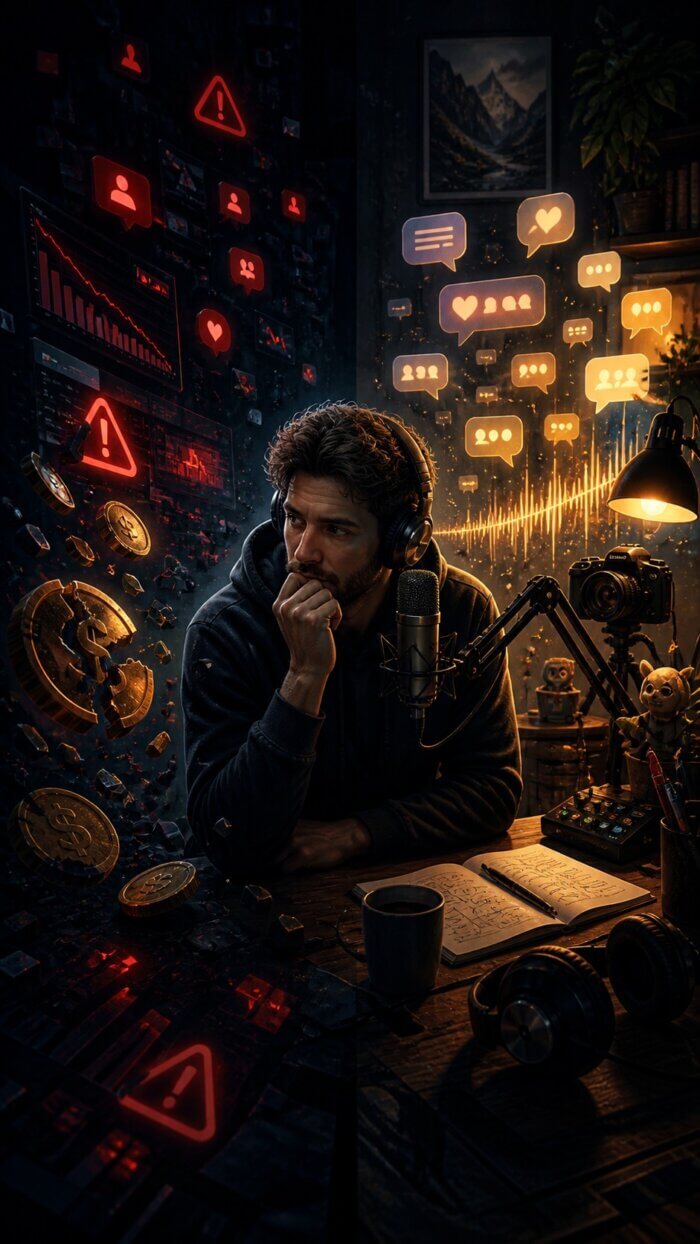
always such waves and currently there is a demonetization wave for channels that stop
|
|
0:01:48 – 0:01:55
They don't produce authentic content, and that's what happened to us. Yes, I know we communicate
|
|
0:01:55 – 0:02:03
Always outward. We are not monetizing. We don't monetize either. But we could.
|
|
0:02:03 – 0:02:09
We have little monetization. This is where you can get channel membership. And that,
|
|
0:02:09 – 0:02:17
The most important thing for me personally was that you can integrate the shop. Why? I mean,
|
|
0:02:17 – 0:02:24
The shop does not make a profit. It is a no-profit shop. These are the series prices of
|
|
0:02:24 – 0:02:33
Spreadshirt. It was all about annoying Frank by keeping them bad.
|
|
0:02:33 – 0:02:43
And make badly designed cups visible over it. There was no other reason and before all
|
|
0:02:43 – 0:02:52
Things like being able to do channel fines is never real.
|
|
0:02:52 – 0:02:58
has been communicated. Yes, it is there, you can click on it, but there are also
|
|
0:02:58 – 0:03:04
Make a comment, a reference to it. But advertised or something
|
|
0:03:04 – 0:03:10
Active, great? No, it's not because we monetize it.
|
|
0:03:10 – 0:03:15
It's not. And even if we regularly receive an e-mail from YouTube
|
|
0:03:15 – 0:03:20
got it. Guys, you could do so and so much sales
|
|
0:03:20 – 0:03:28
Doing it? Monetize it! One click takes 15 minutes, you don't need more. Let's do this
|
|
0:03:28 – 0:03:39
It's not. So, so much for that. This was last week. I believe in one day, in the
|
|
0:03:39 – 0:03:47
In the early hours of the morning, after we uploaded the last video, this happened.
|
|
0:03:47 – 0:03:56
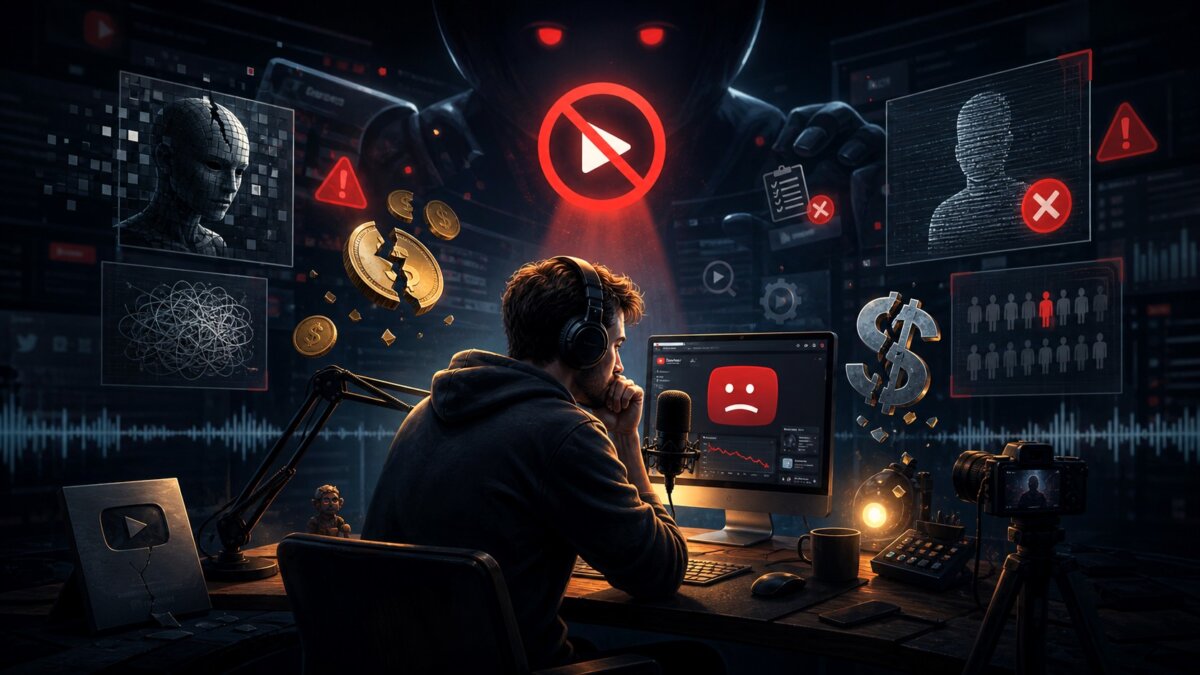
We have been demonetized. With the usual hints, non-authentic content, AI, Slop and
|
|
0:03:56 – 0:04:03
so on. Maybe now I have to explain briefly what AI-Slop is. AI-Slop is cheaply produced,
|
|
0:04:03 – 0:04:16
Contentless, automatically generated AI. Shit. To put it this way. And so I thought to myself,
|
|
0:04:16 – 0:04:23
jo, you've heard about it because I'd gotten messages where some people
|
|
0:04:23 – 0:04:29
They complained that they had lost their monetization. Then hold on
|
|
0:04:29 – 0:04:33
Consider making a disagreement with a lawyer and so and I've thought
|
|
0:04:33 – 0:04:40
"Shit happens", you simply write a two-liner according to the motto. I find it difficult,
|
|
0:04:40 – 0:04:47
We make a podcast that usually lasts longer and uses a static
|
|
0:04:47 – 0:04:56
Background image and just a bit of AI music to underline it thematically. Intro,
|
|
0:04:56 – 0:05:04
Outro's done. And that's how I wrote it. There was, of course, an automatic
|
|
0:05:04 – 0:05:12
The generated response. Yes, thank you very much, we'll do it, we'll check it out. We will contact you at the latest
|
|
0:05:12 – 0:05:21
Two or three weeks. Within 24 hours I got a response from a person,
|
|
0:05:21 – 0:05:30
from a support representative and he said, "We've checked it. A warm welcome,
|
|
0:05:30 – 0:05:38
Congratulations. Monetization is back. Can you reactivate." Yes, and there I have
|
|
0:05:38 – 0:05:45
I thought, cool. Then, of course, came the automatic e-mail. Yeah, you're in. And then
|
|
0:05:45 – 0:05:51
Again came an apology from a co-worker and with the kind thank you,
|
|
0:05:51 – 0:05:57
It would have helped to make the automated process better.
|
|
0:05:57 – 0:06:12
Yes, thank you very much. And what do I see? The last few days are constantly popping up new community posts
|
|
0:06:12 – 0:06:20
or even theatrical videos where creators write "I don't do anything anymore,
|
|
0:06:20 – 0:06:28
Now I'm not going to post my creative posts on YouTube anymore.
|
|
0:06:28 – 0:06:36
The question is, "Why did you do it? is it just about the money you can earn?"
|
|
0:06:36 – 0:06:43
And let's be honest, as a small channel you can only make a few hundred euros a month,
|
|
0:06:43 – 0:06:49
If you then look at all the costs you have, taxes, bla bla bla,
|
|
0:06:49 – 0:07:01
Half of it goes away. Then what do you have? From 150, from 200, 100? Good,
|
|
0:07:01 – 0:07:07
It's nice if you can make a little money with a hobby, but is
|
|
0:07:07 – 0:07:16
Is it what you want? Is that why they did it and don't do it anymore? And
|
|
0:07:16 – 0:07:22
Above all, where do you not reject your contributions now? So the things where you still have money
|
|
0:07:22 – 0:07:32
could earn, have no meaning and the things where you can upload something for free,
|
|
0:07:32 – 0:07:44
they have no range or are too cryptic or too strange to use via tube and so on
|
|
0:07:44 – 0:07:57
continue. So what to do? Most podcasts don't make a profit. So what was the
|
|
0:07:57 – 0:08:05
That's why on YouTube, if it wasn't out there, maybe it was.
|
|
0:08:05 – 0:08:12
The money? Questions about questions. You'll still be able to ask where ever, if some of you would
|
|
0:08:12 – 0:08:24
I've been doing it for years and I'm still doing it today for plus minus zero the podcast. I operate
|
|
0:08:24 – 0:08:34
a blog for plus minus zero and the other formats with plus minus zero. There are a few
|
|
0:08:34 – 0:08:40
nice people who just throw a few euros in a big pot and with it the
|
|
0:08:40 – 0:08:50
Deployment costs paid for the server. And that's it. There's no more than that, which somehow
|
|
0:08:50 – 0:09:00
It would make a profit. For me, it's a nice hobby, a job. I know,
|
|
0:09:00 – 0:09:07
that every day for one or two hours I can sit down on a computer and use the material
|
|
0:09:07 – 0:09:13
busy, a little thought, a little research, the recordings, the editing
|
|
0:09:13 – 0:09:21
and so I get continuously over the week, above all, a nice,
|
|
0:09:21 – 0:09:29
Varied pastimes. And that's all. It's a hobby. Hobbies usually cost
|
|
0:09:29 – 0:09:36
Money. Well, if I buy the new software, I have to pay, it costs money. When I'm new
|
|
0:09:36 – 0:09:43
Buying equipment. It costs money. But these are all things for my hobby. That's the same,
|
|
0:09:43 – 0:09:50
It's like buying a new instrument. A new software synthesizer or, what?
|
|
0:09:50 – 0:09:56
It hasn't been for ages, a new hardware synthesizer. It's for my hobby.
|
|
0:09:56 – 0:10:03
And I don't make any money from that. I mean, you can read on my music blog,
|
|
0:10:03 – 0:10:10
there I have in irregular time stops – I would have to update that again – how much
|
|
0:10:10 – 0:10:19
I made money with music. And there we are in, yes, let's say, in double digits
|
|
0:10:19 – 0:10:26
Cent range, regularly. There was also a month where there were maybe two euros. Da
|
|
0:10:26 – 0:10:34
In an Asian country, someone bought something. So these are amounts,
|
|
0:10:34 – 0:10:44
Those who are far away from anyone, yes, that it would be worth it. When I think about it, I
|
|
0:10:44 – 0:10:53
must accumulate at least 50 euros, so that I get the first payout, yes hello, how many years
|
|
0:10:53 – 0:11:00
Should I wait there? This is not something I expect from you and this is like I said hobby and the
|
|
0:11:00 – 0:11:09
The pay I draw from this hobby is interaction, people who listen to the music,
|
|
0:11:09 – 0:11:15
Streams, people who listen to the podcast and then, if necessary, a review
|
|
0:11:15 – 0:11:25
Leave a comment or leave a comment. That's the pay, reach and interaction, as they say so beautifully
|
|
0:11:25 – 0:11:38
in German "Engagement". So, if there is now this wave of demonetization because of
|
|
0:11:38 – 0:11:42
unauthentic content, I don't know if this wave already has a name,
|
|
0:11:42 – 0:11:56
And little creatures stop creating content because they can't silver it anymore. What was
|
|
0:11:56 – 0:12:03
Then the reason why they did it? YouTube has a saying like that.
|
|
0:12:03 – 0:12:14
How was that again? Anything about "yourself"? "Broadcast yourself" as much as
|
|
0:12:14 – 0:12:27
"Send your own". Be authentic, do what you want. Same with podcasts. Of course
|
|
0:12:27 – 0:12:32
There are a lot of people who still have the dollar signs in their eyes, but these are
|
|
0:12:32 – 0:12:40
least of them. There are so few people who can live off their podcast business. Be it,
|
|
0:12:40 – 0:12:49
because they are funded from somewhere or because they advertise, product placement and so on
|
|
0:12:49 – 0:12:58
continue. I mean, that's perfectly okay if someone makes money from what they do. And
|
|
0:12:58 – 0:13:01
What's better than making money with your hobby?
|
|
0:13:01 – 0:13:06
But then it's not a hobby anymore, then it's work and you have to.
|
|
0:13:06 – 0:13:08
And yet I see it again and again
|
|
0:13:08 – 0:13:13
any young influencers who then stop after five years
|
|
0:13:13 – 0:13:18
live stream every day, totally burned out,
|
|
0:13:18 – 0:13:23
Take a short break with a burnout
|
|
0:13:23 – 0:13:25
three months, six months,
|
|
0:13:26 – 0:13:36
so that they are again so fit that they can then go back to work and have to be careful.
|
|
0:13:36 – 0:13:41
It's hard. It's really hard.
|
|
0:13:41 – 0:13:47
I also did a lot more for a while and did a lot more.
|
|
0:13:47 – 0:13:51
And that's exhausting. That's at work.
|
|
0:13:51 – 0:13:56
And even if that's only 20 minutes of stuff you get out of it.
|
|
0:13:56 – 0:14:02
But when I look at some people, I always wonder,
|
|
0:14:02 – 0:14:07
Do you do this because you want to make money?
|
|
0:14:07 – 0:14:09
And is it worth it at all?
|
|
0:14:09 – 0:14:14
Or because you just want to tell people something?
|
|
0:14:14 – 0:14:17
I mean, we're sitting here now.
|
|
0:14:17 – 0:14:36
Some hear me driving, others on the bus, on the way to work, the next stop at home, the others on YouTube, the one on PearTube, any other platform where you can consume podcasts, even on Spotify.
|
|
0:14:36 – 0:14:42
And follow my thoughts.
|
|
0:14:42 – 0:14:45
And that's already horny.
|
|
0:14:45 – 0:14:52
Let's be honest, you listen to me sin in front of me.
|
|
0:14:52 – 0:14:55
And that's a great pay.
|
|
0:14:55 – 0:15:01
I mean, if you assume now, and I mean, so many a content creator seals
|
|
0:15:01 – 0:15:07
If you have a narcissism, it's a bit difficult to get a borderline diagnosis.
|
|
0:15:07 – 0:15:08
to be agreed.
|
|
0:15:08 – 0:15:12
But that's a topic for another podcast.
|
|
0:15:12 – 0:15:25
Then you might think, yes, that already has racist traits. And I'll tell you a secret, every human being has such a little racist.
|
|
0:15:25 – 0:15:28
The only question is how well trained he is.
|
|
0:15:28 – 0:15:37
And I think in one of the next editions I'll talk about
|
|
0:15:37 – 0:15:46
Let's talk about healthy selfishness. In conjunction with
|
|
0:15:46 – 0:15:56
overtones. Yeah, yeah, yeah, yeah, yeah, yeah, yeah, yeah, yeah, yeah, yeah, yeah, yeah, yeah, yeah, yeah, yeah, yeah, yeah, yeah, yeah, yeah, yeah, ye There will be so many times
|
|
0:15:56 – 0:16:09
Finding new thoughts. I find it interesting that the topic, so attention and reach,
|
|
0:16:09 – 0:16:19
It's always taken as the ultimate manslaughter argument when you criticize someone else. How often
|
|
0:16:19 – 0:16:24
we have recently, especially since we launched the Akter Flattermann series and
|
|
0:16:24 – 0:16:30
some also use the format rectal-digital more strongly again, heard, you only do that
|
|
0:16:30 – 0:16:42
Because of the attention. But even generate this attention by stopping
|
|
0:16:42 – 0:16:53
certain topics that have a certain topicality, make content themselves. Or question rounds
|
|
0:16:53 – 0:17:00
Do what you can talk about in the next live or video. And that closes this
|
|
0:17:00 – 0:17:08
Circle of Thought. No one wants to make content that no one looks at, so no one consumes.
|
|
0:17:08 – 0:17:19
So you do what the target group wants to consume. So you ask or
|
|
0:17:19 – 0:17:28
Do what you see most, click or something else. And then you do that,
|
|
0:17:28 – 0:17:35
What matters, what pleases. But it is actually considered the ultimate manslaughter argument
|
|
0:17:35 – 0:17:42
made. He's just doing it because of the reach and the clicks. If you do this
|
|
0:17:42 – 0:17:51
would now monetize that there are at least a few numbers popping out, such a few money numbers,
|
|
0:17:51 – 0:17:58
Then you would understand. But such little people who can't monetize at all
|
|
0:17:58 – 0:18:04
or others who don't want to do that, you can't ultimately blame them,
|
|
0:18:04 – 0:18:13
Because there's no greater reason than that you might want to be heard.
|
|
0:18:13 – 0:18:20
I said earlier, it's almost a reward for us. For me it is a reward.
|
|
0:18:20 – 0:18:27
If someone writes a comment on the blog post and says you, I think it's okay.
|
|
0:18:27 – 0:18:33
I think I'm horny. You, I have a completely different opinion. I see it differently. This
|
|
0:18:33 – 0:18:39
I am now critical. I think it's great if there's an interesting exchange and
|
|
0:18:39 – 0:18:46
There is discourse. I also see this on YouTube with certain videos and topics. Then it pops
|
|
0:18:46 – 0:18:56
Sometimes right in the comments and I know that many of them claim that I don't delete any
|
|
0:18:56 – 0:19:05
Comments, especially on YouTube. That's what so many people say. I am transparency in persona. me
|
|
0:19:05 – 0:19:13
I am consistently honest. Just like the Berserkers. When I look at the fact that some
|
|
0:19:13 – 0:19:26
Channels so have deleted 5,000, 4,000, 1,700 comments in the last 30 days and I'm talking now
|
|
0:19:26 – 0:19:32
Not from any big ones, but from channels in such a small side bubble. So
|
|
0:19:32 – 0:19:41
such a side arm on YouTube and then hold such a small branch and there such a small bud on it. From
|
|
0:19:41 – 0:19:51
I'm talking about a bubble like that. So from channels that have 30,000, 40,000 subscribers, where maybe
|
|
0:19:51 – 0:19:59
5,000 are active, or perhaps less than 10,000 for channels that have even fewer
|
|
0:19:59 – 0:20:07
Subscribers. Well, I think it's tough. Sure, comments also disappear with us,
|
|
0:20:07 – 0:20:13
because people delete it themselves, because the main comment, under which I say 100 or
|
|
0:20:13 – 0:20:23
200 comments are deleted by the one who created it himself, because every now and then we
|
|
0:20:23 – 0:20:30
delete a comment where something is extremely insulted, something is extremely doxed or where we
|
|
0:20:30 – 0:20:37
would be asked to delete this because it is a personal attack on another commentator
|
|
0:20:37 – 0:20:45
was. But we always weigh this up and then you can just go and say yes, but you say
|
|
0:20:45 – 0:20:53
But you always don't delete. Yeah, but we never said that. We said yes we delete
|
|
0:20:53 – 0:20:59
Also, but only a little. Most of it stops, except for hard insults, doxen of
|
|
0:20:59 – 0:21:07
Data and there are unfortunately a few candidates who like to outweigh first names of women,
|
|
0:21:07 – 0:21:17
Yes, doxen, without the stop being visible from the username stop. And if not the
|
|
0:21:17 – 0:21:23
Who says you can delete this please, of course we do. But let's say
|
|
0:21:23 – 0:21:31
so, for a video, where there are 400 comments and there we delete maybe 5,
|
|
0:21:31 – 0:21:40
Sometimes ten, that's not exactly as much as other people who delete within 24 hours.
|
|
0:21:40 – 0:21:57
Hours - what did I draw the analysis before - delete 1200, 500, 300 comments. This is an
|
|
0:21:57 – 0:22:04
A small difference. Of course they will all say, "No, no, no, no, no, no, I don't do that!"
|
|
0:22:04 – 0:22:12
But yes, this happens regularly, because I see these numbers regularly.
|
|
0:22:12 – 0:22:23
That's the point about this "I'm authentic" because I only do it because I like to do it,
|
|
0:22:23 – 0:22:29
because I want to clarify and I don't care if this is seen here
|
|
0:22:29 – 0:22:34
Will or something. But the others, they do it only because of the reach and because of the attention
|
|
0:22:34 – 0:22:41
They don't have their own issues anyway. Yes, you hear that over and over again and then you see
|
|
0:22:41 – 0:22:53
suddenly that videos, channels are deleted and disappear because YouTube stops
|
|
0:22:53 – 0:22:59
Content that isn't authentic at the moment, I think that's stupid.
|
|
0:22:59 – 0:23:11
It is demonetized. Now I have you again 20 minutes, after 23 minutes of your
|
|
0:23:11 – 0:23:20
cost a valuable life and I just wanted to say if someone really does that because they
|
|
0:23:20 – 0:23:29
What he has to say is that he wants to be heard and he does it.
|
|
0:23:29 – 0:23:36
Even if he doesn't make any money for it. 'Cause it's never been so easy and so cheap,
|
|
0:23:36 – 0:23:45
make videos, podcasts and even publish them quite inexpensively,
|
|
0:23:45 – 0:23:52
as we have now. You can buy reasonable equipment for small money and be there
|
|
0:23:52 – 0:24:00
200 Euro already damn high and can then just pursue an interesting hobby,
|
|
0:24:00 – 0:24:12
where you get to know many interesting people, but also toxic and people,
|
|
0:24:12 – 0:24:18
Where you think, no, I wouldn't have known them better in my life. But this is
|
|
0:24:18 – 0:24:30
everywhere like that. This can happen to you in the carnival club, this can happen to you in the hobby remote controlled
|
|
0:24:30 – 0:24:38
Cars Club pass, RC Racing Club. But this can also happen to you in the chess club or at the
|
|
0:24:38 – 0:24:48
Linen actor troupe. With this in mind, thank you for listening and bye, your Sasha.
|
|
0:24:48 – 0:24:51
[Music]
|
|
0:24:51 – 0:24:54
[Music]
|
|
0:24:54 – 0:25:00
[Music]
|
|
0:25:00 – 0:25:06
[Music]
|
|
0:25:06 – 0:25:12
[Music]
|
|
0:25:12 – 0:25:18
[Music]
|
|
0:25:18 – 0:25:21
[Music]
|
|
0:25:21 – 0:25:27
[Music]
|
|
0:25:27 – 0:25:33
[Music]
|
|
0:25:33 – 0:25:39
[Music]
|
|
0:25:39 – 0:25:45
[Music]
|
|
0:25:45 – 0:25:52
[Music]
|
|
0:25:52 – 0:25:57
[Music]
|
|
0:25:57 – 0:26:04
[Music]
|
|
0:26:04 – 0:26:11
[Music]
|
|
0:26:11 – 0:26:14
[Music]
|
|
0:26:14 – 0:26:20
[Music]
|
|
0:26:20 – 0:26:26
[Music]
|
|
0:26:26 – 0:26:32
[Music]
|
|
0:26:32 – 0:26:38
[Music]
|
|
0:26:38 – 0:26:41
[Music]
|
|
0:26:41 – 0:26:47
[Music]
|
|
0:26:47 – 0:26:53
[Music]
|
|
0:26:53 – 0:26:59
[Music]
|
|
0:26:59 – 0:27:05
[Music]
|
|
0:27:05 – 0:27:08
[Music]
|
|
0:27:08 – 0:27:15
[Music]
|
|
0:27:15 – 0:27:22
[Music]
|
|
0:27:22 – 0:27:30
[Music]
|
|
0:27:30 – 0:27:33
[Music]
|
|
0:27:33 – 0:27:40
[Music]
|
|
0:27:40 – 0:27:48
[Music]
|
|
0:27:48 – 0:27:55
[Music]
|
|
0:27:55 – 0:27:58
[Music]
|
|
0:27:58 – 0:28:04
[Music]
|
|
0:28:04 – 0:28:10
[Music]
|
|
0:28:10 – 0:28:16
[Music]
|
|
0:28:16 – 0:28:22
[Music]
|
|
0:28:22 – 0:28:25
[Music]
|
|
0:28:25 – 0:28:31
[Music]
|
|
0:28:31 – 0:28:37
[Music]
|
|
0:28:37 – 0:28:43
[Music]
|
|
0:28:43 – 0:28:49
[Music]
|
|
0:28:49 – 0:29:07
[Music]
|
|
0:29:07 – 0:29:09
[Music]
|







 English