

| transcript | |
|---|---|
|
00:00 - 0:00:02
*Music*
|
|
|
0:00:02 – 0:00:31
[Music]
|
|
|
0:00:31 – 0:00:38
Hello and welcome to a new edition of "Der Abschweifung",
|
|
|
0:00:38 – 0:00:45
where I occasionally almost never, but sometimes, but sometimes not from the topic
|
|
|
0:00:45 – 0:00:56
I'm digressing. I'm Sascha Markmann and I say hello. Today's topic is a wish from the community
|
|
|
0:00:56 – 0:01:06
Or, as you might call it, spectatorship. It is about opportunism and
|
|
|
0:01:06 – 0:01:15
More specifically, in everyday life. Take, for example, an example from everyday life. The nice colleague,
|
|
|
0:01:15 – 0:01:24
who still blasphemes about the boss in the hallway, but literally speaks to him after the mouth in the meeting or
|
|
|
0:01:24 – 0:01:34
Flag in the wind. It is about the definition of everyday life. It's about pure selfishness, about the
|
|
|
0:01:34 – 0:01:42
Exploitation of a situation for one's own benefit without regard to loss, morality or decency.
|
|
|
0:01:42 – 0:01:51
Let's start with the basics. The origin of words, the epidemiology, how to be so beautiful
|
|
|
0:01:51 – 0:02:00
says. The term comes from Latin and is derived from the word "obatornus".
|
|
|
0:02:00 – 0:02:12
Obatornus. This means as much as "cheap, convenient or convenient". It's an obatonist.
|
|
|
0:02:12 – 0:02:22
often chooses the most convenient and easiest, easiest way of least resistance,
|
|
|
0:02:22 – 0:02:31
As soon as the moment is right. The everyday definition would be something like the absolute
|
|
|
0:02:31 – 0:02:39
Unprincipled. You don't act on what's morally right or what's right.
|
|
|
0:02:39 – 0:02:49
What you believe in in the deepest, but only according to what you believe in the greatest
|
|
|
0:02:49 – 0:02:56
It brings personal advantage. And then you have to distinguish, so to speak, between a
|
|
|
0:02:56 – 0:03:09
healthy egoism and stop bringing egoism to the opportunist. 'Cause there's kind of
|
|
|
0:03:09 – 0:03:18
Something like self-care. So that you make sure that you are well. And that can
|
|
|
0:03:18 – 0:03:23
It is done in many areas. So don't donate so much money that you get problems yourself,
|
|
|
0:03:23 – 0:03:31
but also that one is kind-hearted or requires more work as for a good,
|
|
|
0:03:31 – 0:03:41
Just to please my colleagues. It's kind of a healthy selfishness. But an opportunist,
|
|
|
0:03:41 – 0:03:50
he is very determined and he takes in the purchase that other people are at a disadvantage,
|
|
|
0:03:50 – 0:03:59
Only for his own benefit. But how do we recognize an opportunist in everyday life?
|
|
|
0:03:59 – 0:04:07
It is an extreme flexibility of opinion, because opinions are not made out of conviction.
|
|
|
0:04:07 – 0:04:15
but rather changed in such a way that it serves comfort,
|
|
|
0:04:15 – 0:04:22
That you don't stand out negatively, that you have the greatest advantage from it. And that's something,
|
|
|
0:04:22 – 0:04:30
what I personally do in my private environment, at work or in association work,
|
|
|
0:04:30 – 0:04:41
During school, while studying, yes, you've already met one or the other time. Such people are
|
|
|
0:04:41 – 0:04:50
They also like to be very friendly, almost as if they are crawling in someone's ass, for someone who
|
|
|
0:04:50 – 0:04:58
It brings an advantage or a benefit. Ignores or devalues others who stop
|
|
|
0:04:58 – 0:05:06
have no advantage. Particularly popular in the content creator bubble, one encounters such
|
|
|
0:05:06 – 0:05:16
Phenomena very often. There's one or two experts from my own experience. And then there is
|
|
|
0:05:16 – 0:05:24
This is the principle of purpose loyalty. Friendships or alliances are only for as long as
|
|
|
0:05:24 – 0:05:34
importantly chosen or continued as long as they bring a yield, i.e. advantages.
|
|
|
0:05:34 – 0:05:42
You can take advantage of it and if it gets too uncomfortable or the other
|
|
|
0:05:42 – 0:05:51
successful, then you turn against them and you almost have to fight them or you let
|
|
|
0:05:51 – 0:05:58
They fall. I've only recently experienced this, especially in the YouTube Content Creator.
|
|
|
0:05:58 – 0:06:07
world. My God, no. But so do these coincidences. Now let's see why we humans do this.
|
|
|
0:06:07 – 0:06:15
So we have already defined it between the healthy egoism, that one just pays attention to it,
|
|
|
0:06:15 – 0:06:26
That you don't come so short yourself, but there are other aspects to it. Mostly
|
|
|
0:06:26 – 0:06:33
It is also because there is a missing internal compass for good and bad. It
|
|
|
0:06:33 – 0:06:41
There are no deep-rooted inner values or beliefs. Action is always on it
|
|
|
0:06:41 – 0:06:48
to get one's own advantage and not be anxious to be favorable to others
|
|
|
0:06:48 – 0:06:57
To act, to effect something positive. Everything is used to present itself well.
|
|
|
0:06:57 – 0:07:04
Then there is the aspect of conflict. Well, not everyone has that,
|
|
|
0:07:04 – 0:07:10
but there are representatives of this genus of Oberturists who have a conflict aversion.
|
|
|
0:07:10 – 0:07:14
You choose the path of least resistance. You want to be a favorite,
|
|
|
0:07:14 – 0:07:22
You want to please. There is, too. I have also experienced this myself in the content creator world and
|
|
|
0:07:22 – 0:07:29
It wasn't even that long ago. Because it is always exhausting for one's own opinion to be one.
|
|
|
0:07:29 – 0:07:36
kick. You can also make yourself unpopular and there are people who then choose the
|
|
|
0:07:36 – 0:07:44
Away from the slightest resistance and talk after the mouth. After all, you want to please. And then
|
|
|
0:07:44 – 0:07:49
Let's get to the third point and that is also a very important point. They can be narcissistic.
|
|
|
0:07:49 – 0:07:56
There are trains. I know it's such a total buzzword by now. This is still thrown
|
|
|
0:07:56 – 0:08:05
More inflationary around such as ADHD, depression, personality disorder, but narcissism is also
|
|
|
0:08:05 – 0:08:12
It's already a personality disorder, but it's used so much that the term yes.
|
|
|
0:08:12 – 0:08:17
has almost lost a futility, because everyone who is exhausting and complicated
|
|
|
0:08:17 – 0:08:23
When you think of yourself, you are automatically a narcissist. Your own success and status is
|
|
|
0:08:23 – 0:08:29
super important. Financial gain is also super important for someone who is narcissistic.
|
|
|
0:08:29 – 0:08:38
There are trains. And so everything is done in such a way that you just take advantage of it.
|
|
|
0:08:38 – 0:08:49
Be it fake empathy, solidarity. This can all be hypocritical and faked,
|
|
|
0:08:49 – 0:08:59
Just to get your own profit from it. A typical person with narcissistic traits.
|
|
|
0:08:59 – 0:09:10
Of course, the whole behavior also has consequences for the environment. Impact, destruction of trust,
|
|
|
0:09:10 – 0:09:20
Relationships or teams disappear, which disappear, above all security,
|
|
|
0:09:20 – 0:09:27
the trust, the psychological security, because there are people who carry information
|
|
|
0:09:27 – 0:09:34
outwards, which should never be carried outwards. There will be alliances in the background
|
|
|
0:09:34 – 0:09:41
played, false information sent, just to stop yourself in a better light
|
|
|
0:09:41 – 0:09:48
stand by. A poisonous climate, which again refers to destruction
|
|
|
0:09:48 – 0:09:54
of trust. An elbow society is formed. Honest, authentic people pull themselves
|
|
|
0:09:54 – 0:10:03
back because tactical providers are rewarded. I've only recently seen it all.
|
|
|
0:10:03 – 0:10:10
Also in the YouTube Creator Bubble. You can see that it is also a very
|
|
|
0:10:10 – 0:10:18
is a toxic place and a consequence of all these behaviors is of course also a
|
|
|
0:10:18 – 0:10:24
emotional exhaustion. Dealing with such people robs an unlikely amount of energy.
|
|
|
0:10:24 – 0:10:31
You are constantly on guard. You have to be careful what you say, how you say what you do. Before
|
|
|
0:10:31 – 0:10:35
Everything, if you create content yourself, you have to be careful, because otherwise there comes next
|
|
|
0:10:35 – 0:10:40
Again a letter from the lawyer and at the same time a bill. You have to have one yourself
|
|
|
0:10:40 – 0:10:45
Lawyer, then there's another bill, there's a lot of money being burned, which you don't have anyway.
|
|
|
0:10:45 – 0:10:53
And that's really stressful and there are some people just pulling back or doing
|
|
|
0:10:53 – 0:10:59
The creator game in the form it took before no longer stops. We are coming
|
|
|
0:10:59 – 0:11:09
Now for such an intermediate conclusion. What can you do with it? How can you protect yourself from it?
|
|
|
0:11:09 – 0:11:17
Klipp and clearly draw boundaries. If one separates oneself and prevents opportunists
|
|
|
0:11:17 – 0:11:27
Taking up too much space, if you allow it, you run the risk of
|
|
|
0:11:27 – 0:11:39
It is used to be a stirrup holder. And yes, that's where it helps best to be blunt and clear.
|
|
|
0:11:39 – 0:11:47
Say up to here and no further, and document everything. And I can only get out of
|
|
|
0:11:47 – 0:11:53
to speak of my experience, in the past, in the longer, even in the shorter past,
|
|
|
0:11:53 – 0:12:02
You have to be very consistent. Even if this is not understandable for many others,
|
|
|
0:12:02 – 0:12:10
You have to be absolutely secure against this small minority that is acting in this way. And there are also the
|
|
|
0:12:10 – 0:12:21
Boundaries between healthy selfishness, healthy self-love, self-sufficiency and overtones
|
|
|
0:12:21 – 0:12:28
are very spongy, very flowing, you just have to see for yourself that you are not out
|
|
|
0:12:28 – 0:12:39
Convenience, because you want to please yourself, just fall into this pattern of proportion. Maybe
|
|
|
0:12:39 – 0:12:45
Maybe you have to be a little more willing to compromise here and there, maybe even here.
|
|
|
0:12:45 – 0:12:52
and since more insist on his own opinion, but not always the path of least resistance
|
|
|
0:12:52 – 0:13:00
Let's go. This is the "culture of the year". This does not work in the long run, you yourself become unreliable and
|
|
|
0:13:00 – 0:13:12
Above all, it is exhausting. I found it interesting to think about it in advance.
|
|
|
0:13:12 – 0:13:19
And above all, a little bit of literature. How is it
|
|
|
0:13:19 – 0:13:27
almost like falling from the scales, from the eyes, when I put this together,
|
|
|
0:13:27 – 0:13:39
that much of what we have experienced especially here with the sound radio project in the
|
|
|
0:13:39 – 0:13:48
in recent months, since the summer of almost last year, so fits into this scheme,
|
|
|
0:13:48 – 0:13:59
from viewers, from opponents, that I found this really fascinating and how easy
|
|
|
0:13:59 – 0:14:06
That explains. And I'm really grateful that a spectator wanted it.
|
|
|
0:14:06 – 0:14:10
Now, unfortunately, that's already a bit of a deal. I don't even know,
|
|
|
0:14:10 – 0:14:15
whether the viewer will then remember that the topic was once on the table,
|
|
|
0:14:15 – 0:14:25
But I would like to say thank you, because how I have dealt with it so intensively,
|
|
|
0:14:25 – 0:14:31
I thought you knew it all and it seemed so familiar to you. And precisely because
|
|
|
0:14:31 – 0:14:44
these experiences and events in the recent past were so explosive and concise,
|
|
|
0:14:44 – 0:14:58
I found it really interesting that I saw the parallels right away. It is so,
|
|
|
0:14:58 – 0:15:06
that in this bubble, especially on YouTube with the viewers, there are people,
|
|
|
0:15:06 – 0:15:13
They migrate from one content creator to another and then stop there for good weather,
|
|
|
0:15:13 – 0:15:20
Change the fronts when one person says something that isn't going to happen. And I remember,
|
|
|
0:15:20 – 0:15:25
that we were really foolishly turned on because we didn't post a story where it
|
|
|
0:15:25 – 0:15:32
It was about animal welfare. Now the sound radio project is not necessarily an animal welfare project, but
|
|
|
0:15:32 – 0:15:41
hold an opinion blog, a podcast, in which it is about content critical of media, about psychological
|
|
|
0:15:41 – 0:15:50
Explanations and processing, perhaps also social criticism, but not animal welfare.
|
|
|
0:15:50 – 0:16:01
You would have stopped the Lavan story … so that was just an animal welfare incident … you would have
|
|
|
0:16:01 – 0:16:10
You can only take up the matter if you had just gone there and then dealt with the
|
|
|
0:16:10 – 0:16:20
It would have been on social media. Otherwise, there would be no room for this format.
|
|
|
0:16:20 – 0:16:28
Not a place where that would happen. And because we didn't do that, we're offended.
|
|
|
0:16:28 – 0:16:35
They were taken away, and so on. We have similar behaviors in the past.
|
|
|
0:16:35 – 0:16:42
experienced again and again. And that's really hard. If you don't agree with me, you are
|
|
|
0:16:42 – 0:16:54
against me. Interesting, isn't it? There is so much about freedom of expression, about the individual word
|
|
|
0:16:54 – 0:17:03
But then there is a total restriction on freedom of speech. And I have to say, we have
|
|
|
0:17:03 – 0:17:11
We recently decided, Sarah and I, that we should also withdraw from this game.
|
|
|
0:17:11 – 0:17:20
we will continue to make our content, but stop focusing on these dynamics and
|
|
|
0:17:20 – 0:17:27
This bubble thinking. This is absolutely toxic and, above all, all echo chambers.
|
|
|
0:17:27 – 0:17:33
So for every content curator there is just such an echo chamber, such a bubble that
|
|
|
0:17:33 – 0:17:46
Self-reinforcing with affirmations, yes, opinion-reinforcing, by all thinking and saying the same thing. Then
|
|
|
0:17:46 – 0:17:51
There are a few overlaps with other bubbles, but by and large that's just
|
|
|
0:17:51 – 0:18:00
such a – I have such a structure as clusters of cells that exist side by side. And this
|
|
|
0:18:00 – 0:18:07
This is one of YouTube's niches. Now there are a few bubbles, actually such a few
|
|
|
0:18:07 – 0:18:14
Cells that go into each other like this and then there's an exchange. But woe to the one who says
|
|
|
0:18:14 – 0:18:20
What's wrong is immediately war. And that's what we watch all the time and that's
|
|
|
0:18:20 – 0:18:29
interesting dynamic processes on a psychological and sociological level. And that's what we want
|
|
|
0:18:29 – 0:18:35
show such things, but we no longer participate in such trench fights. We have
|
|
|
0:18:35 – 0:18:43
Unfortunately, let God be so enthralled there, because of opportunists who stop in the bubbles everywhere
|
|
|
0:18:43 – 0:18:50
are represented and some content creators are also such candidates that we then
|
|
|
0:18:50 – 0:18:56
have in some places also been instrumentalized and then have also lost the objective view,
|
|
|
0:18:56 – 0:19:06
To show how destructive these dynamics are. Yeah, what am I supposed to say about that? You're over it
|
|
|
0:19:06 – 0:19:16
Disappointed, hurt, in places there are even harassing, malicious announcements to the point of insulting,
|
|
|
0:19:16 – 0:19:23
that you withdraw from this game because you think about its authenticity,
|
|
|
0:19:23 – 0:19:29
They want to hold on to what is important to them and, above all, to their own health.
|
|
|
0:19:29 – 0:19:39
I want to respect. Especially mental health. And this will be presented to you or
|
|
|
0:19:39 – 0:19:51
It is also used to act as a sharp knife. This is an interesting logic and
|
|
|
0:19:51 – 0:20:00
A consequence that we have drawn. And that's what we're going to stick to. Because nothing is
|
|
|
0:20:00 – 0:20:06
more important for us than that we are authentic and above all our own
|
|
|
0:20:06 – 0:20:13
mental health. And you have to say that community care is really a time-consuming thing. If:
|
|
|
0:20:13 – 0:20:19
I think that I only have a few hours a day where I can do something, because besides the
|
|
|
0:20:19 – 0:20:27
Everyday care and some household and so, I just don't have much time to deal with the things
|
|
|
0:20:27 – 0:20:32
Dealing with things that are important to me. And if I care for community all the time
|
|
|
0:20:32 – 0:20:40
Take care, then it takes a lot of time. It is also an aspect to consider. And that's why we can
|
|
|
0:20:40 – 0:20:45
I also understand that great content creators act differently and have their people for it,
|
|
|
0:20:45 – 0:20:48
Those who stop it.
|
|
|
0:20:48 – 0:20:56
So much for overtunism. Then I have a question. Maybe he wanted
|
|
|
0:20:56 – 0:21:00
I'll answer that, but you know, the comments are different.
|
|
|
0:21:00 – 0:21:06
As before. Have you ever had such an experience with extreme
|
|
|
0:21:06 – 0:21:11
Top tunists and how did you deal with them? That would be me again
|
|
|
0:21:11 – 0:21:19
interested. Even if the comments are now moderated more strictly and not everything
|
|
|
0:21:19 – 0:21:27
It is immediately unlocked. After all, this must first be approved. Good,
|
|
|
0:21:27 – 0:21:32
I say thank you for listening and say until next time. Goodbye, Sasha.
|
|
|
0:21:32 – 0:21:39
[Music]
|
|
|
0:21:39 – 0:21:42
[Music]
|
|
|
0:21:42 – 0:21:48
[Music]
|
|
|
0:21:48 – 0:21:54
[Music]
|
|
|
0:21:54 – 0:22:00
[Music]
|
|
|
0:22:00 – 0:22:06
[Music]
|
|
|
0:22:06 – 0:22:09
[Music]
|
|
|
0:22:09 – 0:22:15
[Music]
|
|
|
0:22:15 – 0:22:21
[Music]
|
|
|
0:22:21 – 0:22:27
[Music]
|
|
|
0:22:27 – 0:22:33
[Music]
|
|
|
0:22:33 – 0:22:36
[Music]
|
|
|
0:22:36 – 0:22:42
[Music]
|
|
|
0:22:42 – 0:22:48
[Music]
|
|
|
0:22:48 – 0:22:54
[Music]
|
|
|
0:22:54 – 0:23:00
[Music]
|
|
|
0:23:00 – 0:23:03
[Music]
|
|
|
0:23:03 – 0:23:09
[Music]
|
|
|
0:23:09 – 0:23:15
[Music]
|
|
|
0:23:15 – 0:23:21
[Music]
|
|
|
0:23:21 – 0:23:28
[Music]
|
|
|
0:23:28 – 0:23:31
[Music]
|
|
|
0:23:31 – 0:23:37
[Music]
|
|
|
0:23:37 – 0:23:43
[Music]
|
|
|
0:23:43 – 0:23:49
[Music]
|
|
|
0:23:49 – 0:23:55
[Music]
|
|
|
0:23:55 – 0:23:58
[Music]
|
|
|
0:23:58 – 0:24:04
[Music]
|
|
|
0:24:04 – 0:24:10
[Music]
|
|
|
0:24:10 – 0:24:16
[Music]
|
|
|
0:24:16 – 0:24:23
[Music]
|
|
|
0:24:23 – 0:24:26
[Music]
|
|
|
0:24:26 – 0:24:33
[Music]
|
|
|
0:24:33 – 0:24:41
[Music]
|
|
|
0:24:41 – 0:24:49
[Music]
|
|
|
0:24:49 – 0:24:52
[Music]
|
|
|
0:24:52 – 0:24:55
[Music]
|
|
|
0:24:55 – 0:25:01
[Music]
|
|
|
0:25:01 – 0:25:07
[Music]
|
|
|
0:25:07 – 0:25:13
[Music]
|
|
|
0:25:13 – 0:25:20
[Music]
|
|
|
0:25:20 – 0:25:23
[Music]
|
|
|
0:25:23 – 0:25:29
[Music]
|
|
|
0:25:29 – 0:25:35
[Music]
|
|
|
0:25:35 – 0:25:41
[Music]
|
|
|
0:25:41 – 0:25:48
[Music]
|
|
|
0:25:48 – 0:25:52
[Music]
|
|
|
0:25:52 – 0:25:54
[Music]
|
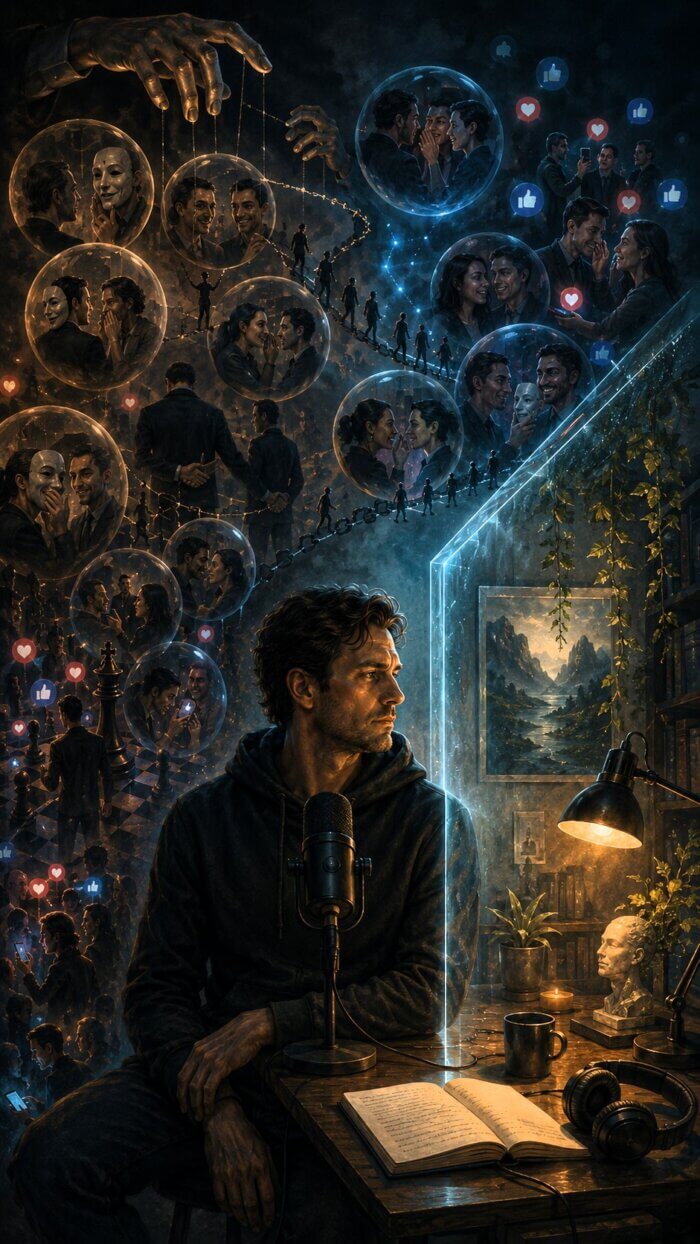
In this edition of ‘Difference’ Sascha Markmann is dedicated to a topic that we encounter again and again in our professional life, in private life and especially in the digital world: the opportunism.
What distinguishes a healthy egoism and necessary self-care from unprincipled purpose loyalty? We will shed light on the Latin roots of the term – from opportunus (cheap, convenient) – and analyse why people choose the path of least resistance as soon as there is a personal advantage.
The main focus of this episode:
- Definition & delineation: Why opportunism often means absolute unprincipledness and how it differs from healthy self-care.
- Characteristics of everyday life: From extreme flexibility of opinion to ‘purpose loyalty’, which lasts only as long as a yield flows.
- Psychological background: A lack of inner compass, conflict aversion and the role of narcissistic traits in social structures.
- Focus Content Creator Bubble: A critical reflection on toxic echo chambers, instrumentalized loyalties, and why Sascha and Sarah consistently draw boundaries to protect their mental health and authenticity.
- Self-protection: Practical approaches to dealing with opportunists, setting limits and preserving one's own credibility.
An in-depth analysis of the mechanisms of the ‘Anniversary culture’ and the courage to stand up for one’s own convictions even against the wind.
Topic overview:
- Intro and Welcome
- Introduction to the topic of opportunism as a community wish.
- Basic principles and definition
- Etymological origin: From the Latin ‘obatornus’ (cheap, comfortable).
- Definition of opportunism as acting according to the greatest personal advantage without regard to morality or principles.
- Distinction from ‘healthy selfishness’ and the need for self-care.
- Analysis: How do you recognize opportunists?
- Extreme flexibility of opinion and tactical behavior depending on the situation.
- The concept of ‘purpose loyalty’: Alliances only exist as long as they bring benefits.
- Devaluation of others as soon as no advantage can be derived from them.
- Psychological root cause research
- The lack of internal compass and lack of deeply anchored values.
- Choosing the least resistance from conflict aversion.
- The Role of Narcissistic Traits: Focus on status, success and fake empathy.
- Impact on the environment
- Destruction of trust and psychological security in teams and relationships.
- The emergence of a poisonous climate and an ‘elbow society’.
- Emotional exhaustion in fellow human beings through constant vigilance.
- Transfer: The Reality in the Content Creator Bubble
- Personal experiences with toxic dynamics and echo chambers on YouTube.
- Reflection on instrumentalization and the loss of objective gaze.
- Examples of conflicts: The handling of expectations of the spectators (using the example of animal welfare/Lavan story).
- Conclusion and outlook: Strategies for self-protection
- Need to draw blunt and clear boundaries.
- Importance of documentation and consistent action.
- The conscious withdrawal from the bubble game in favour of one’s own mental health and authenticity.


Advertising:
Contributors to this episode


Playing time: 0:25:53
Date of admission: 12.05.26
This episode is from season 4, there are a total of 4 seasons.
One According to Funk Publication Cartel Production - Where stories are transmitted unmistakably.
Podcast license:

This work is licensed under a Creative Commons Attribution-NonCommercial-ShareAlike 4.0 International License

Note: This post contains affiliate links. If you shop through these links, I'll get a small commission at no extra cost to you.








 English