|
00:00 - 0:00:23
[Music]
|
|
0:00:23 – 0:00:28
Hello and welcome to the first episode of
|
|
0:00:28 – 0:00:36
A podcast about mental illness.
|
|
0:00:36 – 0:00:41
Today's topic is depression.
|
|
0:00:41 – 0:00:45
The issue affects a lot of people.
|
|
0:00:45 – 0:00:51
I know a lot of people who suffer from depression.
|
|
0:00:51 – 0:00:53
Sometimes more, sometimes less.
|
|
0:00:53 – 0:01:01
I even met someone who, as she said, with her latent depressive
|
|
0:01:01 – 0:01:08
Phase lives in her little turret. Maybe you've already felt yourself,
|
|
0:01:08 – 0:01:17
how life can turn gray or you can no longer enjoy small things,
|
|
0:01:17 – 0:01:26
like a beautiful sunrise, I know it's pretty clichéd, a good cup of coffee,
|
|
0:01:26 – 0:01:38
Enjoy a delicious piece of cake, watch your favorite movie on the streaming service or on LinearTV. You
|
|
0:01:38 – 0:01:45
notice how you withdraw more and more from the environment and manage less and less, somehow
|
|
0:01:45 – 0:01:47
How to manage your everyday life.
|
|
0:01:47 – 0:01:51
And that's what it's all about today.
|
|
0:01:51 – 0:01:55
Depressiveness, depression,
|
|
0:01:55 – 0:01:59
or a depressive phase,
|
|
0:01:59 – 0:02:04
As they call it in technical jargon.
|
|
0:02:04 – 0:02:08
But a little disclaimer at the very beginning.
|
|
0:02:08 – 0:02:10
This is not therapy.
|
|
0:02:10 – 0:02:12
This should not replace therapy.
|
|
0:02:12 – 0:02:22
If you feel that your depression is too severe to cope on your own,
|
|
0:02:22 – 0:02:28
Then seek professionally qualified help. A good contact point is in the first place
|
|
0:02:28 – 0:02:36
Your family doctor. Talk to him about how you feel, that you have a guess,
|
|
0:02:36 – 0:02:42
That it could be depression and see together how it goes on.
|
|
0:02:42 – 0:02:52
But now at the very beginning. What is depression? Depression is longer and
|
|
0:02:52 – 0:03:01
more difficult. It just takes longer. A phase in life where you are more than in a bad mood or
|
|
0:03:01 – 0:03:12
such a hanger now in quotation marks. It's something that really depends on the severity.
|
|
0:03:12 – 0:03:18
It prevents you from living your day-to-day life. I met people who were so
|
|
0:03:18 – 0:03:24
Depressed, they couldn't get up. They just stood up to stop it.
|
|
0:03:24 – 0:03:31
The most important thing to do was to go to the toilet. They had all the joy
|
|
0:03:31 – 0:03:41
lost in eating, caring, or talking to other people. There was nothing left,
|
|
0:03:41 – 0:03:47
except to lie in bed and sleep. So we see, such a depression can really
|
|
0:03:47 – 0:03:53
It is a serious, serious illness. It's not as obvious as a broken
|
|
0:03:53 – 0:04:02
Leg or as clearly perceptible as pneumonia. It is a hidden disease,
|
|
0:04:02 – 0:04:10
But it can be just as difficult and even in individual cases just as deadly. But what are so
|
|
0:04:10 – 0:04:18
The typical symptoms? One speaks of a deep exhaustion, so that one even sleeps a lot.
|
|
0:04:18 – 0:04:28
There is a loss of interest, nothing is more fun. Some also have serious feelings of guilt,
|
|
0:04:28 – 0:04:33
a self-doubt or even a deep hopelessness that nothing is left in the
|
|
0:04:33 – 0:04:41
Life gets better or makes sense. Concentration problems are also often present.
|
|
0:04:41 – 0:04:48
Because there's so much going on in my head. Some also have a great deal of decision-making difficulty.
|
|
0:04:48 – 0:04:56
What is called ambivalence in technical jargon. You just can't decide anymore,
|
|
0:04:56 – 0:05:01
And even if it's just between two things, now I'm eating a donut or eating
|
|
0:05:01 – 0:05:10
I've got the doughnuts next to me. Just as a small example. Insomnia or extreme sleep needs
|
|
0:05:10 – 0:05:17
It is also a common symptom. I can tell from my own experience that I was a real
|
|
0:05:17 – 0:05:23
Night Owl and have here once two hours, maybe there once an hour or there sometimes three hours
|
|
0:05:23 – 0:05:32
slept. I was awake and did nothing. loss of appetite or the opposite,
|
|
0:05:32 – 0:05:42
Excessive eating is also a symptom. A lot of people have a withdrawal from
|
|
0:05:42 – 0:05:50
the social life. And I observe this very often and I have had this myself, while
|
|
0:05:50 – 0:06:01
Many of my depressive phases. And in some serious cases, suicidality, i.e. a kind of
|
|
0:06:01 – 0:06:07
death longing, thoughts about death, which now does not necessarily lead to a suicide attempt,
|
|
0:06:07 – 0:06:14
But it can lead to it. At least the desire is for it, because when I'm dead,
|
|
0:06:14 – 0:06:21
All my problems are gone or my suffering is over. What I learned from many conversations with
|
|
0:06:21 – 0:06:29
Affected or even with fellow patients is remembered, so sentences,
|
|
0:06:29 – 0:06:35
They were like, "I didn't feel like I was sad. I had rather this
|
|
0:06:35 – 0:06:46
Feeling like I'm nothing." And that's kind of a good thing. You are so deep in your
|
|
0:06:46 – 0:06:55
Depression trapped that you don't feel anything in and of yourself anymore because this sadness is so
|
|
0:06:55 – 0:07:05
is overwhelming, so huge that you taste like sweet honey, which at some point tastes bitter,
|
|
0:07:05 – 0:07:13
Because it's just so sweet. Maybe that's how it can be compared. So how does it feel
|
|
0:07:13 – 0:07:21
To have a depression? This is very different and very individual. Some
|
|
0:07:21 – 0:07:31
People say it feels like I'm packed in cotton because everything is very dull and nothing
|
|
0:07:31 – 0:07:38
It really gets closer to me. You don't feel much anymore. Others describe it as if
|
|
0:07:38 – 0:07:46
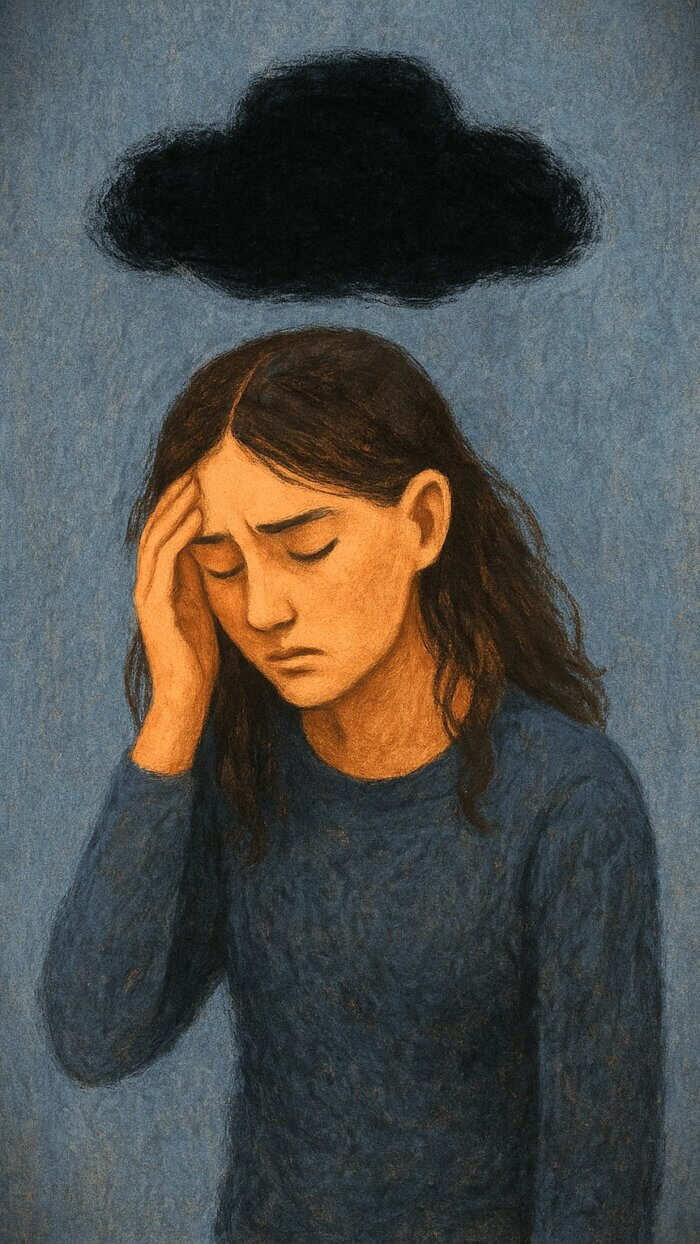
There is a black cloud in her head or even around her or around her. Others say,
|
|
0:07:46 – 0:07:49
It feels like living under water.
|
|
0:07:49 – 0:08:00
You see everything out there as life is, but even you can't get it or you're no longer a part of it.
|
|
0:08:00 – 0:08:08
These feelings, these impressions cannot simply be thought away or talked away.
|
|
0:08:08 – 0:08:12
It's just there.
|
|
0:08:12 – 0:08:18
It's permanent, perma- sorry, I can't pronounce it right now.
|
|
0:08:18 – 0:08:21
It's just always there.
|
|
0:08:21 – 0:08:28
And no matter how good the talk is, pull yourself together, just go out,
|
|
0:08:28 – 0:08:30
You have to go among people again.
|
|
0:08:30 – 0:08:35
It doesn't matter because you just don't see it that way at the moment.
|
|
0:08:35 – 0:08:40
Or if you understand that you actually have to do it, you can't,
|
|
0:08:40 – 0:08:47
Because you are paralyzed by this impotence, which you also feel yourself.
|
|
0:08:47 – 0:08:52
The big question is, where does depression come from?
|
|
0:08:52 – 0:08:57
It must be said that there is a single cause.
|
|
0:08:57 – 0:09:01
It is usually a combination of several factors.
|
|
0:09:01 – 0:09:07
On the one hand, there is a biological component,
|
|
0:09:07 – 0:09:18
In other words, there is an imbalance of messenger substances in the brain, such as serotonin or norepinephrine.
|
|
0:09:18 – 0:09:23
Sometimes it's a shortage, sometimes it's a surplus.
|
|
0:09:23 – 0:09:30
You have to understand, our metabolism in the brain works almost with players
|
|
0:09:30 – 0:09:31
and opponents.
|
|
0:09:31 – 0:09:39
One performs a task and the other ensures that the messenger substance,
|
|
0:09:39 – 0:09:44
who has performed this task will be withdrawn. We are also talking about
|
|
0:09:44 – 0:09:52
Players and opponents. And this is in the case of the seretondomine and the noradralin,
|
|
0:09:52 – 0:09:59
What then is the opponent. To explain it in a very simple way.
|
|
0:09:59 – 0:10:06
I know, people who know that this is much more complex, the mechanisms,
|
|
0:10:06 – 0:10:12
and that many other good fabrics play a big role, but that's all
|
|
0:10:12 – 0:10:17
Stay here quite simply and comprehensibly. Then, of course, there is the psychological
|
|
0:10:17 – 0:10:32
component. trauma, loss of a person, a serious accident, witness or even victim
|
|
0:10:32 – 0:10:38
an act of violence, childhood experiences that can also be traumatizing, loss of a
|
|
0:10:38 – 0:10:48
Parent, divorces of parents, personality traits such as a very high self-criticism
|
|
0:10:48 – 0:10:56
It can also lead to depression like this. 'Cause when I'm all super
|
|
0:10:56 – 0:11:03
You have to make perfect and you can't make anything perfect because the perfect doesn't exist.
|
|
0:11:03 – 0:11:09
You will never reach that level, that level of ambition. And some people will stop at it,
|
|
0:11:09 – 0:11:17
Because they never reach it, depressed. Then, of course, there are environmental factors such as social,
|
|
0:11:17 – 0:11:25
social factors such as long-term stress. The one who gets burned at work
|
|
0:11:25 – 0:11:33
Or at home in care work. The housewife who, in addition to her, her half-day job,
|
|
0:11:33 – 0:11:46
Household has to throw, then the family planner is, the manager, then still wife of the man and
|
|
0:11:46 – 0:11:52
many other things. This can lead to an overload and then you can also get into depression.
|
|
0:11:52 – 0:11:59
fall. Isolation. We humans are social beings. We need to interact with
|
|
0:11:59 – 0:12:05
with other people. And if it's just over the internet. Enough social interaction
|
|
0:12:05 – 0:12:11
over the Internet. I really limit my real contacts to a minimum because I
|
|
0:12:11 – 0:12:17
find it very exhausting. People are really exhausting for me. This is also very
|
|
0:12:17 – 0:12:23
interesting. Maybe I should talk about it. Bullying. Anyone who has ever
|
|
0:12:23 – 0:12:30
has had bullying experiences, whether they are perpetrators or victims who know
|
|
0:12:30 – 0:12:37
What a great experience it is for the victim. I also have my bullying experience.
|
|
0:12:37 – 0:12:48
Experienced in school. There were two phases. It's like a fifth grader, and then it's like that.
|
|
0:12:48 – 0:13:02
in the 8th/9th with people from a parallel class. That was really awkward. Really. But
|
|
0:13:02 – 0:13:10
I think many people have this experience. But we just know from research,
|
|
0:13:10 – 0:13:18
Bullying can actually lead to severe depression. Poverty, for example, is also
|
|
0:13:18 – 0:13:25
The trigger. Who would have thought? I mean, who has such problems with the money,
|
|
0:13:25 – 0:13:28
At the end of the month, I still have enough to buy myself something to eat.
|
|
0:13:28 – 0:13:34
I have enough money to buy food for my children or my pets. This
|
|
0:13:34 – 0:13:39
It can also lead to depression. Last but not least, unemployment.
|
|
0:13:39 – 0:13:45
Long-term unemployed people are more at risk of falling into depression,
|
|
0:13:45 – 0:13:51
like people who have a job or a meaningful job.
|
|
0:13:51 – 0:13:58
After my stroke, I started the hobby of podcasting and social media.
|
|
0:13:58 – 0:14:08
I wanted to blog in order to find a job. I've stopped
|
|
0:14:08 – 0:14:16
realized in music, painting and other creative hobbies. You have to hold your place
|
|
0:14:16 – 0:14:24
find. Yeah, so how can you not imagine that in the picture? The best thing is that you
|
|
0:14:24 – 0:14:32
Imagine a barrel where slowly a drop by drop falls on it. This barrel has a certain
|
|
0:14:32 – 0:14:40
by volume of volume. And when the barrel is full at some point, it overflows. Now the barrel is
|
|
0:14:40 – 0:14:48
But don't always have the same size. In the case of one person, the barrel has a large
|
|
0:14:48 – 0:14:54
Capacity, there can come many worries and griefs in until it overflows. And with the other
|
|
0:14:54 – 0:14:59
People, for whatever reason, this capacity is much smaller and then that happens.
|
|
0:14:59 – 0:15:06
much faster. But how will now
|
|
0:15:06 – 0:15:09
Really diagnosed with depression?
|
|
0:15:09 – 0:15:14
Many people are affected only after months or
|
|
0:15:14 – 0:15:18
years to go to the doctor and then a
|
|
0:15:18 – 0:15:20
Begin therapy from a wide variety of
|
|
0:15:20 – 0:15:23
reasons. This can be for safety,
|
|
0:15:23 – 0:15:23
shame,
|
|
0:15:24 – 0:15:32
Unexperience or the belief that mental illness is not really something,
|
|
0:15:32 – 0:15:41
As far as I'm concerned. People don't go to the doctor and get help. As I said,
|
|
0:15:41 – 0:15:45
I can only give you the tip if you think there's something wrong with you in life.
|
|
0:15:45 – 0:15:52
run, go to your family doctor, talk to him about it and encourage him to take you to a
|
|
0:15:52 – 0:16:04
The specialist sends. Now we have asked the question, how is this diagnosed? And there
|
|
0:16:04 – 0:16:16
There is a fixed set of criteria, as with all other diseases. And when you
|
|
0:16:16 – 0:16:24
has at least two weeks several main and additional symptoms, i.e.
|
|
0:16:24 – 0:16:31
Depression. They are available in different forms. A light one, a medium one
|
|
0:16:31 – 0:16:40
and severe depression. The main symptoms would be depressed mood, loss of interest,
|
|
0:16:40 – 0:16:54
Lack of drive. Now the question is, what helps? And there they are, yes, there are the spirits crying out.
|
|
0:16:54 – 0:17:03
Some say pills helped me, others say psychotherapy helped me. me
|
|
0:17:03 – 0:17:10
Say it helped me both. First of all, thank God, depression is
|
|
0:17:10 – 0:17:18
curable. It takes time, because it doesn't come from now on like a broken one.
|
|
0:17:18 – 0:17:25
Poor, but it also develops for a longer time and just as or even longer needs
|
|
0:17:25 – 0:17:34
It's also a depression until it's over. There are different ways. The psychotherapy,
|
|
0:17:34 – 0:17:42
First and foremost, cognitive behavioral therapy is recommended. It stops,
|
|
0:17:42 – 0:17:52
Thought patterns are recognized and, if necessary, changed. On very rough lines. It's a lot
|
|
0:17:52 – 0:17:59
work. There's a lot of conversation to it. You have to recognize your problems and your construction sites and
|
|
0:17:59 – 0:18:09
Then, by asking specific questions, know where to start and make changes. As I said,
|
|
0:18:09 – 0:18:21
It's really lengthy. In-depth psychological therapy, where childhood relationship patterns or even
|
|
0:18:21 – 0:18:30
Conflicts, even if they are internal conflicts, are analyzed and attempted to be resolved.
|
|
0:18:30 – 0:18:38
It's also a very lengthy thing. Yes, and then there are also online therapy programs,
|
|
0:18:38 – 0:18:45
But I can't say much about that, because that didn't exist in my time, where I was actively involved.
|
|
0:18:45 – 0:18:55
It was treatment. I just have for myself
|
|
0:18:55 – 0:18:59
a mixture of cognitive behavioral therapy and
|
|
0:18:59 – 0:19:02
Deep psychological therapy.
|
|
0:19:02 – 0:19:05
By the way, that helped me a lot. me
|
|
0:19:05 – 0:19:07
I am over a lot of things at this time.
|
|
0:19:07 – 0:19:10
I became aware, above all, of my
|
|
0:19:10 – 0:19:10
Strengths and weaknesses.
|
|
0:19:10 – 0:19:18
Then, of course, there are the medications. I said yes, there is once psychotherapy and to the
|
|
0:19:18 – 0:19:28
others the drug treatment. The technical term here is antidepressants. Basically, they are
|
|
0:19:28 – 0:19:38
Mostly serotonmin reuptake inhibitors. They help to stabilize brain metabolism.
|
|
0:19:38 – 0:19:48
Unfortunately, they need due to the iron-out of our brain and the blood-brain barrier
|
|
0:19:48 – 0:19:55
or barrier more precisely, but usually four to six weeks, until the active substance at all
|
|
0:19:55 – 0:20:01
arrives in the brain. There you can see, so pain pill works, if I'm lucky,
|
|
0:20:01 – 0:20:07
15-20 minutes later. This stuff takes an eternity to get to the brain.
|
|
0:20:07 – 0:20:15
Of course, the intake must be made regularly, of course, also have side effects.
|
|
0:20:15 – 0:20:22
I can still remember extreme dry mouth and I sweated more.
|
|
0:20:22 – 0:20:26
These are little things now.
|
|
0:20:26 – 0:20:33
So after the, I'd say after four weeks, I already have a change
|
|
0:20:33 – 0:20:41
After six weeks, I have seen a significant improvement in my situation. I was also
|
|
0:20:41 – 0:20:46
Much more able to participate in life somehow. That really helped me.
|
|
0:20:46 – 0:20:55
Then there are supportive measures. Many swear by exercise, walks at
|
|
0:20:55 – 0:21:06
Daylight. Daylight works wonders, especially when it hits the skin. Everyday life more structure
|
|
0:21:06 – 0:21:13
Introduce small routines, reward yourself again and again with small things.
|
|
0:21:13 – 0:21:21
In therapy, it is often said that they are allowed to reward themselves, but it must not cost anything and
|
|
0:21:21 – 0:21:26
For the most part, this must have nothing to do with food, which then becomes difficult again and again,
|
|
0:21:26 – 0:21:30
How to Reward Yourself When You're Not Creative
|
|
0:21:30 – 0:21:39
Develop rewards for yourself. Which has helped me a lot and also some people,
|
|
0:21:39 – 0:21:48
The one I've met is a creative expression. Writing, painting, making music and
|
|
0:21:48 – 0:21:56
Anything else that doesn't exist can be really liberating and maybe even liberating.
|
|
0:21:56 – 0:22:00
From time to time, there are signs of internal conflict.
|
|
0:22:00 – 0:22:06
What kind of crazy pictures did I paint during my therapy time in occupational therapy?
|
|
0:22:06 – 0:22:09
That helped me.
|
|
0:22:09 – 0:22:21
And last but not least, if you are not currently in a clinic, self-help programs, whether online
|
|
0:22:21 – 0:22:29
or stop where you really meet yourself, private or stop in public space, can also help,
|
|
0:22:29 – 0:22:34
because you see there, you're not alone and it's amazing how many people suffer from depression
|
|
0:22:34 – 0:22:43
suffering. Little insider, once you have dealt with yourself so intensively,
|
|
0:22:43 – 0:22:51
When you walk around outside, you will see so many people who really help and support you.
|
|
0:22:51 – 0:22:58
They could use it, but they actually know it and wonder why they are doing great things here and there in life.
|
|
0:22:58 – 0:23:04
have problems. And here we come to the next point. How do you live with depression?
|
|
0:23:04 – 0:23:15
Some people experience only one episode in their entire lives and after years of struggle,
|
|
0:23:15 – 0:23:21
I don't want to say, but after years of recovery, they live a life without any
|
|
0:23:21 – 0:23:32
More incidents. Other people are always experiencing episodes. I also have
|
|
0:23:32 – 0:23:38
I've had several episodes in my life and I'm sure I'll still have some in my life.
|
|
0:23:38 – 0:23:45
That's the way it is and I can't change anything about it. The only important thing is that I recognize early enough,
|
|
0:23:45 – 0:23:52
What's the matter and what to do about it. It is important to remember that living with depression is not
|
|
0:23:52 – 0:24:04
Failure. It's a disease. She can meet anyone and it's an act of strength, every day with it.
|
|
0:24:04 – 0:24:15
It's also a process to get to know yourself when you're working on yourself.
|
|
0:24:15 – 0:24:23
There is a quote from a dear fellow patient, who at the end shortly before his
|
|
0:24:23 – 0:24:31
Dismissal said he had learned not to fight against himself, but to fight with himself.
|
|
0:24:31 – 0:24:40
He worked because he always had the fear or the feeling that he would not be able to do enough in life.
|
|
0:24:40 – 0:24:48
And that's nice when this burden is taken from one's back, which he himself
|
|
0:24:48 – 0:24:57
had worked out. Your successes like getting up, showering, shopping are big steps and they
|
|
0:24:57 – 0:25:07
They deserve recognition and no comparison. What does that mean? When I am in a depressive phase
|
|
0:25:07 – 0:25:14
I am and I find it difficult to get up alone just because I have to go to the toilet,
|
|
0:25:14 – 0:25:22
then it is even more difficult to do the profane shower. And when I pick myself up
|
|
0:25:22 – 0:25:30
I have and have showered, then I have done something and this should be acknowledged,
|
|
0:25:30 – 0:25:36
Not from anyone outside. It is also very important that I acknowledge that I am rewarding myself.
|
|
0:25:36 – 0:25:43
I'm proud of myself for being able to do that. And it really is a big step,
|
|
0:25:43 – 0:25:49
That they did that. You have overcome the inner hog and that deserves recognition.
|
|
0:25:49 – 0:25:54
Don't look, everyone else can do it. This is not a big thing,
|
|
0:25:54 – 0:26:00
That's not a gossip. No, they don't have the problem you have. They are yes
|
|
0:26:00 – 0:26:08
Not depressed. It's easy for them. They just do it. When you first have to pick yourself up
|
|
0:26:08 – 0:26:17
and then you sit on the edge of the bed for 20 minutes and need to gather enough strength that you
|
|
0:26:17 – 0:26:23
Going to the bathroom and taking a shower is a great achievement and deserves recognition.
|
|
0:26:23 – 0:26:29
And then we get to the point, which is always a bit, let's say,
|
|
0:26:29 – 0:26:37
is borderline. relatives. There are people who have the talent to always do the right thing.
|
|
0:26:37 – 0:26:43
To be empathetic and empathetic. And then there are people where it's just the opposite.
|
|
0:26:43 – 0:26:55
Sentences like "you have to be able to do that", "others can do that" are totally counterproductive
|
|
0:26:55 – 0:27:03
and bring nothing. What really helps is being there, listening, and most importantly,
|
|
0:27:03 – 0:27:11
not to be evaluated, quasi an open and affirmative communication, active listening
|
|
0:27:11 – 0:27:22
For people who know. Encourage them to do something. Also encourage professional help
|
|
0:27:22 – 0:27:34
to look for. It is also very important to be patient and accept setbacks as someone who
|
|
0:27:34 – 0:27:41
who supports someone with depression in this way and does not evaluate these things.
|
|
0:27:41 – 0:27:51
So then, I could do that. That was a crap. No, don't. I said before,
|
|
0:27:51 – 0:27:59
Sayings like "Get together" or the well-intentioned "This will come again"
|
|
0:27:59 – 0:28:09
Nothing at all and very bad is either putting pressure or blaming. I know,
|
|
0:28:09 – 0:28:18
that some people tend to put a little pressure on false love,
|
|
0:28:18 – 0:28:24
It may be the opposite, but it's the opposite that keeps people going.
|
|
0:28:24 – 0:28:31
Retirement because it's an overload. It always helped me to know,
|
|
0:28:31 – 0:28:40
that there is someone I can rely on, and if I need him, if I need him,
|
|
0:28:40 – 0:28:50
That it is tangible for me and that I do not have to go through such situations alone. This
|
|
0:28:50 – 0:28:56
It really helped me. One topic that needs to be talked about is – and for many, this can be
|
|
0:28:56 – 0:29:05
Family members are really difficult – suicidal thoughts. And yes, I have suicidal thoughts myself
|
|
0:29:05 – 0:29:13
have had in my life and can say that this is not easy for a self or even for a
|
|
0:29:13 – 0:29:20
relatives. I remember that my parents were very horrified about it, as then so slowly
|
|
0:29:20 – 0:29:28
The subject came to the table. Depression, hospital, that's no longer possible. me
|
|
0:29:28 – 0:29:36
Think about taking my life. Yeah, that wasn't easy. In a depression can
|
|
0:29:36 – 0:29:44
you are so desperate that the meaning of life is no longer there and above all,
|
|
0:29:44 – 0:29:53
Death offers itself as a simple solution to end suffering. That's what I said
|
|
0:29:53 – 0:30:02
In the beginning. And this thought can be very tempting because no one wants to suffer. And then offer
|
|
0:30:02 – 0:30:11
Stop it. It's just that you need a lot of courage. Because everything
|
|
0:30:11 – 0:30:18
All in one and all in one resists it. And believe me, as a paramedic I have
|
|
0:30:18 – 0:30:26
It often shows how much the body resists it. The human body wants to live.
|
|
0:30:26 – 0:30:35
It's like that. If you find yourself in such a situation, be sure to talk to relatives about it.
|
|
0:30:35 – 0:30:44
If you, as a relative, feel that there is someone around you who has suicidal thoughts,
|
|
0:30:44 – 0:30:53
Talk to him about it. Offer him help. There are crisis phones. You can take him to the emergency room,
|
|
0:30:53 – 0:31:00
You can go to the doctor with him and he doesn't have to stay alone.
|
|
0:31:00 – 0:31:05
You don't have to stay alone. Find adequate help quickly.
|
|
0:31:05 – 0:31:15
If you can't, ask someone. As a family member, you can also ask questions.
|
|
0:31:15 – 0:31:20
Do you sometimes think about sharing and doing something to yourself?
|
|
0:31:20 – 0:31:31
It can actually save lives. And you can, if you feel like you don't know any further,
|
|
0:31:31 – 0:31:40
Also talk to your family doctor, as a relative or call the care phone. It is free of charge,
|
|
0:31:40 – 0:31:49
It's anonymous. On the Internet there are also offers such as www.depression.de. There you will find
|
|
0:31:49 – 0:32:00
Quick info and help. Last but not least, hope. This is also part of the truth.
|
|
0:32:00 – 0:32:07
Depression can affect a part of your life, but it's not your whole life.
|
|
0:32:07 – 0:32:15
Life, your whole identity. Many people learn to live with her. They discover ways,
|
|
0:32:15 – 0:32:23
Confessing yourself with more compassion. There are relapses, yes, but there is also light.
|
|
0:32:23 – 0:32:32
And that's so important to admit that you have weaknesses, that you need help. But
|
|
0:32:32 – 0:32:43
There is also a light at the end of the tunnel and you will eventually understand that you are better off.
|
|
0:32:43 – 0:32:52
Go on, you'll feel it too. And if you've worked with yourself, you'll be better off.
|
|
0:32:52 – 0:32:59
I've never met anyone who hasn't made it, unless they have their own.
|
|
0:32:59 – 0:33:05
Suicide has changed. Unfortunately, I also experienced this and it was also a great experience for me as a fellow patient.
|
|
0:33:05 – 0:33:13
And finally, I'd like to give you a quote from someone I've been waiting for.
|
|
0:33:13 – 0:33:19
I got to know a therapy. I'm not healed, but I'm alive. And that's more,
|
|
0:33:19 – 0:33:28
than I ever thought possible for myself." I thank you for this episode
|
|
0:33:28 – 0:33:34
You listened. Maybe it was a bit hard, maybe it was also in places
|
|
0:33:34 – 0:33:42
It's unbearable to listen to me, for whatever reason. It may have been a relief or
|
|
0:33:42 – 0:33:50
opened your eyes. If you are affected yourself, you are not alone. This
|
|
0:33:50 – 0:33:57
I really want to recommend you. If you know someone who is depressed,
|
|
0:33:57 – 0:34:08
Your patience and compassion can be a lifeline. Throw him, help him.
|
|
0:34:08 – 0:34:18
And I would like to thank you for sharing the first episode of Silent Silence.
|
|
0:34:18 – 0:34:32
I have listened to it and will do so on a regular basis. I don't know if I have the time
|
|
0:34:32 – 0:34:40
I have to, but there are other formats on this podcast. So thank you for
|
|
0:34:40 – 0:34:45
Your attention and until next time. Your Sasha. Bye bye.
|
|
0:34:45 – 0:34:47
[Music]
|
|
0:34:47 – 0:34:50
[Music]
|
|
0:34:50 – 0:34:56
[Music]
|
|
0:34:56 – 0:35:02
[Music]
|
|
0:35:02 – 0:35:08
[Music]
|
|
0:35:08 – 0:35:14
[Music]
|
|
0:35:14 – 0:35:17
[Music]
|
|
0:35:17 – 0:35:23
[Music]
|
|
0:35:23 – 0:35:29
[Music]
|
|
0:35:29 – 0:35:35
[Music]
|
|
0:35:35 – 0:35:41
[Music]
|
|
0:35:41 – 0:35:44
[Music]
|
|
0:35:44 – 0:35:50
[Music]
|
|
0:35:50 – 0:35:56
[Music]
|
|
0:35:56 – 0:36:02
[Music]
|
|
0:36:02 – 0:36:08
[Music]
|
|
0:36:08 – 0:36:11
[Music]
|
|
0:36:11 – 0:36:17
[Music]
|
|
0:36:17 – 0:36:23
[Music]
|
|
0:36:23 – 0:36:29
[Music]
|
|
0:36:29 – 0:36:35
[Music]
|
|
0:36:35 – 0:36:38
[Music]
|
|
0:36:38 – 0:36:44
[Music]
|
|
0:36:44 – 0:36:50
[Music]
|
|
0:36:50 – 0:36:56
[Music]
|
|
0:36:56 – 0:37:03
[Music]
|
|
0:37:03 – 0:37:06
[Music]
|
|
0:37:06 – 0:37:12
[Music]
|
|
0:37:12 – 0:37:18
[Music]
|
|
0:37:18 – 0:37:24
[Music]
|
|
0:37:24 – 0:37:30
[Music]
|
|
0:37:30 – 0:37:33
[Music]
|
|
0:37:33 – 0:37:39
[Music]
|
|
0:37:39 – 0:37:45
[Music]
|
|
0:37:45 – 0:37:51
[Music]
|
|
0:37:51 – 0:37:57
[Music]
|
|
0:37:57 – 0:38:03
[Music]
|
|
0:38:03 – 0:38:05
[silence]
|











 English